
Most people don’t think twice about grabbing a bottle of ibuprofen at the pharmacy. But if you look closer, you’ll notice something strange: some people refuse to take the cheaper version, even when their doctor says it’s exactly the same. They’ll pay twice as much for the blue capsule with the big name on it. Why? It’s not about science. It’s about trust, memory, and the stories we tell ourselves about medicine.
Older generations still trust the brand name
If you’re 60 or older, you grew up in a time when drug ads were simple: a doctor in a white coat, a logo you saw on TV every night, and the promise that this was the one you could count on. Brand-name drugs weren’t just products-they were symbols of safety. When your parents told you to take "the real thing," they weren’t being picky. They were protecting you. That mindset stuck. A 2023 survey in the U.S. found that 47% of adults over 65 still believe brand-name drugs work better than generics-even though the FDA requires generics to match the active ingredient, strength, and performance of the original. It’s not ignorance. It’s experience. Many older patients have been on the same medication for decades. They remember when generics were unreliable. Back then, some did have issues with fillers or absorption. Those stories didn’t disappear. They got passed down. Even when they know generics are cheaper, many older patients feel uneasy switching. One woman in Melbourne told me she’s been taking the same blood pressure pill for 22 years. She tried the generic once. "It didn’t feel right," she said. Her doctor assured her it was identical. But she went back to the brand. For her, the feeling mattered more than the chemistry.Gen X and Millennials are more practical-but still skeptical
People born between 1965 and 1980 are caught in the middle. They’ve seen the rise of pharmacy benefit managers, insurance formularies, and automatic substitutions at the counter. They’ve been told, repeatedly, that generics are safe. And yet, many still hesitate. Why? Because they’ve also seen the ads. The ones that make you think the brand-name drug is the only one that really works. Pharmaceutical companies spent billions marketing to this group during their formative years. That branding didn’t just sell pills-it built emotional loyalty. A 2022 study showed that 38% of Gen X and Millennials still believe generics cause more side effects. That’s not based on personal experience. It’s based on messaging. They’ve been told, indirectly, that cheaper means lower quality. And when you’re managing chronic conditions-diabetes, high cholesterol, depression-that fear isn’t trivial. One man in his early 50s switched to a generic antidepressant after his insurance forced it. He felt "duller," "slower." His doctor said it was placebo. He didn’t believe it. He switched back. The difference? This group is more likely to check online. They Google the drug name. They read forums. And what they find isn’t always reassuring. A Reddit thread titled "Generic Zoloft made me feel like a zombie" has 12,000 upvotes. Even if 99% of users report no difference, that 1% sticks.Gen Z doesn’t care about the logo
If you’re under 30, you’ve never known a world without online pharmacies, price comparison apps, and direct-to-consumer drug pricing. You’ve seen your parents pay $200 for a prescription. You’ve watched TikTok influencers explain how to save money on meds. You don’t see generics as a compromise. You see them as the smart choice. A 2025 survey of Australian pharmacy users found that 71% of Gen Z respondents chose generics without hesitation-even when the brand was covered by their insurance. Why? Because they trust data more than branding. They know how to read the FDA’s bioequivalence reports. They’ve seen studies. They’ve learned that the inactive ingredients (like dyes or fillers) are what cause rare reactions-not the active drug. One 24-year-old told me: "If two pills have the same chemical structure and the same effect, why would I pay extra for a logo?" She’s not anti-brand. She just doesn’t believe in paying for advertising. She’s also more likely to switch generics if her pharmacist recommends it. Trust isn’t tied to the name on the bottle. It’s tied to the person handing it over.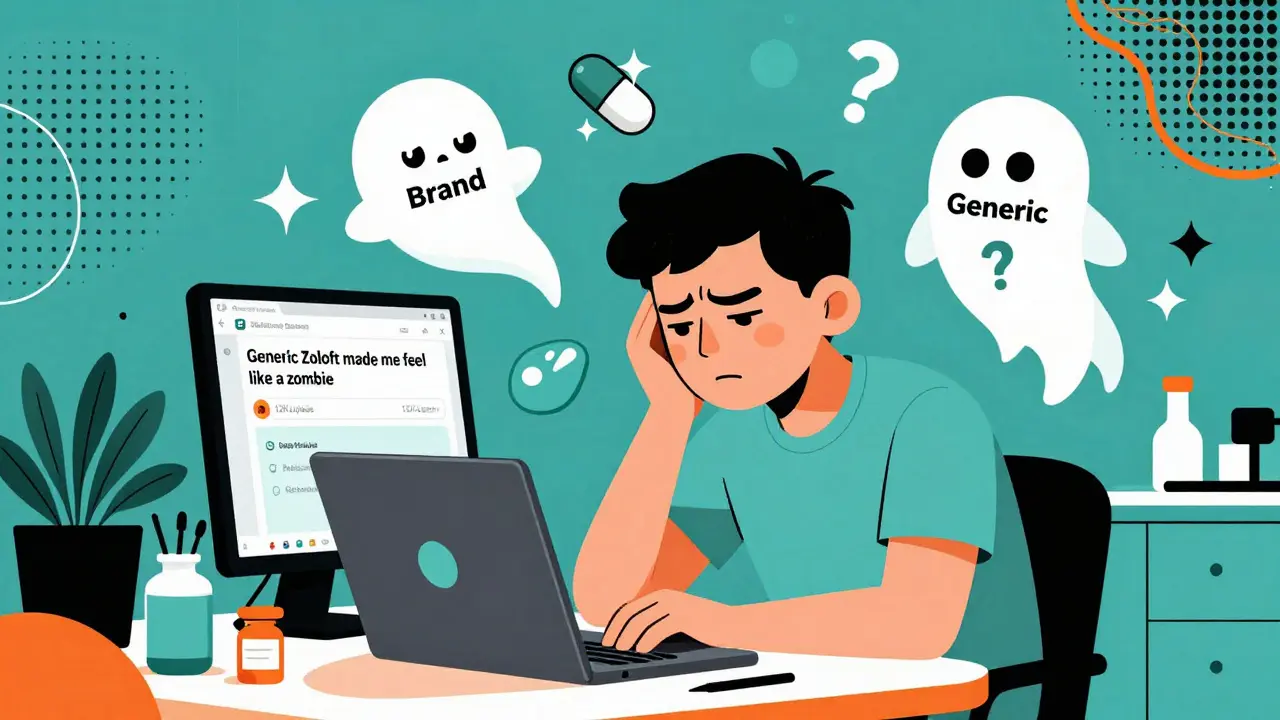
Why the gap isn’t just about knowledge
You’d think the answer is simple: educate people. Tell them generics are safe. But research shows that doesn’t work. A 2021 study found that even when patients understood bioequivalence, 40% still believed the brand worked better. Why? Because knowledge doesn’t override emotion. Think of it like this: You know a used car can be just as reliable as a new one. But if your first car broke down at 10,000 miles, you’ll still feel nervous buying a used one-even if it’s got a warranty and a clean history. Generics trigger the same feeling. For older people, it’s a memory. For Gen X, it’s a fear of the unknown. For Gen Z, it’s just not a factor. The real issue isn’t misinformation. It’s brand psychology. The name on the bottle isn’t just a label. It’s a promise. A signal. A psychological shortcut our brains use to reduce risk. And for many, that shortcut still points to the brand.How pharmacies and doctors can help
Changing attitudes isn’t about shouting facts. It’s about rewriting the story. Pharmacists who take 30 seconds to say, "This is the exact same medicine, just without the marketing cost," see higher acceptance rates. One pharmacy chain in Sydney tracked a 22% increase in generic uptake after training staff to use simple, confident language: "This is what your doctor prescribed. It’s the same drug. Just cheaper." Doctors who show patients the FDA’s bioequivalence data on a tablet during the visit also see better results. But they have to do it without sounding condescending. "I know you’ve been on the brand for years. This isn’t a downgrade. It’s an upgrade in value." For younger patients, digital tools help. Apps that compare prices, show photos of the pills, and link to peer-reviewed studies are changing minds faster than pamphlets ever could.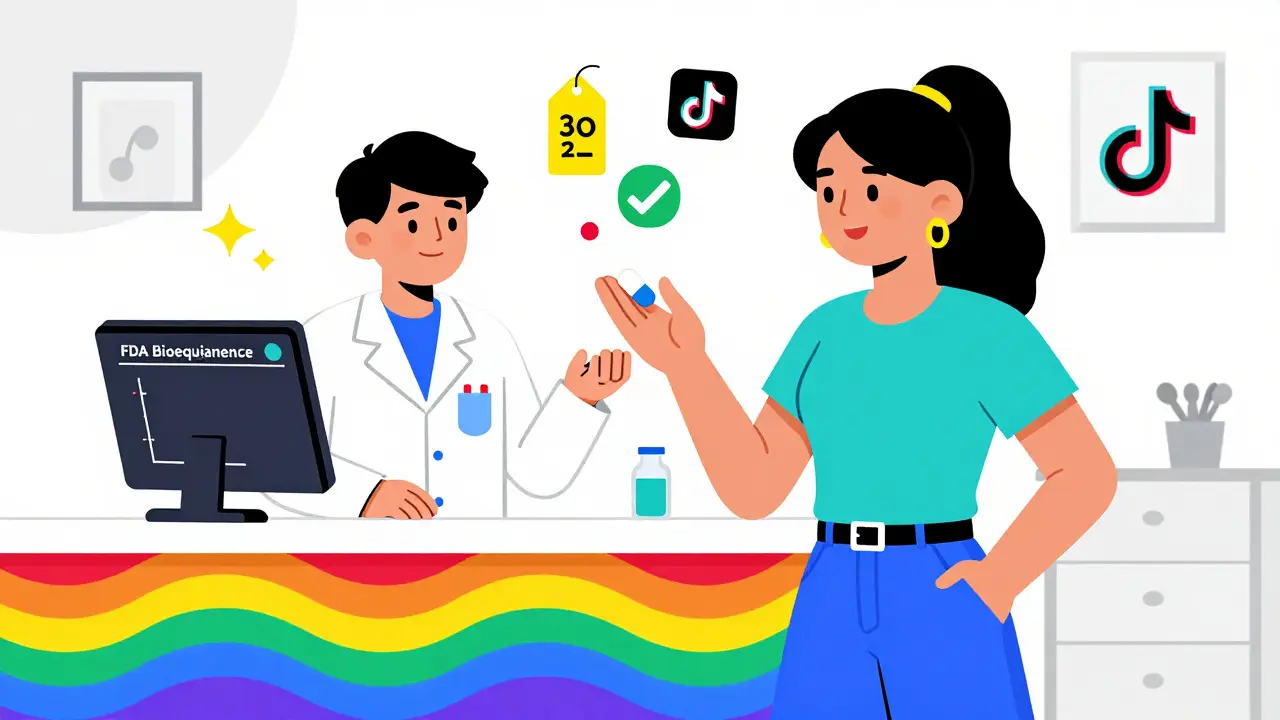
The real cost of not switching
Here’s what happens when people stick with brand-name drugs out of habit: they skip doses. They delay refills. They skip care altogether because they can’t afford it. In Australia, 1 in 5 adults over 65 say they’ve cut pills in half or skipped them to stretch their supply. Most of them are on brand-name medications. The same group is 3 times more likely to be hospitalized for uncontrolled conditions like hypertension or diabetes. Generics aren’t just cheaper. They’re lifesavers. The U.S. saves $370 billion a year because of generics. That’s money that goes back into care, into families, into lives. But if we keep treating generics as second-rate, we’re not saving money-we’re sacrificing health.It’s not about age. It’s about experience.
The truth? Generational differences in generic drug attitudes aren’t about being old or young. They’re about what you’ve lived through. If you’ve seen a loved one get better on a brand-name drug, you’ll trust that brand. If you’ve watched your paycheck vanish on prescriptions, you’ll look for the alternative. If you’ve been told your medication is "just as good," but never shown proof, you’ll stay doubtful. The solution isn’t to shame anyone for their beliefs. It’s to meet people where they are-with facts, with empathy, and with clear, honest communication. The next time you hand someone a generic pill, don’t say, "It’s the same." Say, "This is the medicine your doctor chose. It’s been tested, approved, and used by millions. It works the same. And it’s saving you money so you can afford the rest of your care." That’s not marketing. That’s care.Are generic medications really as effective as brand-name drugs?
Yes. By law, generic medications must contain the same active ingredient, strength, dosage form, and route of administration as the brand-name version. They must also meet the same strict standards for purity and performance set by the FDA and similar agencies worldwide. Bioequivalence testing ensures that generics work in the body the same way as the original. Over 90% of prescriptions in the U.S. are filled with generics-and they’ve been used safely by hundreds of millions of people for decades.
Why do some people feel generics don’t work as well?
It’s often psychological. People associate brand names with quality because of decades of advertising and personal experience. Some notice minor differences in pill shape, color, or filler ingredients-which can affect how quickly the drug dissolves in the stomach. These differences are harmless and don’t change effectiveness, but they can make someone feel like the medication isn’t working. That feeling, even if it’s not medically real, is powerful enough to make people switch back to the brand.
Do pharmacists recommend generics more than doctors?
Yes, often. Pharmacists see the financial impact firsthand-they know how much patients pay out of pocket. They also handle the supply chain and see the consistency of generic manufacturing. Studies show pharmacists are more likely to support generics because they understand the regulatory process and have direct experience with patient outcomes. Doctors, especially older ones, may be more influenced by brand loyalty or outdated training.
Can switching to a generic cause side effects?
Rarely. The active ingredient is identical. Side effects come from that ingredient, not the brand. However, some people are sensitive to inactive ingredients like dyes or fillers. If you’ve had a reaction to a specific generic, it’s likely due to one of those, not the drug itself. Talk to your pharmacist-they can switch you to a different generic version with different fillers. Most people never experience this issue.
Why do some countries use generics more than others?
It’s mostly policy. Countries like Germany, Canada, and China have strong government programs that push pharmacies to substitute generics unless the doctor specifically says "do not substitute." In the U.S., insurance plans encourage generics through lower copays. In places without those systems, brand loyalty and marketing dominate. Culture matters too-some societies are more trusting of authority and branded products, while others prioritize cost and efficiency.
Is it safe to switch from a brand-name drug to a generic?
Yes, for nearly all medications. The FDA requires generics to be bioequivalent within a 90-110% range of the brand. That’s a very tight window. For drugs like insulin, thyroid medication, or seizure drugs, doctors may monitor levels more closely when switching-but even then, most patients do fine. Always talk to your doctor or pharmacist before switching, but don’t assume the brand is safer. The science says otherwise.

15 Comments
Crystal August
January 19, 2026 AT 18:24People who pay extra for brand names are just wasting their money. If the FDA says it's the same, then it is. No amount of 'feeling' changes chemistry. Stop letting marketing fool you.
This isn't about trust-it's about being financially irresponsible.
thomas wall
January 21, 2026 AT 17:00One cannot help but observe the profound psychological underpinnings of pharmaceutical brand loyalty. It is, in essence, a modern manifestation of the placebo effect reinforced by decades of corporate narrative. The emotional attachment to a blue capsule is not irrational-it is human.
Yet, to persist in paying double when the active ingredient is identical, is to privilege sentiment over science-a lamentable, though understandable, cultural inertia.
Manoj Kumar Billigunta
January 22, 2026 AT 05:05My dad took the same blood pressure pill for 30 years. Brand name. He switched to generic after I showed him the FDA report. No difference. He said, 'Well, I guess my fear was just in my head.'
That’s the thing-most people just need someone to show them the truth, not yell at them. A little patience goes a long way.
sagar sanadi
January 22, 2026 AT 09:34Gen Z doesn't care about logos? Sure. They also think 'organic' means 'magic fairy dust' and believe crypto is real money. You think they're smart? Wait till they need insulin.
Generics are fine until one batch has a bad filler and someone ends up in the ER. Then who's laughing? The pharmaceutical CEOs who made billions selling fear and then profit from the panic.
Thomas Varner
January 24, 2026 AT 04:23So... like... people feel things, right? And that's real, even if it's not 'scientific.'
I switched to generic Adderall once. Felt like my brain was wrapped in cotton. Went back. My doc said it was placebo. I said, 'Cool, but my brain doesn't care what you call it.'
So yeah. Maybe science says it's the same. But my body? It knows better.
Also, the generic was a different color. That mattered. Weird, I know.
Art Gar
January 24, 2026 AT 23:47It is axiomatic that the efficacy of pharmaceuticals is determined by pharmacokinetic parameters, not psychological conditioning. The persistence of brand preference, despite overwhelming empirical evidence to the contrary, constitutes a cognitive dissonance of significant public health consequence.
One must conclude that education alone is insufficient; structural incentives must be realigned to disincentivize brand-name expenditure.
Edith Brederode
January 25, 2026 AT 09:38OMG YES!! 😊 I switched my mom to generic Lipitor last year and she cried because she thought she was ‘giving up’ on her health. I showed her the FDA page, the pill photos, the cost difference… now she’s saving $80/month and says she feels ‘lighter’ mentally because she’s not stressing about the bill. 💙
It’s not about the pill. It’s about the story we tell ourselves. And we can rewrite it.
Nadia Watson
January 26, 2026 AT 05:13When I was in nursing school, our instructor said, 'If you're not sure about a generic, ask the pharmacist. They see the batches. They know the suppliers. They're the real experts on this stuff.'
Turns out she was right. I’ve seen pharmacists switch people to different generics because the first one made someone feel off-not because the drug didn’t work, but because of a dye or filler.
Doctors prescribe. Pharmacists protect. We need to trust them more.
Shane McGriff
January 27, 2026 AT 07:37Let’s be real-no one’s scared of generics because they’re dumb. They’re scared because they’ve been burned. My cousin took a generic seizure med and had a breakdown. Turned out the fillers were different. He was fine after switching back. The doctor said, 'It’s not the drug.' But he didn’t live through it.
So yeah. For some of us, it’s not placebo. It’s trauma. And you don’t fix trauma with a chart.
Jacob Cathro
January 28, 2026 AT 22:29Generic Zoloft made me a zombie. Reddit says it’s placebo. I say the FDA’s got a deal with Pfizer. Why else would the generic be 3x cheaper if it’s the same? Someone’s making bank off fear.
Also, the generic had a weird taste. Like chalk and regret. Coincidence? I think not. #BigPharmaLies
Paul Barnes
January 30, 2026 AT 09:29The assertion that generics are bioequivalent is statistically valid. However, the narrow therapeutic index of certain medications-such as warfarin, levothyroxine, and phenytoin-demands careful monitoring during transition. Anecdotal reports of adverse effects are not inherently invalid merely because they are subjective.
Therefore, blanket endorsement of generics without clinical context is irresponsible.
pragya mishra
January 31, 2026 AT 18:37Why are we even having this conversation? If you can’t afford the brand, you shouldn’t be taking it. Period. Stop pretending money isn’t the issue. Your feelings don’t change the math.
And if you’re rich enough to buy the brand? Then you’re just showing off.
kumar kc
February 1, 2026 AT 11:24Generics are fine. But don’t lie to people. Some batches are different. Some people react. Say that. Then fix it. Don’t just say ‘it’s the same’ and walk away.
clifford hoang
February 2, 2026 AT 07:15What if the ‘active ingredient’ isn’t even the real drug? What if the FDA’s testing is rigged? What if the ‘bioequivalence’ is measured in lab rats, not humans? What if the ‘fillers’ are actually nano-tracking chips? 🤔
I used to take the brand. Now I take nothing. I’m not sick. I’m awake.
They want you to think the pill fixes you. But the real cure? Awareness. 🕵️♂️💊👁️
Arlene Mathison
February 2, 2026 AT 09:02My grandma took the brand-name version for 25 years. Last year, we switched her. She was scared. I sat with her while she took the first one. We watched a movie. She fell asleep. Woke up. Said, ‘Huh. Still feels like me.’
That’s the secret. Not data. Not charts. Just time. And someone who won’t let you feel alone while you change.