
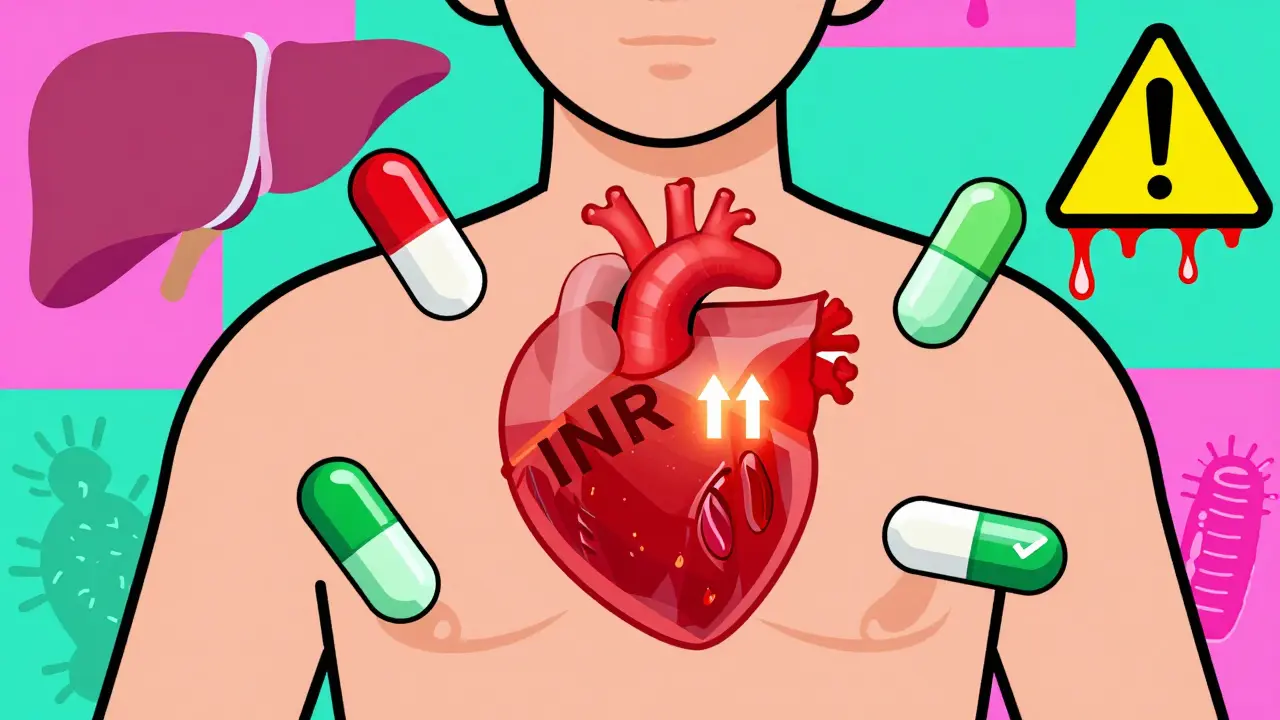
Warfarin-Antibiotic Interaction Risk Checker
Check Your Antibiotic Risk
Enter your details to see how an antibiotic might affect your INR while on warfarin treatment.
Risk Assessment Results
When you're on warfarin, even a simple course of antibiotics can throw your blood-thinning balance off track - sometimes dangerously so. This isn't just a theoretical risk. Every year, thousands of people on warfarin end up in the emergency room because their INR spiked too high after taking an antibiotic. And it’s not always the antibiotics you’d expect. Some seem harmless, while others are known troublemakers. The key? Understanding how these drugs interact, and what to do about it.
Why Warfarin Is So Sensitive
Warfarin works by blocking vitamin K, which your body needs to make clotting factors. It’s been used for over 70 years, and despite newer drugs like apixaban and rivaroxaban, it’s still prescribed to millions. Why? Cost. Warfarin costs about $4.27 a month. The alternatives? Around $500. For Medicare patients, that difference matters. But warfarin’s narrow window of safety - the difference between working and overdoing it - makes it tricky.Your INR tells you how long it takes your blood to clot. For most people on warfarin, the target is between 2.0 and 3.0. Go above 5.0? Your risk of serious bleeding - like internal bleeding or a brain hemorrhage - jumps sharply. And antibiotics? They can push your INR into that danger zone.
How Antibiotics Mess With Your INR
There are three main ways antibiotics interfere with warfarin:- Slowing down warfarin breakdown: Warfarin is processed by liver enzymes - mainly CYP2C9 and CYP3A4. Some antibiotics block these enzymes, so warfarin builds up in your blood. This can happen fast.
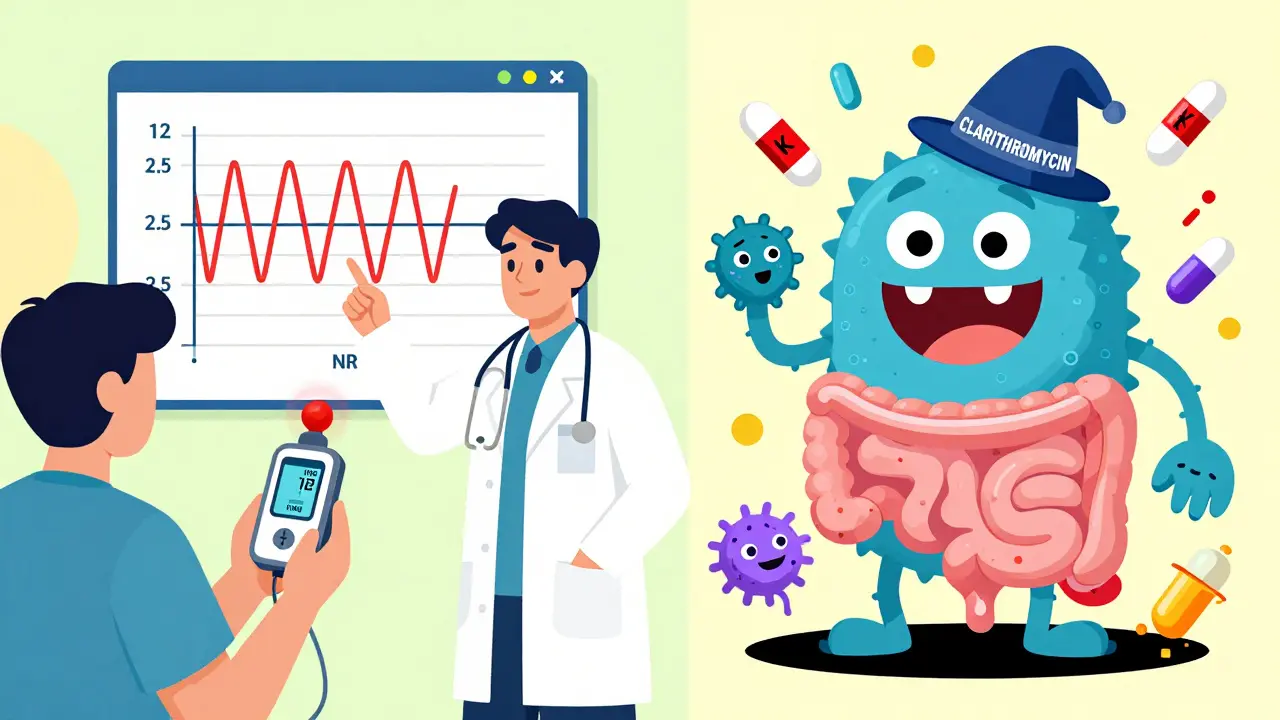
- Killing off vitamin K-producing bacteria: Your gut has bacteria that make about 10-15% of your daily vitamin K. Antibiotics wipe out these bugs. Less vitamin K means warfarin works harder. This effect takes a few days to show up.
- Displacing warfarin from proteins: Warfarin sticks to albumin in your blood. Some antibiotics displace it, temporarily increasing the active amount in your bloodstream.
That’s why INR changes don’t always happen right away. You might start an antibiotic and feel fine. Then, three or four days later, your INR spikes. Or, if you stop the antibiotic, your INR can suddenly drop - putting you at risk for a clot.
Which Antibiotics Are Most Dangerous?
Not all antibiotics affect warfarin the same way. Here’s what the data shows:| Antibiotic Class | Examples | INR Increase Risk | Time to Effect |
|---|---|---|---|
| Fluoroquinolones | Levofloxacin, Ciprofloxacin | High (especially levofloxacin) | 3-8 days |
| Macrolides | Clarithromycin | High | 3-7 days |
| Azithromycin | Low | None | |
| Sulfonamides | Trimethoprim-sulfamethoxazole | High | 4-7 days |
| Nitroimidazoles | Metronidazole | High | 5-10 days |
| Penicillins | Amoxicillin, Ampicillin | Low | Minimal |
| Cephalosporins | Ceftriaxone, Cefazolin | Very Low | Usually none |
Levofloxacin and clarithromycin are the worst offenders. Studies show they can push INR up by 2 to 4 points. In one Reddit thread, 37 patients reported INRs shooting from 2.5 to over 12 after starting clarithromycin. That’s not a typo - 12 is life-threatening.
On the flip side, azithromycin and amoxicillin rarely cause problems. If you need an antibiotic and are on warfarin, ask your doctor if one of these is an option.
Who’s at Highest Risk?
It’s not just about the antibiotic. Some people are more likely to have a dangerous reaction:- Age over 75: Liver and kidney function slow down. Warfarin sticks around longer.
- Cancer patients: Cancer itself affects how your body processes drugs. One study found cancer doubled the risk of INR ≥5.0.
- Women: Even after adjusting for weight, women have higher INR spikes than men on the same dose.
- Baseline INR above 2.5: If you’re already close to the top of the target range, even a small nudge can push you over.
If you fit any of these, your doctor should be extra cautious. Daily INR checks might be needed during antibiotic treatment.
What You Should Do
Here’s the practical advice - no fluff:- Get your INR checked 3-5 days after starting any antibiotic. Don’t wait. Even if you feel fine.
- Check again 7-10 days after stopping. When the antibiotic leaves your system, your gut bacteria start making vitamin K again. Your INR can drop fast - and suddenly, you’re not protected from clots.
- Don’t assume your pharmacist flagged it. A 2020 study found only 32.7% of primary care providers consistently ordered INR checks after antibiotics. You have to be your own advocate.
- Ask about alternatives. If you need an antibiotic, ask: "Is there one that won’t mess with my warfarin?" Azithromycin or amoxicillin are often safe.
- Watch for signs of bleeding: Unusual bruising, nosebleeds, blood in urine or stool, headaches, dizziness. Call your doctor immediately if any appear.
What About Home INR Monitors?
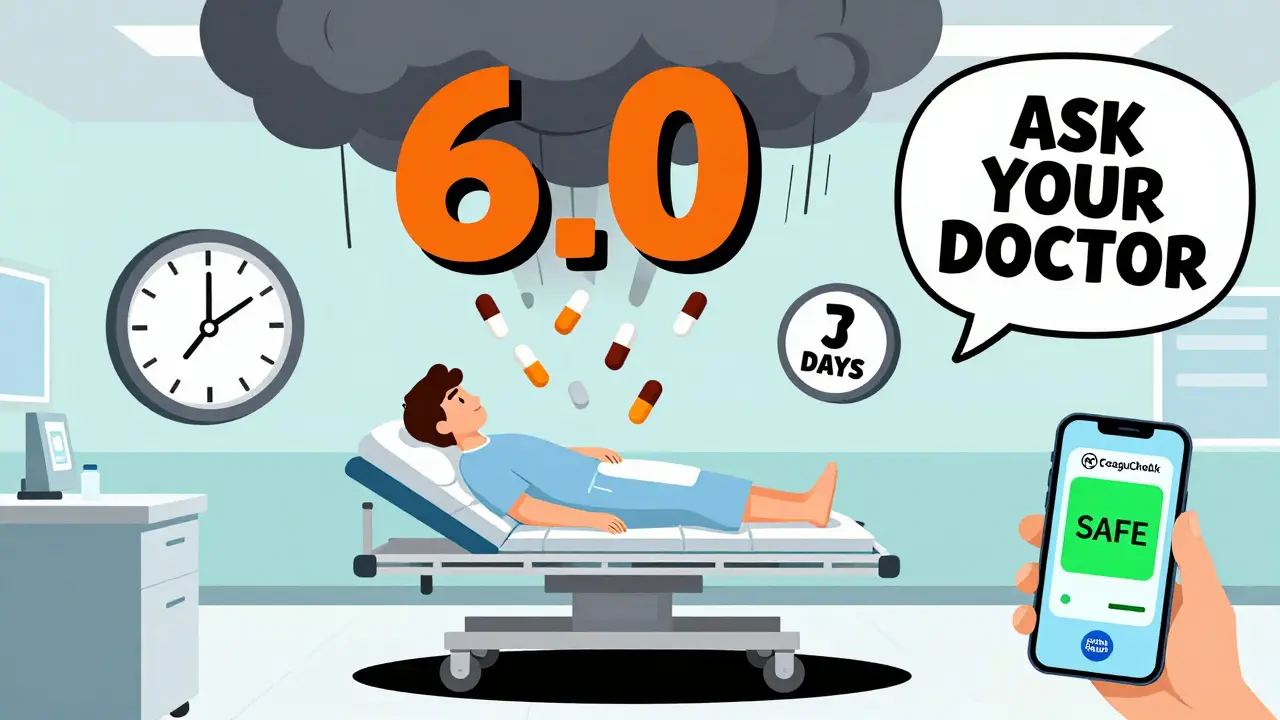
Newer devices like the Roche CoaguChek INRange let you test your INR at home and send results to your phone. The FDA approved them in 2023. For people on warfarin, especially during antibiotic use, this is a game-changer. Daily monitoring during antibiotic therapy cuts the risk of dangerous INR swings by over 40%. If you’re eligible, ask your doctor about getting one.Why This Keeps Happening
Even though we’ve known about this for decades, mistakes still happen. A 2022 CDC survey found that over 30% of warfarin users get antibiotics they don’t even need - like for viral infections. Antibiotics don’t work on colds or flu. Yet, they’re still prescribed.And when they are, too many doctors don’t check the INR. A 2021 study found that nearly 24% of warfarin-related ER visits happened after an antibiotic was started. Over 60% of those cases had INR above 5.0. This isn’t an accident. It’s a system failure.
What’s Next?
New tools are emerging. A 2023 AI model called WAR-DRUG can predict how much your INR will rise based on your age, genetics, current dose, and which antibiotic you’re taking - with 89% accuracy. It’s not in every clinic yet, but it’s coming.For now, the best defense is awareness. Know which antibiotics are risky. Know when to test. Know your baseline INR. And if you’re unsure - call your anticoagulation clinic. Don’t wait for a bleeding episode to realize you should’ve acted sooner.
Can I take azithromycin while on warfarin?
Yes, azithromycin is generally safe with warfarin. Unlike clarithromycin, it doesn’t significantly inhibit liver enzymes or affect gut bacteria that make vitamin K. Studies show over 98% of patients experience no INR change when taking azithromycin. It’s often recommended as a safer alternative when antibiotics are needed.
How long does it take for INR to go back to normal after stopping an antibiotic?
It usually takes 3 to 7 days for your INR to drop after stopping an antibiotic that raised it. This happens because your gut bacteria start producing vitamin K again. But if your INR was pushed very high (above 5.0), it may take longer. Always get your INR checked 7-10 days after stopping the antibiotic to make sure you’re not under-anticoagulated.
Do all antibiotics affect warfarin?
No. Penicillins like amoxicillin and cephalosporins like ceftriaxone rarely affect INR. Azithromycin is also low risk. The big concerns are fluoroquinolones (levofloxacin), macrolides (clarithromycin), sulfonamides (Bactrim), and metronidazole. Always check with your doctor or pharmacist before starting any new antibiotic.
What should I do if my INR spikes to 6.0 while on an antibiotic?
Contact your doctor immediately. An INR of 6.0 means you’re at high risk of bleeding. You may need to stop warfarin temporarily, take vitamin K orally, or even get a blood transfusion in severe cases. Do not adjust your dose on your own. Follow medical advice.
Is it safe to take over-the-counter supplements while on warfarin and antibiotics?
Many supplements can interfere with warfarin. Vitamin K supplements directly counteract it. Garlic, ginkgo, ginger, and green tea can increase bleeding risk. During antibiotic use, your INR is already unstable. Avoid all supplements unless approved by your anticoagulation clinic. Even "natural" doesn’t mean safe.
Warfarin isn’t going away. It’s too cheap, too effective for certain conditions, and too entrenched in older populations. But its risks are real - especially when antibiotics get mixed in. The good news? With the right checks, the right antibiotics, and the right awareness, you can stay safe. Don’t assume it’s someone else’s job to keep track. Your life depends on knowing the signs - and acting before it’s too late.

8 Comments
Tricia O'Sullivan
February 7, 2026 AT 10:28Thank you for this comprehensive overview. As a pharmacist in Dublin, I see far too many patients who are unaware of these interactions. The data presented here aligns with our local anticoagulation clinic's findings. I particularly appreciate the emphasis on azithromycin as a safer alternative - it’s a small change that can prevent major complications. I’ve started including printed summaries in patient discharge packets, and feedback has been overwhelmingly positive.
Brandon Osborne
February 9, 2026 AT 06:36THIS IS WHY AMERICA’S HEALTHCARE IS A SHAM. DOCTORS DON’T EVEN CHECK INR? 24% OF ER VISITS ARE FROM THIS? YOU KNOW WHAT? I’M SICK OF IT. MY GRANDMA DIED BECAUSE HER DOCTOR PRESCRIBED CIPROFLOXACIN AND NEVER CHECKED HER INR. SHE BLED OUT IN HER SLEEP. NOBODY TOLD HER. NOBODY CAUGHT IT. AND NOW I’M HERE YELLING INTO THE VOID BECAUSE NO ONE LISTENS. YOU THINK THIS IS A ‘RISK’? IT’S A MURDEROUS OVERSIGHT. STOP BEING NICE AND START BEING ACCOUNTABLE.
Marie Fontaine
February 11, 2026 AT 04:00YESSSSS this is such a needed post!! 🙌 I’m a nurse in Ohio and I’ve had so many patients panic because they got a random antibiotic and didn’t know what to do. Seriously, the azithromycin vs clarithromycin difference is CRUCIAL. I’ve started handing out little cheat sheets like ‘Warfarin + Antibiotic? Check This First!’ - and it’s been a game changer. Also, home INR monitors? ABSOLUTELY YES. If your doc says no, keep asking. Your life matters 💪❤️
Elan Ricarte
February 12, 2026 AT 19:55Let’s be real - this isn’t rocket science, but it’s also not being done. We’ve got AI models predicting INR spikes with 89% accuracy and yet primary care docs are still flying blind? Meanwhile, the FDA approves home monitors in 2023 and half the patients don’t even know they exist. And don’t get me started on the ‘natural’ supplement crowd. Ginkgo? Garlic? Bro, you’re not a witch, you’re on warfarin. That shit isn’t herbal tea, it’s a ticking time bomb. I’ve seen people with INRs of 8.7 because they ‘felt better’ and took some ginger capsule. It’s not a lifestyle choice. It’s a death sentence with a side of kale.
Angie Datuin
February 13, 2026 AT 03:09This is incredibly helpful. I’ve been on warfarin for 12 years and never realized how much the gut bacteria thing mattered. I thought it was just liver enzymes. Now I understand why my INR dropped after stopping metronidazole - I was terrified I’d clot. I’ll definitely be checking more often now. Thanks for the clarity.
Camille Hall
February 13, 2026 AT 23:43One thing I’d add - if you’re on warfarin and need antibiotics, don’t just ask your doctor. Ask your anticoagulation clinic. They’re the experts. They track trends, they know which antibiotics are risky in your region, and they often have protocols in place. I’ve had patients come in saying their PCP said ‘it’s fine’ - then we checked their INR and it was 6.2. The clinic saved their life. Don’t assume your primary care provider has the full picture. Go to the specialists. They’re there for a reason.
Ritteka Goyal
February 14, 2026 AT 20:47OMG this is so true i live in india and here doctors just give antibiotics for everything like cough cold fever even if its viral and they dont even know about warfarin interactions my uncle had a brain bleed last year after taking cipro and no one checked his inr they just said oh he is old so its natural but it was the antibiotic i am so angry about this because in india we dont have home inr monitors and most people cant afford to go to private hospitals and the govt hospitals dont even have staff trained for this its a disaster i hope someone does something about this
Lyle Whyatt
February 15, 2026 AT 10:02Man, I’ve been on warfarin since 2018 after a pulmonary embolism. I use a CoaguChek at home now - best decision I ever made. But here’s the kicker: I had to fight my GP to get one. They said, ‘We don’t do that here.’ I said, ‘Fine, I’ll pay out of pocket.’ Cost me $800, but now I check my INR every time I take an antibiotic - even azithromycin, just to be safe. And yeah, I’ve caught two spikes before they got dangerous. One was after a course of amoxicillin. Turns out, even ‘low-risk’ drugs can act up if you’re over 70, have diabetes, and are on four other meds. The takeaway? Don’t wait for a system that doesn’t care. Take control. Your blood doesn’t care about bureaucracy - it just wants to clot or not clot. You’re the only one who can make sure it does the right thing.