
Side Effect Assessment Tool
Understand Your Symptoms
This tool helps you assess whether your symptoms are likely related to your medication or could be coincidental. Based on the medical definitions explained in the article, this tool will guide you through determining if your symptoms are:
- Side effects (predictable, known reactions)
- Adverse drug reactions (harmful, unintended responses)
- Adverse events (any negative health occurrence after taking a drug)
Remember: Not every symptom after taking medication is caused by the drug. Many are coincidental.
When you start a new medication, it’s normal to worry about what might go wrong. You’ve probably heard terms like side effects and adverse drug reactions used interchangeably - but they’re not the same. Mixing them up can lead to unnecessary fear, wrong decisions, or even dangerous changes in your treatment. Understanding the difference isn’t just for doctors or pharmacists. It’s something every patient should know.
What’s a Side Effect?
A side effect is a known, predictable reaction to a drug that happens because of how the drug works in your body. It’s not a mistake. It’s not an accident. It’s built into the drug’s design. For example, if you take an antihistamine for allergies and get sleepy, that’s a side effect. The drug blocks histamine to reduce sneezing - but histamine also helps keep you awake. So sleepiness? That’s a direct, expected result. Side effects are identified during clinical trials. Researchers give the drug to one group and a placebo to another. If more people in the drug group report nausea, dizziness, or dry mouth - and the difference is statistically significant - then those are labeled as side effects. They’re listed in the drug’s official prescribing information. These are usually dose-dependent. Take more of the drug? The side effect gets stronger. Take less? It fades. That’s why doctors start you on a low dose. They’re trying to find the sweet spot where the drug works without making you feel awful. Common side effects include:- Drowsiness from antihistamines or antidepressants
- Upset stomach from NSAIDs like ibuprofen
- Dry mouth from blood pressure medications
- Weight gain from steroids or some psychiatric drugs
What’s an Adverse Drug Reaction?
An adverse drug reaction (ADR) is a broader term. It’s any harmful, unintended response to a drug taken at normal doses. But here’s the key: all side effects are ADRs, but not all ADRs are side effects. Think of it this way: side effects are the predictable ones. ADRs include those - plus the unpredictable, rare, and sometimes dangerous reactions. There are two main types of ADRs:- Type A: These are the predictable ones - the side effects we just talked about. They make up 80-85% of all ADRs. Examples: liver damage from too much acetaminophen, kidney issues from certain antibiotics, or bleeding from blood thinners.
- Type B: These are the surprises. They’re rare, unpredictable, and not tied to the drug’s main action. They can be allergic reactions, like hives or anaphylaxis from penicillin. Or they can be strange, rare effects like tardive dyskinesia from long-term antipsychotic use. Type B reactions aren’t dose-dependent. Even a tiny amount can trigger them.
What’s an Adverse Event?
Now we get to the most confusing term: adverse event. An adverse event is any negative health occurrence that happens after you take a drug - whether or not the drug actually caused it. Here’s a real example: You start a new cholesterol drug. Two weeks later, you get a bad headache and miss work. Was the drug the cause? Maybe. Maybe not. You were stressed. You slept poorly. You drank more coffee. The headache could be unrelated. That headache? It’s an adverse event. It’s a reportable incident. But it’s not necessarily a side effect - not until researchers compare it to people who didn’t take the drug. In clinical trials, every negative thing that happens after taking the drug is recorded as an adverse event. Only after statistical analysis do they figure out which ones are truly linked to the drug - and those become side effects. In real life, patients often report adverse events to their doctors: “I felt dizzy after taking this pill.” The doctor doesn’t know yet if it’s the drug. They’ll look at timing, other factors, and maybe stop the drug temporarily to see if the symptom goes away. That’s called a “dechallenge.” If it comes back when the drug is restarted? That’s strong evidence it’s a side effect.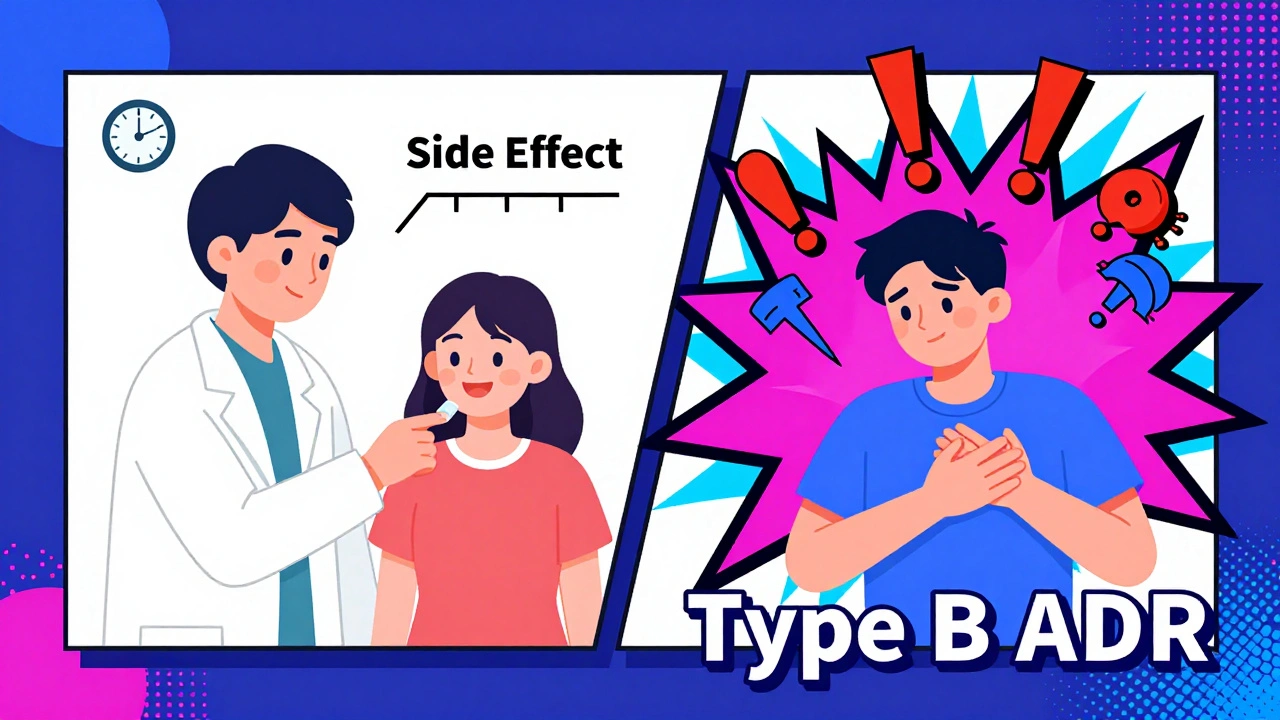
Why Does This Distinction Matter?
Mixing up these terms has real-world consequences. A 2021 study found that 43% of patients stopped taking life-saving medications because they thought every bad feeling was a “side effect.” They didn’t realize some symptoms were unrelated - like a cold they caught, stress from work, or even normal aging. One woman in Melbourne stopped her blood thinner after developing a mild rash. She thought it was a side effect. It turned out to be a seasonal allergy. She ended up in the hospital with a blood clot. Doctors and pharmacists are trained to distinguish these terms - but even they slip up. A 2021 survey showed 68% of healthcare workers use “side effect” and “adverse reaction” interchangeably in notes. That’s dangerous. It skews how risks are understood, how drugs are labeled, and how insurance claims are processed. Insurance companies often deny claims if the documentation says “adverse event” instead of “adverse reaction.” Why? Because “adverse event” doesn’t prove the drug caused harm. It just says something bad happened while the drug was being taken.How Do Experts Tell the Difference?
Medical professionals use three steps to figure out if something is a true side effect:- Timing: Did the symptom start after the drug was started? Did it improve when the drug was stopped?
- Rechallenge: If the drug is restarted and the symptom returns? That’s strong proof it’s linked.
- Comparison: Is this symptom reported more often in people taking the drug than in those taking a placebo? If yes, it’s a side effect.
What Should You Do as a Patient?
You don’t need to be a doctor - but you can be smarter about your meds.- Don’t panic at every new symptom. Not everything is the drug’s fault.
- Track what happens. Write down when symptoms start, how bad they are, and what else changed around the same time (sleep, diet, stress, new supplements).
- Ask your doctor: “Is this a known side effect, or could it be something else?” That question alone can prevent unnecessary drug changes.
- Never stop a life-saving drug without talking to your provider. A mild side effect is often worth managing - not quitting.
- Report real concerns. If you have a serious reaction - like swelling, trouble breathing, chest pain, or severe rash - call your doctor immediately. These are red flags.
The Future: Better Tools, Better Decisions
Technology is helping. AI tools now analyze electronic health records to spot patterns between drugs and symptoms faster than ever. A 2023 study showed AI improved side effect identification accuracy by 41%. Genetic testing is also changing the game. Some people have genes that make them more likely to react badly to certain drugs. For example, if you have a specific CYP2C19 gene variant, you’re nearly nine times more likely to have serious stomach bleeding from clopidogrel (a blood thinner). Testing for that before prescribing can prevent harm. By 2026, the American Pharmacists Association aims to cut patient confusion around these terms by half. That means clearer labels, better education, and fewer people quitting their meds out of fear.Final Takeaway
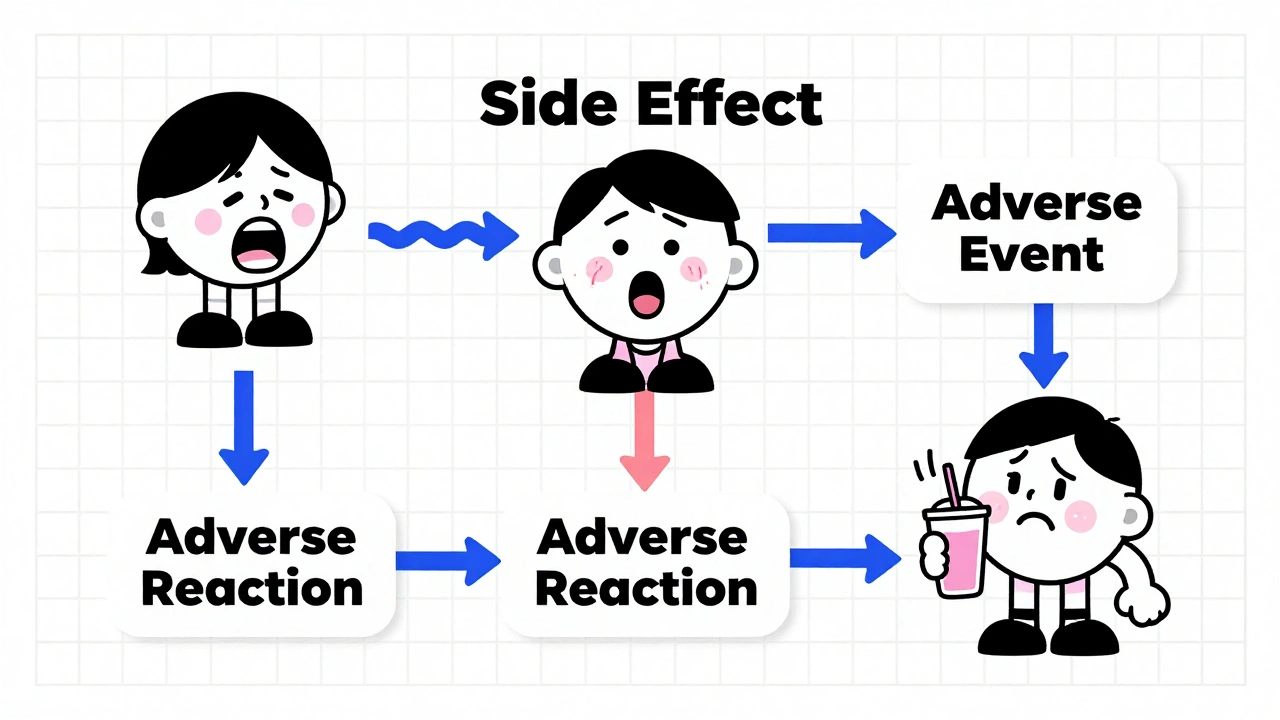
Side effects are predictable, common, and often manageable. Adverse drug reactions include side effects - plus rare, dangerous, and unpredictable reactions. Adverse events are any negative event that happens after taking a drug - whether it’s the drug’s fault or not. Understanding this isn’t about memorizing definitions. It’s about asking the right questions. It’s about knowing when to worry - and when to let it go. It’s about trusting your doctor, but also trusting yourself enough to speak up. Your health isn’t a guessing game. It’s a conversation. And knowing the difference between these terms gives you the words to have it.Are side effects the same as adverse drug reactions?
All side effects are a type of adverse drug reaction, but not all adverse drug reactions are side effects. Side effects are predictable, dose-dependent, and known from clinical trials. Adverse drug reactions include those - plus rare, unpredictable reactions like allergic responses that aren’t tied to the drug’s main action.
Can an adverse event be harmless?
Yes. An adverse event is just any negative health occurrence that happens after taking a drug - regardless of whether the drug caused it. For example, if you start a new medication and then get a cold, the cold is an adverse event. But it’s not caused by the drug. Many adverse events turn out to be coincidental.
Why do some medications list side effects that don’t happen to me?
Side effects listed on drug labels are based on what happened in clinical trials - not what happens to every single person. If 5% of participants in a trial got nausea, that gets listed. But if you’re in the 95% who didn’t, you won’t feel it. Everyone’s body reacts differently based on genetics, age, other medications, and overall health.
What should I do if I think I’m having an adverse reaction?
Contact your doctor or pharmacist right away. Don’t stop the medication unless told to - especially if it’s for a serious condition like high blood pressure or epilepsy. Write down the symptom, when it started, and any other changes. This helps your provider determine if it’s a side effect, an allergic reaction, or something unrelated.
Do side effects always go away?
Many do - especially if they’re mild and dose-related. Your body often adjusts over a few weeks. But some side effects persist. If one doesn’t improve or gets worse, your doctor may lower your dose, switch you to a different drug, or add another medication to counteract it. Never ignore a persistent or worsening side effect.
Can I report a side effect to the FDA?
Yes. You can report any suspected side effect or adverse event through the FDA’s MedWatch program. Even if you’re not sure it’s caused by the drug, your report helps build the safety database. The more data collected, the better we understand how drugs affect real people over time.

15 Comments
kelly mckeown
December 3, 2025 AT 14:13I started a new blood pressure med last month and got this weird dry cough. Thought it was the drug until my doctor said it was just a cold. So glad I didn't quit.
Tom Costello
December 4, 2025 AT 05:07This is one of the clearest explanations I've seen. Side effects are the price of admission for the benefit. ADRs are the surprise tax you didn't know you were paying. And adverse events? Those are just noise in the system.
Pamela Mae Ibabao
December 6, 2025 AT 03:40I love how you broke this down. I used to panic every time I got a headache after taking a pill. Now I just check the timeline. 🤓
Cyndy Gregoria
December 6, 2025 AT 14:37You’re so right-don’t quit meds because you’re scared. I stopped my antidepressant because of dizziness. Two weeks later I was a mess. Started back on it. Dizziness faded. Life improved. 💪
Pooja Surnar
December 7, 2025 AT 05:30People need to stop blaming drugs for everything. I had a friend who thought her anxiety was from her thyroid med. Turns out she was watching horror movies at 2am and drinking 5 energy drinks. 🙄
Susan Haboustak
December 8, 2025 AT 07:12I work in pharma compliance. The misuse of 'adverse event' vs 'adverse reaction' is a nightmare. Insurance denies claims because of sloppy documentation. People get denied care because someone typed 'headache' without context. This is systemic.
Siddharth Notani
December 8, 2025 AT 15:03In India, many patients stop statins because of muscle pain. But studies show 90% of those pains are unrelated. Genetic testing for SLCO1B1 variants can prevent this. We need more awareness here.
dylan dowsett
December 10, 2025 AT 12:46I'm not sure why you're so nice about this. People should just stop taking meds if they feel weird. Why risk it? I mean, what if it's the start of something deadly? You're just encouraging people to be careless.
Justin Hampton
December 11, 2025 AT 10:45Yeah right. 'Don't panic.' Like I'm supposed to trust a drug company that hid side effects for decades? Tell that to the people who got heart damage from Vioxx.
Chad Kennedy
December 11, 2025 AT 22:00I don't care what you call it. If I feel weird after taking a pill, I'm not taking it again. Simple. Why risk it? I'd rather be healthy than have some 'manageable' side effect.
Akash Sharma
December 13, 2025 AT 20:42This is actually really important. I've been on a beta-blocker for migraines for three years and had zero side effects. But I know someone who had severe bradycardia from the same dose. It's all about individual biology. The body is wild. Genetic differences, gut microbiome, liver enzymes-it’s a whole ecosystem. Most people think meds work the same for everyone. They don’t. That’s why we need personalized medicine, not one-size-fits-all labels.
Jessica Ainscough
December 15, 2025 AT 17:45I just started a new antidepressant. The first week I felt like a zombie. I almost quit. Then I read this and waited. Two weeks later, I felt like myself again. Only difference? I didn't panic. Thank you for this.
May .
December 15, 2025 AT 22:19Side effects are just the drug being a little too enthusiastic
Stacy Natanielle
December 17, 2025 AT 14:37As a toxicologist, I see this daily. The FDA’s MedWatch database is gold-but 68% of reports are misclassified. People report 'nausea' after starting a new med... but they also started a new coffee shop. Or got a new cat. Or slept 4 hours. We need better intake forms. And patients need to track timing like a scientist. Not just 'it happened'. But 'it happened 3 days after, and not before, and stopped when I skipped the pill'. That’s data.
Wendy Chiridza
December 19, 2025 AT 03:31This should be required reading for every patient starting a new prescription. I’m sharing it with my mom. She’s on six meds and thinks every ache is from one of them. She’s been on a rollercoaster of stopping and restarting. This will help her stop guessing.