
Antihistamine Safety Checker for RLS
Is Your Allergy Medication Safe for RLS?
This tool checks if common allergy and cold medications contain antihistamines that worsen restless legs syndrome. Check any active ingredient or medication name to see if it's safe for RLS patients.
If you have restless legs syndrome (RLS), taking an over-the-counter allergy pill might be making your nights worse-not better. It sounds counterintuitive: you’re trying to sleep, so you grab something to stop your runny nose or itchy eyes. But many common antihistamines don’t just calm allergies-they can turn your legs into a buzzing, crawling nightmare.
Why Antihistamines Make Restless Legs Worse
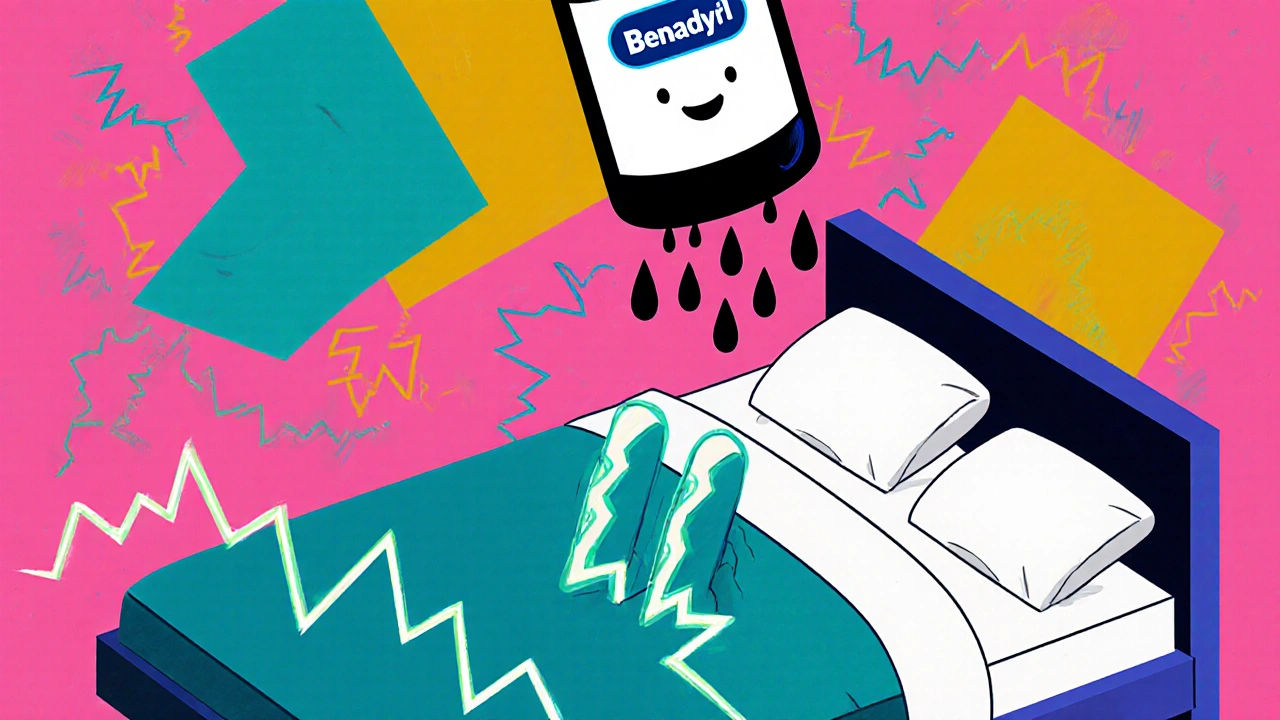
Restless legs syndrome isn’t just discomfort. It’s a neurological condition where your legs feel like they’re crawling, tingling, or aching-especially when you’re lying down or trying to sleep. The root problem? Your brain’s dopamine system isn’t working right. Dopamine helps control movement and signals your body to relax. When it’s disrupted, your legs feel restless, and you have to move them to find relief. Sedating antihistamines like diphenhydramine (Benadryl), chlorpheniramine (Piriton), and hydroxyzine (Atarax) slip easily through the blood-brain barrier because they’re fat-soluble. Once inside, they don’t just block histamine-they also accidentally block dopamine receptors. This is like turning down the volume on the very system your brain already struggles with. The result? Symptoms spike. Studies show that up to 78% of RLS patients report worse symptoms after taking these meds. One 2014 study of over 16,000 kidney patients found that those taking sedating antihistamines were more than twice as likely to develop RLS symptoms.Which Antihistamines Are Safe?
Not all antihistamines are created equal. The newer, non-sedating ones-like fexofenadine (Allegra), loratadine (Claritin), and desloratadine (Clarinex)-are designed to stay out of the brain. They’re pumped out by a protein called P-glycoprotein, which acts like a bouncer at the blood-brain barrier. That means they treat your sneezes without touching your dopamine system. Here’s the breakdown:| Antihistamine | Brand Examples | RLS Risk | Notes |
|---|---|---|---|
| Diphenhydramine | Benadryl, Tylenol PM, Advil PM | High | Strong dopamine blocker. Avoid completely. |
| Chlorpheniramine | Piriton, Comtrex, Contact | High | Found in many cold and flu mixes. |
| Hydroxyzine | Atarax, Vistaril | High | Prescription only, but still risky. |
| Loratadine | Claritin, Alavert | Low | Safe for most RLS patients. |
| Fexofenadine | Allegra | Very Low | Best choice for sensitive patients. |
| Desloratadine | Clarinex | Very Low | Long-lasting, minimal side effects. |
| Cetirizine | Zyrtec | Moderate | 15% of RLS users report mild worsening. |
Even Zyrtec (cetirizine), often considered safe, causes mild worsening in about 1 in 7 RLS patients. Fexofenadine (Allegra) is the safest bet-only 5% report any issue. But be careful: many allergy pills combine antihistamines with decongestants like pseudoephedrine or phenylephrine. These decongestants can worsen RLS too, independently. So even if the antihistamine is safe, the whole pill might not be.
Hidden Traps in Everyday Medicines
You won’t find diphenhydramine on the label of just allergy pills. It’s hiding in sleep aids, cold remedies, and even cough syrups. Products like NyQuil, TheraFlu, Dimetapp, and Night Nurse all contain it. One Reddit user described walking five miles after taking Night Nurse-just to quiet the burning in their legs. That’s not an exaggeration. It’s a real pattern. A 2020 survey by RLS-UK found that 23% of patients accidentally took a sedating antihistamine because they didn’t realize it was in their nighttime cough medicine. Always check the active ingredients. If you see “diphenhydramine,” “doxylamine,” or “chlorpheniramine,” put it back. Even if it says “PM” or “Night,” it’s likely loaded with these blockers.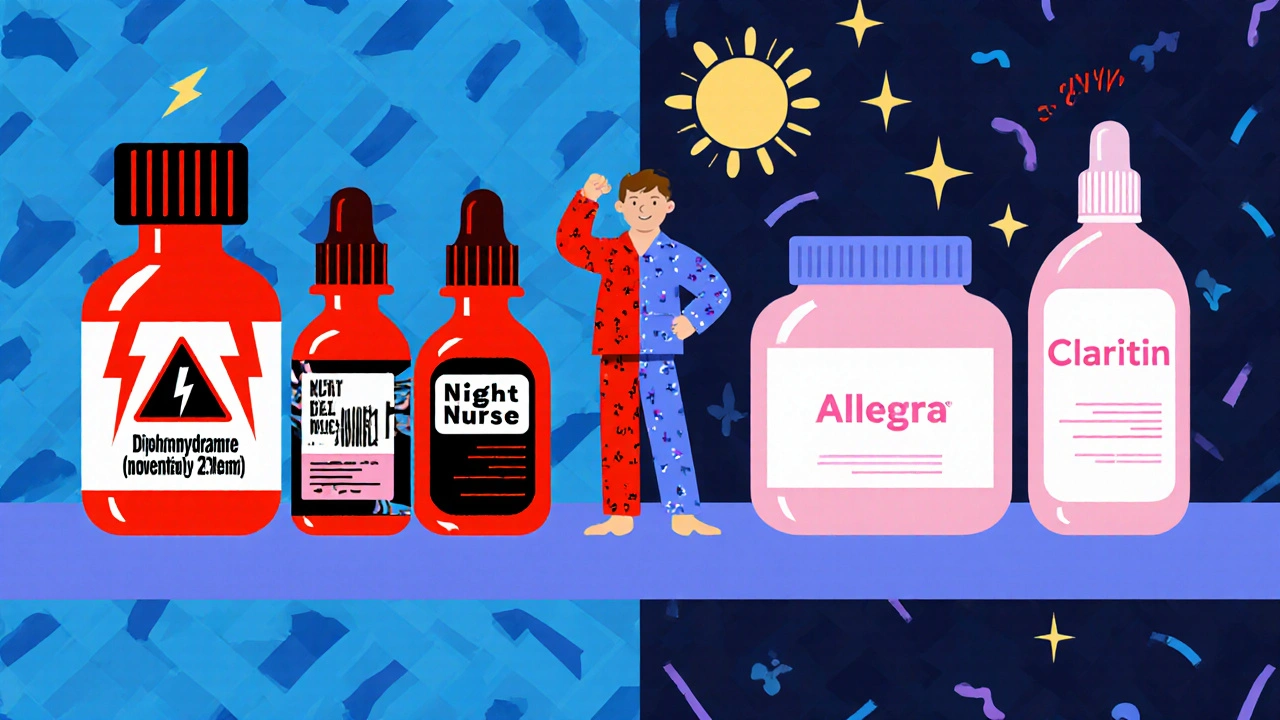
What to Use Instead
You still need relief from allergies. Here’s what works without wrecking your sleep:- Flonase (fluticasone) - A nasal spray that reduces inflammation without entering your bloodstream. Studies show it helps 82% of RLS patients with allergy-related sleep disruption.
- Saline nasal rinse - Simple, cheap, and effective. About 76% of RLS patients report better breathing and fewer nighttime symptoms after daily rinses.
- Melatonin - If you’re struggling to sleep because of allergies or RLS, try 0.5-5 mg of melatonin. It doesn’t affect dopamine and helps regulate sleep cycles. Around 65% of RLS patients find it helpful.
- Non-drowsy antihistamines - Stick with Claritin, Allegra, or Clarinex. Take them in the morning so they’re fully cleared by bedtime.
Don’t assume natural remedies are safe either. Some herbal sleep aids contain antihistamine-like compounds. Always check labels-even “natural” products can interfere with dopamine.
How Long Does It Take to Feel Better?
If you’ve been taking Benadryl or similar meds and your RLS has gotten worse, switching isn’t a quick fix-but it’s fast enough. Most patients report noticeable improvement within 24 to 48 hours after stopping the sedating antihistamine. One patient on the RLS Foundation forum wrote: “Took Benadryl for allergies. Couldn’t sleep for 3 nights. Switched to Claritin. Symptoms gone by morning.” It takes a couple of weeks to learn what’s safe. Read every label. Keep a list of approved meds. Talk to your pharmacist-they’re trained to spot hidden antihistamines. Most people get comfortable with this routine within one allergy season.
Why This Matters More Than You Think
RLS affects about 1 in 10 adults. Many don’t realize their symptoms are being made worse by something they’re taking for something else. In fact, 25% of RLS patients unknowingly take meds that make their condition worse. Sedating antihistamines are the #1 culprit. The American Academy of Neurology updated its guidelines in 2021 to warn doctors about this link. Medicare now covers non-sedating antihistamines in 98% of plans. That’s because the evidence is clear: these drugs aren’t just inconvenient-they’re harmful to people with RLS. Even pharmaceutical companies are responding. Sales of sedating antihistamines have dropped 4.3% since 2016. Sales of safer alternatives like Allegra and Claritin have climbed 12.7%. That’s not just marketing-it’s real-world patient feedback shaping the market.What to Do Next
If you have RLS and take allergy meds:- Check every bottle you’ve taken in the last 3 months. Look for diphenhydramine, doxylamine, or chlorpheniramine.
- Switch to fexofenadine (Allegra) or loratadine (Claritin). Avoid combination products.
- Use Flonase or saline rinses for nasal symptoms.
- Keep a symptom journal for 2 weeks after switching. Note sleep quality and leg discomfort.
- Talk to your doctor or pharmacist about your full medication list. Don’t assume OTC means safe.
RLS is manageable. But you can’t manage it if your meds are working against you. The fix isn’t complicated-it’s just hidden in plain sight on the back of a bottle.
Can Zyrtec make restless legs worse?
Yes, Zyrtec (cetirizine) can make RLS symptoms worse for some people. While it’s considered a non-sedating antihistamine, about 15% of RLS patients report increased leg discomfort after taking it. It’s not as bad as Benadryl, but it’s not risk-free. If you’re sensitive, try Allegra or Claritin instead-they have lower rates of worsening symptoms.
Is Benadryl the worst antihistamine for RLS?
Yes. Benadryl (diphenhydramine) is the most common and worst offender. It crosses the blood-brain barrier easily and strongly blocks dopamine receptors. Studies show it worsens RLS symptoms in up to 78% of patients. Even small doses can trigger severe discomfort. It’s not just a sleep aid-it’s a symptom trigger.
What cold medicines are safe with RLS?
Avoid all cold medicines labeled "PM," "Night," or "Multi-Symptom." These almost always contain sedating antihistamines or decongestants. Safe options are single-ingredient: use Claritin or Allegra for allergies, saline rinse for congestion, and acetaminophen for pain. Always check the active ingredients list-not the brand name.
Can I take melatonin with RLS?
Yes, melatonin is safe and often helpful for RLS patients. It doesn’t affect dopamine pathways like antihistamines do. It helps regulate sleep timing, which can improve overall rest. Most patients take 0.5 to 5 mg about an hour before bed. Around 65% report better sleep without worsening leg symptoms.
Why do some people react badly to non-sedating antihistamines?
While rare, some RLS patients still react to non-sedating antihistamines like fexofenadine or cetirizine. The reason isn’t fully understood, but researchers suspect genetic differences in how the body processes these drugs or subtle effects on dopamine beyond just brain penetration. A 2022 study is looking into genetic markers that might predict who’s sensitive. For now, if one non-sedating antihistamine causes trouble, try another.
If you’ve been struggling with restless legs and think allergy meds might be the cause, you’re not alone. The fix is simple: swap out the wrong pills for the right ones. It’s not about giving up relief-it’s about getting better relief.

12 Comments
Matthew Higgins
November 30, 2025 AT 10:15Man, I had no idea Benadryl was doing this to my legs. Thought I was just bad at sleeping. Switched to Claritin last week and honestly? First night I didn’t get up to walk around once. Game changer.
Mary Kate Powers
December 2, 2025 AT 03:23So glad you posted this. I’ve been telling my patients for years that OTC meds are sneaky villains. Flonase + saline rinse has been my go-to recommendation for RLS patients with allergies. No more midnight leg marathons.
Peter Axelberg
December 2, 2025 AT 06:35Just checked my medicine cabinet. Three bottles with diphenhydramine. One was labeled 'Nighttime Cold Relief' - I thought it was just for congestion. Now I feel like an idiot. But also, kind of relieved? Like, maybe my insomnia wasn’t all in my head.
Sara Shumaker
December 3, 2025 AT 21:50This is one of those quiet public health issues that flies under the radar. People don’t connect the dots between their allergy pills and their restless legs - until they’re pacing the floor at 3 a.m. wondering why their body won’t shut down. It’s not laziness. It’s pharmacology. And it’s fixable. Thank you for making this visible.
Richard Thomas
December 5, 2025 AT 05:17The data presented here is statistically significant and methodologically sound, particularly the 2014 cohort study involving 16,000 kidney patients. However, one must consider confounding variables such as renal clearance rates and polypharmacy effects, which may influence dopamine receptor occupancy. The conclusion that non-sedating antihistamines are universally safe requires further stratification by CYP450 polymorphism profiles.
Latika Gupta
December 6, 2025 AT 17:20I live in India and we have so many brands here with diphenhydramine - often hidden in 'herbal' night drops. I didn’t know it was the same stuff as Benadryl. I switched to cetirizine and it helped a little, but still had bad nights. Now I’m trying saline rinse. Small steps.
Scott Collard
December 8, 2025 AT 15:25Allegra. Not Zyrtec. Not Claritin. Just Allegra. End of story.
Brandy Johnson
December 9, 2025 AT 04:28It’s embarrassing how many Americans self-medicate without understanding pharmacology. This isn’t a medical breakthrough - it’s basic science. If you’re taking something labeled 'PM,' you’re asking for neurological disruption. Stop being lazy and read the label. Your legs will thank you.
Robert Bashaw
December 10, 2025 AT 05:40Benadryl is the devil’s cough syrup. I took it for a cold once and my legs felt like they were filled with live wires and angry bees. I screamed into a pillow for three hours. Then I cried. Then I threw the bottle out the window. Best decision I ever made.
jamie sigler
December 10, 2025 AT 23:48Yeah, whatever. I just take melatonin and call it a day. Probably doesn’t matter anyway.
Andrew Keh
December 12, 2025 AT 18:16Thank you for writing this. I’ve struggled with RLS for years and never connected it to my allergy meds. I’ve been using Flonase for two weeks now - my sleep is actually restful. I didn’t realize how much I’d been suffering until it was gone.
Steven Howell
December 14, 2025 AT 01:31As someone who works in pharmacy, I see this every day. Patients come in asking why they can’t sleep, and half the time it’s because they’re taking NyQuil for a stuffy nose. We need better labeling. We need public education. And we need pharmacists to be proactive - not reactive. This post nails it.