
Every year, over 1.3 million adverse drug events are reported to the FDA through MedWatch - but experts estimate that fewer than 10% of actual reactions make it into the system. If you’ve experienced an unexpected side effect from a medication, your report could help prevent harm to others. You don’t need to be a doctor. You don’t need to prove causality. You just need to report what happened.
What Is MedWatch?
MedWatch is the FDA’s official system for collecting reports about harmful side effects from prescription drugs, over-the-counter medicines, medical devices, and even some cosmetics. It’s not a hotline for emergencies - if you’re having a life-threatening reaction, call 911 or go to the ER. MedWatch is for documenting what happened after the fact so the FDA can spot patterns and act.
The system started in 1993 to make it easier for doctors, pharmacists, and patients to share safety concerns. Today, over 95% of reports come in electronically. The FDA uses this data to update drug labels, issue safety alerts, and sometimes pull products off the market. In 2021, MedWatch data directly led to 47% of all drug safety label changes - including new black box warnings for diabetes drugs linked to rare but severe infections like Fournier’s gangrene.
Who Should Report?
Anyone can report. That includes:
- Patients and caregivers
- Doctors, nurses, and pharmacists
- Hospital staff and long-term care workers
- Drug manufacturers and importers (who are legally required to report)
Healthcare professionals report using Form 3500. Patients and family members use the simpler Form 3500B. Manufacturers use Form 3500A, which includes extra details like lot numbers and device serial codes.
Important: Don’t report vaccines to MedWatch. They go to VAERS (Vaccine Adverse Event Reporting System). Animal drug reactions go to the Center for Veterinary Medicine. MedWatch only covers human-use products.
What Counts as an Adverse Event?
You don’t need to be certain the drug caused the problem. The FDA defines an adverse event as any unintended, unfavorable medical occurrence that happens after taking a product - even if it might be a coincidence.
Examples of reportable events:
- A sudden rash after starting a new antibiotic
- Unexplained dizziness or confusion linked to a blood pressure pill
- Severe nausea that didn’t go away after switching pain meds
- Liver enzyme spikes found on routine blood work after taking a new supplement
- An allergic reaction to an over-the-counter antihistamine
Even mild reactions matter. Dr. Joel Lexchin, a pharmacology professor, points out that the voluntary nature of MedWatch means severe cases are overrepresented. Mild but frequent reactions - like chronic fatigue or brain fog - often go unreported, creating blind spots in safety data.
How to Report: Step-by-Step
There are three ways to submit a report: online, by phone, or by mail. Online is fastest and most accurate.
Option 1: Online Reporting (Recommended)
Go to FDA.gov/MedWatch and click "Report a Problem."
For patients: Use Form 3500B. You’ll need:
- Patient info: Age, sex, weight (optional). No Social Security number needed - initials or medical record number are fine.
- Drug details: Full name (brand and generic), dosage, how often taken, start and stop dates.
- Event description: What happened? When did it start? How long did it last? Did it get worse or better after stopping the drug?
- Outcome: Did the person go to the hospital? Need treatment? Recover fully? Have lasting damage?
- Reporter info: Your name and contact details (you can choose to remain anonymous).
Don’t worry about medical jargon. Write it like you’re telling your doctor: "I started taking metformin and three days later I had terrible diarrhea that lasted two weeks." The system uses standardized codes (MedDRA version 26.1) to translate your words into searchable data.
Online forms auto-save every 30 seconds. You’ll get an email confirmation within 21 days. The whole process takes 15-20 minutes.
Option 2: Call to Report
If you can’t use the website, call 1-800-FDA-1088. The line is staffed 24/7, and 95% of calls are answered within 30 seconds.
Have this ready:
- Patient’s age and gender
- Drug name and dosage
- When the reaction started
- What happened
- Your name and number (optional)
A representative will fill out Form 3500B for you and email you a copy for your records. This method is slower than online, but it’s helpful if you’re not comfortable typing medical details.
Option 3: Mail or Fax
You can download Form 3500B from the FDA website, print it, fill it out, and mail or fax it. The address and fax number are on the form. This is the slowest option - and the most error-prone. The FDA strongly recommends online or phone reporting.

What If You’re a Healthcare Provider?
If you’re a doctor, nurse, or pharmacist, you’ll use Form 3500. It has more fields - including lab results, imaging findings, and past medical history - because your report carries more clinical weight.
Many EHR systems like Epic and Cerner now integrate with MedWatch. If your hospital uses one of these, look for a "Report Adverse Event" button in the patient chart. At the Indian Health Service, simply creating a note titled "Adverse Reaction/Allergy" auto-fills the form. One doctor in Massachusetts cut her reporting time from 25 minutes to 8 minutes using this feature.
But not all systems are seamless. Some providers say the free-text fields are confusing and lead to inconsistent data. The FDA is testing an AI assistant that pulls key details from clinical notes to auto-fill 40% of the form. That pilot is running in 15 teaching hospitals and may roll out nationwide by 2025.
What Happens After You Report?
Your report goes into the FDA Adverse Event Reporting System (FAERS), which handles about 2 million reports a year. The FDA doesn’t investigate every single report. Instead, they look for clusters - the same side effect reported dozens or hundreds of times with the same drug.
If a pattern emerges, the FDA may:
- Add a new warning to the drug label
- Require a Risk Evaluation and Mitigation Strategy (REMS)
- Issue a public safety alert
- Ask the manufacturer to study the issue further
- In rare cases, withdraw the drug from the market
You won’t get a follow-up unless you ask. But you will get an acknowledgment email within 21 days. That’s your confirmation the report was received.
Common Problems and How to Avoid Them
Most people who report get it right. But here are the top three mistakes - and how to avoid them:
- Not including the start and stop dates: It’s impossible to link a reaction to a drug without knowing when it was taken. Write down the exact dates.
- Being too vague: "I felt bad" isn’t helpful. Say: "I had chest tightness and shortness of breath 2 hours after taking lisinopril, which lasted 4 hours and didn’t return after I stopped it."
- Forgetting to report OTC drugs and supplements: People think only prescriptions matter. But Tylenol overdoses, herbal weight-loss pills, and CBD gummies are common sources of adverse events. Report them all.
Also, don’t wait. The FDA recommends reporting within 15 days of recognizing the reaction. The sooner you report, the faster the FDA can spot a trend.
Why Your Report Matters
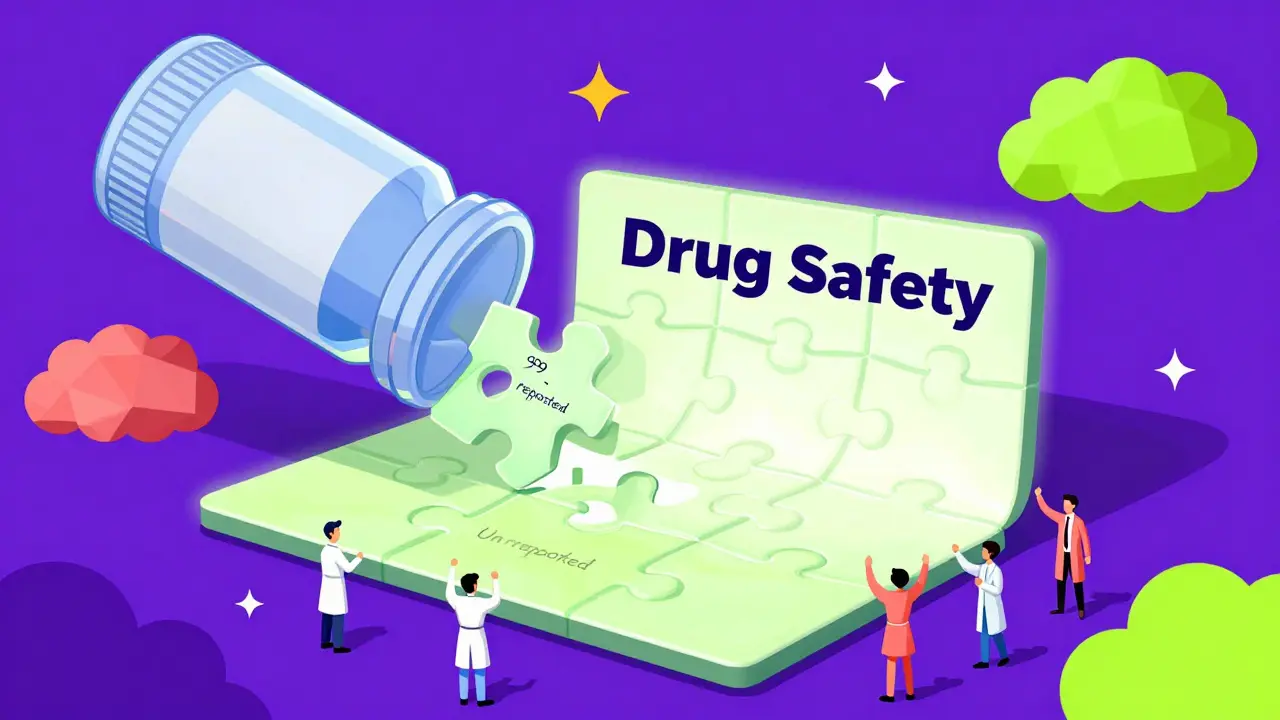
Every report adds a piece to a giant puzzle. One report might seem insignificant. But 100 reports of the same rare skin reaction? That’s a signal. That’s how the FDA found the link between SGLT2 inhibitors and Fournier’s gangrene - starting with just a handful of reports.
Dr. Janet Woodcock, former head of the FDA’s drug center, called voluntary reports "a vital source of information." Without them, we’d only know what happens in clinical trials - which involve mostly healthy adults for a few months. Real-world use reveals what happens to older people, pregnant women, or those on five different medications.
Still, underreporting is a huge problem. The Government Accountability Office says we’re missing 90-99% of events. Why? Time. Doctors say filling out forms takes too long. Patients don’t know how. The FDA is trying to fix this - with mobile apps, QR codes at pharmacies, and EHR integrations. But none of it works unless people report.
Your report doesn’t just help the FDA. It helps the next person who takes that same drug. It might save a life.
Frequently Asked Questions
Do I need proof that the drug caused the reaction to report it?
No. You don’t need to prove causality. The FDA wants to know about any unexpected medical problem that happened after taking a product - even if it might be unrelated. If you’re unsure, report it anyway. The FDA’s experts will evaluate whether it’s likely connected.
Can I report a side effect from a supplement or herbal product?
Yes. MedWatch accepts reports for dietary supplements, vitamins, CBD products, and other non-prescription items. Since these aren’t FDA-approved before sale, adverse event reports are especially important for identifying safety risks.
Will my report be kept private?
Yes. The FDA protects personal information. You can report anonymously. Even if you provide your name, your contact details are not shared with the drug manufacturer unless you give permission. Only de-identified data is used in public safety analyses.
What if I report and nothing happens? Is it worth it?
Yes. Safety monitoring is like a smoke alarm - you don’t know if it’s working until there’s a fire. One report might not change anything. But if 50 other people report the same issue, the FDA will investigate. Your report could be the one that triggers a warning, a recall, or a life-saving update to the drug label.
Can I report for someone else, like an elderly parent?
Absolutely. Family members, caregivers, and guardians can report adverse events on behalf of others. You’ll need basic info about the patient and the drug, but you don’t need legal authorization to file the report.
Next Steps
If you’ve experienced a side effect, don’t wait. Go to FDA.gov/MedWatch now and file a report. It takes less than 20 minutes. If you’re a healthcare provider, check if your EHR system has a built-in MedWatch tool. If not, ask your IT department to enable it.
Want to learn more? The FDA offers free online training through MedWatch Learn - 12 interactive modules that walk you through real-world cases. Over 42,000 providers have already taken it.
And if you’re unsure whether something counts as an adverse event? Report it anyway. Better to report and find out it wasn’t serious than to miss a warning sign that could save someone else’s life.

9 Comments
Chloe Hadland
January 23, 2026 AT 19:09I reported my weird dizziness after starting that new blood pressure med last year and got an email confirmation in like 2 weeks. felt good knowing i helped even a little. dont overthink it, just hit submit.
you dont need to be a doctor to make a difference.
Jamie Hooper
January 24, 2026 AT 08:42bro i just typed "my head felt weird after taking the gummy vitamins" and hit send. no diagnosis, no lab reports, just vibes. if the fda cant handle that then they need better interns lmao.
also why do they make the form so long?? its not a tax return.
Husain Atther
January 26, 2026 AT 08:18This is an important initiative that deserves wider awareness. Many individuals, especially in underserved communities, remain unaware that they can contribute to pharmacovigilance. The simplicity of Form 3500B is commendable, and the emphasis on voluntary reporting without requiring proof of causality lowers barriers significantly. I encourage healthcare institutions to promote this process during routine consultations.
Helen Leite
January 26, 2026 AT 14:09THEY'RE USING OUR REPORTS TO TRACK US 😳
i just reported my rash from that turmeric pill and now my facebook ads are showing me cancer screenings??
they know EVERYTHING. they're building a database of every person who ever felt weird after taking something. next they'll flag you for 'suspected non-compliance' if you took ibuprofen once.
report anyway. but wear a tin foil hat while you do it. 🫡
Izzy Hadala
January 28, 2026 AT 04:12The statistical underreporting rate cited-90–99%-is consistent with prior literature on pharmacovigilance gaps. However, the methodological challenge lies in distinguishing between true underreporting and the inherent noise in spontaneous reporting systems. The FDA's reliance on signal detection algorithms assumes a Poisson distribution of adverse events, which may not hold for low-incidence, high-impact reactions. Further validation using real-world evidence from EHRs and claims databases would strengthen the reliability of MedWatch-derived signals.
Marlon Mentolaroc
January 28, 2026 AT 09:55you know what's wild? people report their side effects and then act like the FDA is gonna magically fix it. nah. they just add a tiny footnote to the drug label that no one reads. i had a friend get hospitalized from a supplement. reported it. two years later, it's still on the shelf. same packaging. same ingredients. nothing changed.
so yeah. report. but don't expect justice. just hope your report is the 47th one that finally makes them blink.
Phil Maxwell
January 30, 2026 AT 05:08i reported my chronic fatigue after starting metformin. didn't think much of it. got the email. forgot about it. then last month my endo said, 'oh yeah, we've been seeing more of these cases lately.' turns out, i wasn't alone.
weird how one quiet report can just... add up.
Shelby Marcel
January 31, 2026 AT 03:33wait so i can report my weird dream after taking zzzquil?? i had one where i was a dolphin in a pharmacy??
ok i just did it. typed "bad dreams after taking sleep aid" and clicked send. fda pls take my dream seriously. i need to know if im the only one.
blackbelt security
January 31, 2026 AT 19:41If you’ve ever taken a pill and felt something off, you owe it to the next person to report it. Doesn’t matter if you’re scared, confused, or think it’s "just a little thing." That little thing might be the first clue someone else needs to stay alive. Do it. Now. No excuses.