
Medication Hair Loss Risk Calculator
Assess Your Medication Risk
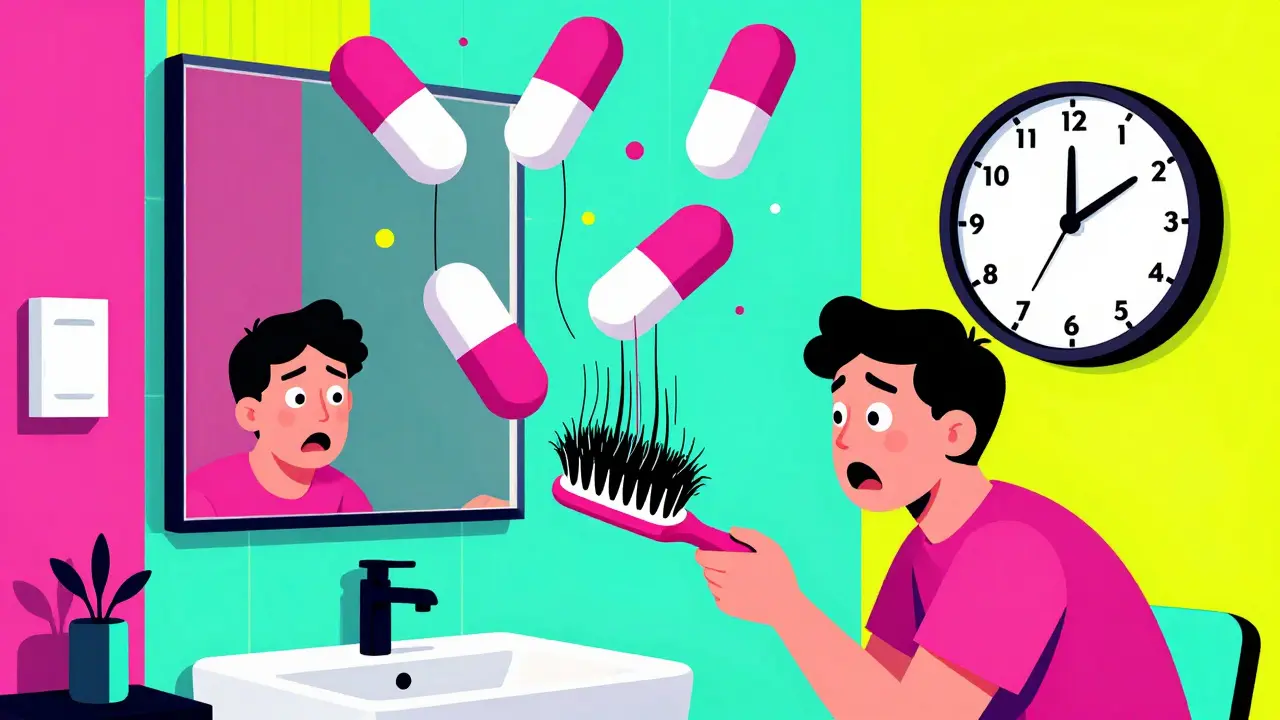
It’s not unusual to wake up one day and find more hair in your brush, on your pillow, or clogging the shower drain than usual. If you’ve recently started a new medication, that sudden shedding might not be stress or aging-it could be your medicine. Medication-induced hair loss is more common than most people realize, and while it’s often alarming, it’s rarely permanent. The good news? You don’t have to just wait it out. Knowing what’s happening and what to do next can make all the difference.
How Medications Cause Hair Loss
Not all hair loss is the same. When drugs trigger it, they usually interfere with one of two phases in your hair’s natural cycle: the growing phase (anagen) or the resting phase (telogen). Most medication-related hair loss falls into the second category-telogen effluvium. This means your hair follicles get pushed into resting mode too early, and weeks later, they shed all at once. You won’t notice it right away. It typically takes 2 to 4 months after starting a new drug before you see the shedding. That delay is why people often blame stress, diet, or hormones, not their pills. Some drugs, especially chemotherapy agents, cause something called anagen effluvium. This is more dramatic. Instead of gently falling out, hair breaks off at the root during active growth. This happens fast-sometimes within days. You might wake up with clumps of hair in your hand. It’s scary, but it’s also the type most likely to grow back quickly once treatment ends.Common Medications That Cause Hair Loss
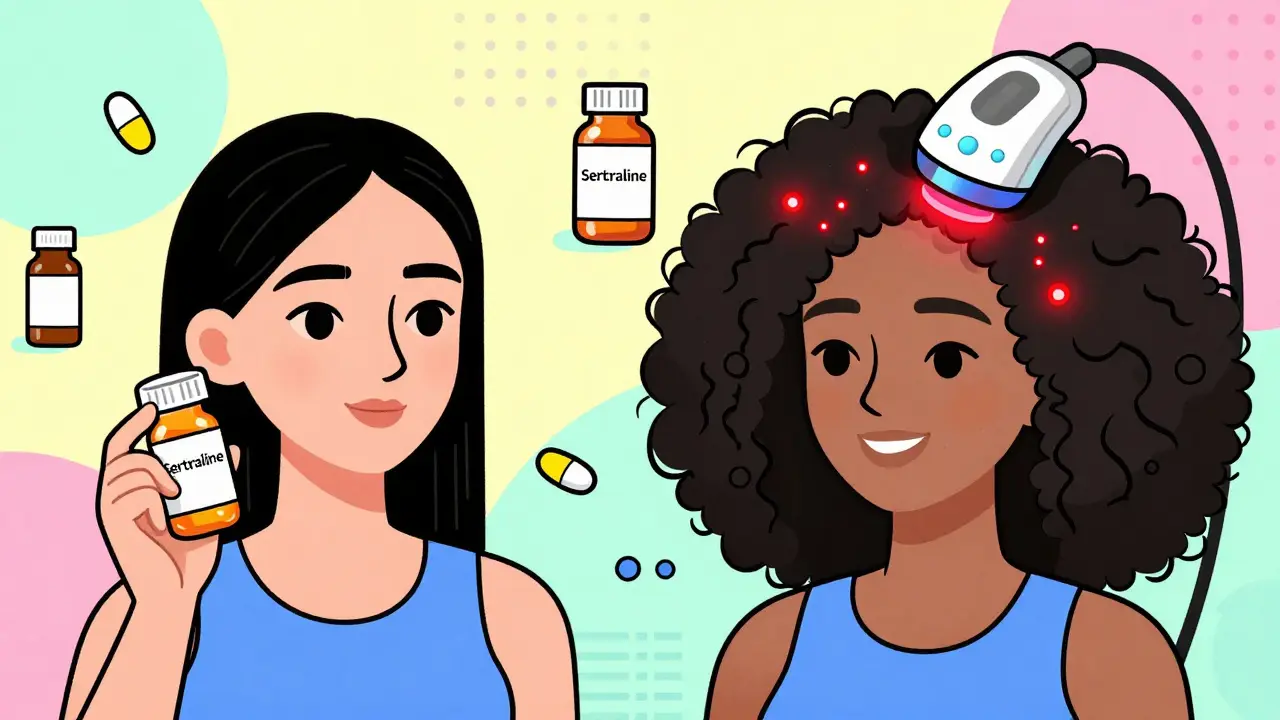
You might be surprised how many everyday drugs can trigger this. Here are the most common culprits, backed by clinical data:- Antidepressants like sertraline (Zoloft), fluoxetine (Prozac), and paroxetine (Paxil) affect about 5-7% of users. The hair loss usually starts around 3 months in.
- Blood pressure meds-especially beta-blockers like metoprolol and ACE inhibitors like lisinopril-can cause telogen effluvium in up to 3% of people.
- Birth control pills and hormone therapies often trigger shedding in women who are genetically sensitive to hormonal shifts. Switching formulations sometimes helps.
- Arthritis drugs like methotrexate and leflunomide cause hair thinning in 1-10% of users. Folic acid supplements can reduce the severity, but won’t stop it completely.
- Oral retinoids (like isotretinoin for acne) affect nearly 18% of users. Hair loss here is often linked to vitamin A toxicity and usually reverses after stopping.
- Chemotherapy drugs are the most aggressive. Up to 65% of patients lose most or all of their hair. But this is temporary, and regrowth usually begins within weeks after treatment ends.
It’s important to remember: not everyone on these drugs loses hair. Genetics play a big role. If someone in your family has a history of thinning hair, you might be more at risk.
What to Do If You Suspect Your Medication Is the Cause
The first thing? Don’t stop taking your medicine on your own. Talk to your doctor. They’ll help you figure out if the timing matches up. The rule of thumb dermatologists use? If you started a new drug within the last 7 months and hair loss began after that, it’s a strong candidate. Your doctor might suggest one of three paths:- Wait and watch. For telogen effluvium, 85% of cases resolve on their own within 6 months after stopping the drug. If the medication is essential (like for high blood pressure or depression), your doctor may just want you to give it time.
- Switch medications. If you’re on a beta-blocker and losing hair, switching to a different class like an ARB (e.g., losartan) might help. For antidepressants, bupropion (Wellbutrin) has a lower risk of hair loss than SSRIs.
- Add a treatment. While waiting for your body to recover, you can support regrowth.
Proven Treatments to Help Hair Grow Back
Once you’ve ruled out urgent health risks, these are the most effective, science-backed options:- Minoxidil (Rogaine) is the gold standard. A 5% solution applied twice daily to the scalp increases hair density in 40-50% of users after 6 months. It works for both men and women. But here’s the catch: you have to use it consistently. About 65% of people quit by month 6 because of the initial shedding (which is normal) or the messiness of applying it twice a day.
- Low-level laser therapy (LLLT) devices like the iRestore Elite or Capillus82 are FDA-cleared. They use red light to stimulate follicles. Studies show 65-90% of users see measurable improvement after 26 weeks of daily 20-30 minute sessions. They’re not cheap, but they’re non-invasive and safe.
- Nutritional support matters more than you think. Dermatologists often recommend:
- Biotin: 5,000 mcg daily
- Zinc: 15 mg daily
- Iron: Only if your ferritin level is below 70 ng/mL
Don’t just grab any supplement. Look for ones with clinically studied doses. Nutrafol, for example, contains marine collagen (5,000 mg), ashwagandha (390 mg), and curcumin (250 mg). In Amazon reviews from over 3,400 users, 63% reported visible improvement after 6 months.
Special Cases: Chemotherapy and Scalp Cooling
If you’re undergoing chemo, hair loss is expected-but it doesn’t have to be total. Scalp cooling systems like the DigniCap have been shown to retain 50-65% of hair in breast cancer patients receiving taxane-based drugs. The process involves wearing a tight, chilled cap for 15 minutes before, during, and 30 minutes after each infusion. It’s uncomfortable (many rate the pain at 7.2/10), and it doesn’t work for all chemo types, but for those who can tolerate it, the difference is huge.There’s also new research on topical finasteride foam (Breezula). Unlike the oral version, it doesn’t enter your bloodstream much, so it avoids sexual side effects. In trials, it reduced hair loss progression by 45% over 12 months with only 0.5% reporting side effects-compared to 3.5% with oral finasteride.
What Doesn’t Work (And Why)
There’s a lot of noise out there. Avoid these myths:- Shampoos that claim to “block DHT”-they don’t penetrate deeply enough to matter.
- Essential oils alone-while some (like rosemary) show mild promise in small studies, they’re not enough on their own.
- Waiting too long to act-the longer you wait after stopping the drug, the harder it becomes to reverse damage. Start support treatments within 3 months if shedding continues.
When to See a Dermatologist
If you’ve been shedding for more than 6 months after stopping the medication, or if your scalp is showing patches of thinning, redness, or scaling, see a dermatologist. They can rule out other causes like alopecia areata or scalp infections. A simple pull test or a trichogram (microscopic hair analysis) can confirm if the issue is still drug-related or something else.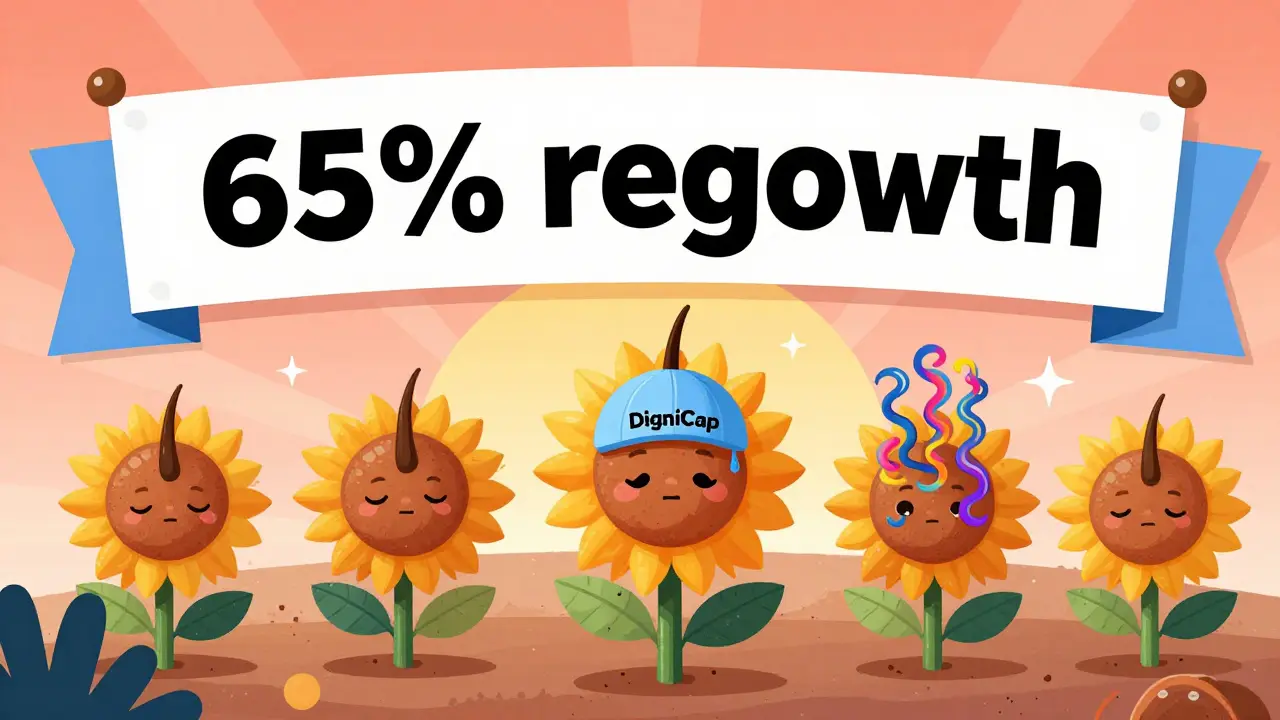
Real Stories, Real Recovery
On Reddit’s r/HairLoss community, 68% of users who stopped antidepressants reported full regrowth within 7-9 months. One woman shared that after switching from sertraline to bupropion, her hair stopped falling out in 2 months and started growing back visibly by month 5. Another man, on methotrexate for psoriasis, added folic acid and started using minoxidil. He lost 30% of his hair at first, but after 8 months, he was back to 80% of his original thickness.The emotional toll is real. In one survey, 82% of people said hair loss made them feel less confident. 44% avoided social events. But the recovery stories outnumber the despair. Hair doesn’t grow back overnight, but it almost always does-if you give it time and the right support.
What to Expect During Recovery
Regrowth isn’t linear. You might notice:- First, tiny, fine hairs (peach fuzz) appearing-this is normal.
- Then, shedding again around month 3-4. That’s just old hair making way for new growth.
- By month 6, you should see thicker strands.
- Full recovery often takes 9-12 months.
Texture might change. Hair could come back curlier, straighter, or a shade lighter. That’s common after chemo or long-term medication use. It usually settles back into your natural pattern within a year.
Can medication-induced hair loss be permanent?
In most cases, no. Over 90% of medication-related hair loss is reversible once the drug is stopped or changed. Permanent loss is rare and usually only happens if the follicles are damaged by long-term use of extremely aggressive drugs or if an underlying condition like scarring alopecia is also present. If hair hasn’t returned after 12-18 months, see a dermatologist to investigate further.
How long after stopping a drug does hair start to grow back?
For telogen effluvium, shedding usually stops within 3-6 months after stopping the drug, and visible regrowth begins around 4-6 months. For chemotherapy-induced anagen effluvium, regrowth can start as early as 3-6 weeks after the last treatment. The timeline depends on the drug, your metabolism, and how long you were on it.
Does minoxidil work for drug-induced hair loss?
Yes, it does. Minoxidil isn’t designed specifically for drug-induced loss, but it works by stimulating follicles regardless of the trigger. Studies show 40-50% improvement in hair density after 6 months of consistent use. It’s especially helpful if you’re waiting for your body to recover naturally.
Can supplements prevent medication hair loss?
Supplements like biotin, zinc, and iron can support healthy hair growth, but they won’t prevent hair loss caused by most medications. The exception is folic acid with methotrexate-it reduces severity by about 25%. For other drugs, supplements help recovery, not prevention. Don’t rely on them as a shield.
Is it safe to use finasteride for drug-induced hair loss?
Finasteride is approved for male pattern baldness, not drug-induced loss. But if your hair loss has an androgen component (like in women with PCOS or men with genetic thinning), it can help. Oral finasteride has side effects like sexual dysfunction in 3-5% of users. Topical finasteride foam (Breezula) is now available and has far fewer side effects-only 0.5% in trials. Talk to your doctor before starting.
Should I get a blood test if I’m losing hair from medication?
Yes. While the medication is likely the main cause, low iron, thyroid issues, or vitamin D deficiency can make hair loss worse. Ask your doctor to check ferritin (iron stores), TSH (thyroid), and vitamin D levels. Correcting these can speed up regrowth-even if you’re still on the drug.
