
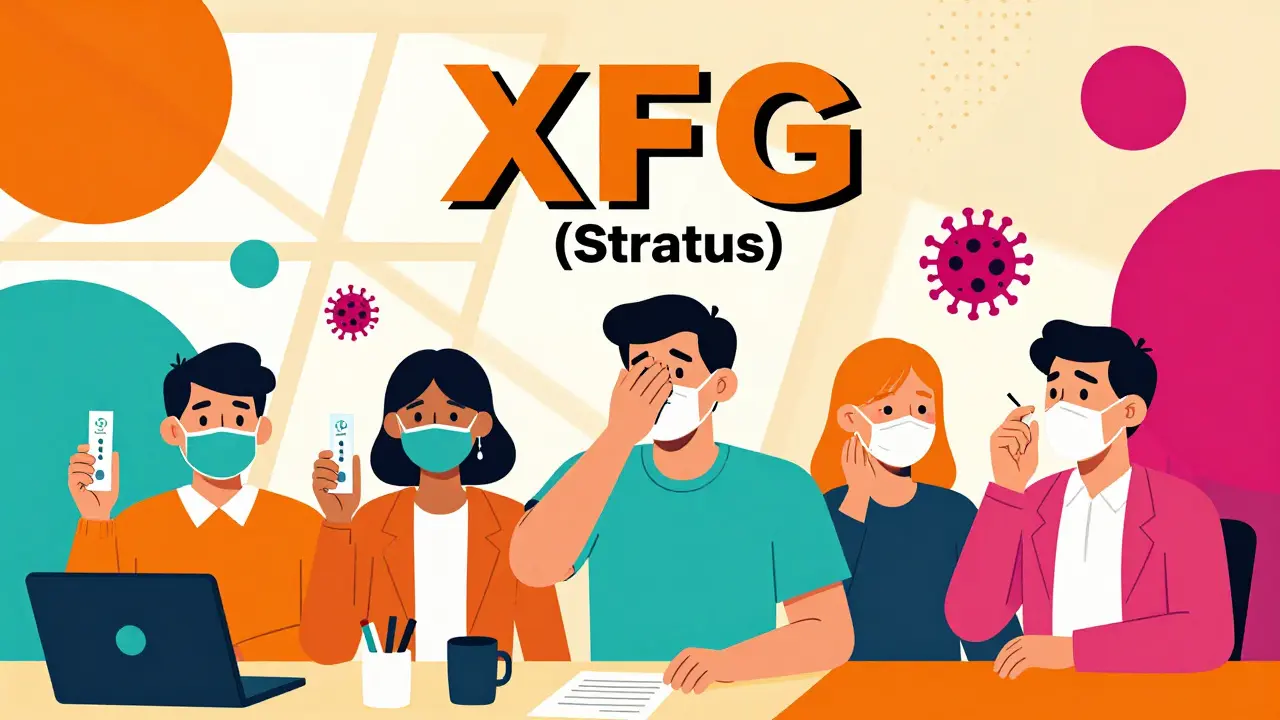
It’s February 2026, and COVID-19 isn’t gone-it’s changed. The virus that shook the world in 2020 is now a seasonal player, like the flu. But that doesn’t mean it’s harmless. People are still getting sick, still ending up in hospitals, and still dealing with long-term effects. The good news? We know a lot more now. We have better vaccines, clearer data on variants, and smarter ways to treat it. This isn’t about fear anymore. It’s about staying informed and protected.
What Symptoms Are You Likely to See Right Now?
The old list of symptoms-loss of taste, high fever, dry cough-isn’t the full picture anymore. The dominant variant as of late 2025 is XFG, also called Stratus. It’s responsible for 85% of cases in the U.S. and looks a lot like a bad cold. Most people report congestion, sore throat, headache, muscle aches, and a low-grade fever. Some get a dry cough. A few have nausea or diarrhea.
There’s another variant floating around-Nimbus-that’s known for one very specific symptom: a sharp, stabbing sore throat. It’s not the most common, but if you wake up with throat pain so intense it hurts to swallow, that’s a red flag. It doesn’t mean you have something worse than COVID. It just means you have Nimbus.
And here’s something many don’t talk about: long COVID. About 1 in 5 people who’ve had COVID report symptoms lasting three years or more. Fatigue, trouble breathing, brain fog, insomnia, and loss of smell or taste are the most common. Hospitalized patients are at higher risk. If you’ve had it before and still feel off, you’re not imagining it. It’s real, and it’s being studied.
Which Variants Are Actually Circulating?
The original strain? Gone. Delta? Gone. Even the early Omicron variants? All replaced. Right now, it’s all about sublineages of Omicron. XFG (Stratus) is king. Then there’s NB.1.8.1 at 7%, and NW.1 at 3%. Others like XEC, XDV.1, and LF.7 are still out there but rare.
What makes XFG different? It’s more contagious. It spreads faster in crowded places-offices, schools, public transit. But it’s less likely to cause severe lung damage than earlier versions. That’s why so many people think it’s just a cold. But don’t be fooled. Even mild cases can land you in bed for a week. And if you’re older, immunocompromised, or have underlying conditions, it can still turn dangerous.
Experts like Dr. Mark Rupp from Nebraska Medicine say we’re seeing more cases now than in early 2025. “We have a lot of disease out there,” he said. “People should continue to be careful.”
What Vaccines Are Available in 2026?
The 2025-2026 vaccines are here. They’re not the same as the ones you got in 2023. They’re updated. The CDC recommends everyone 6 months and older get one dose every year, ideally in early fall before winter surges. If you had COVID recently, wait at least three months after symptoms or a positive test before getting the new shot.
There are three main brands:
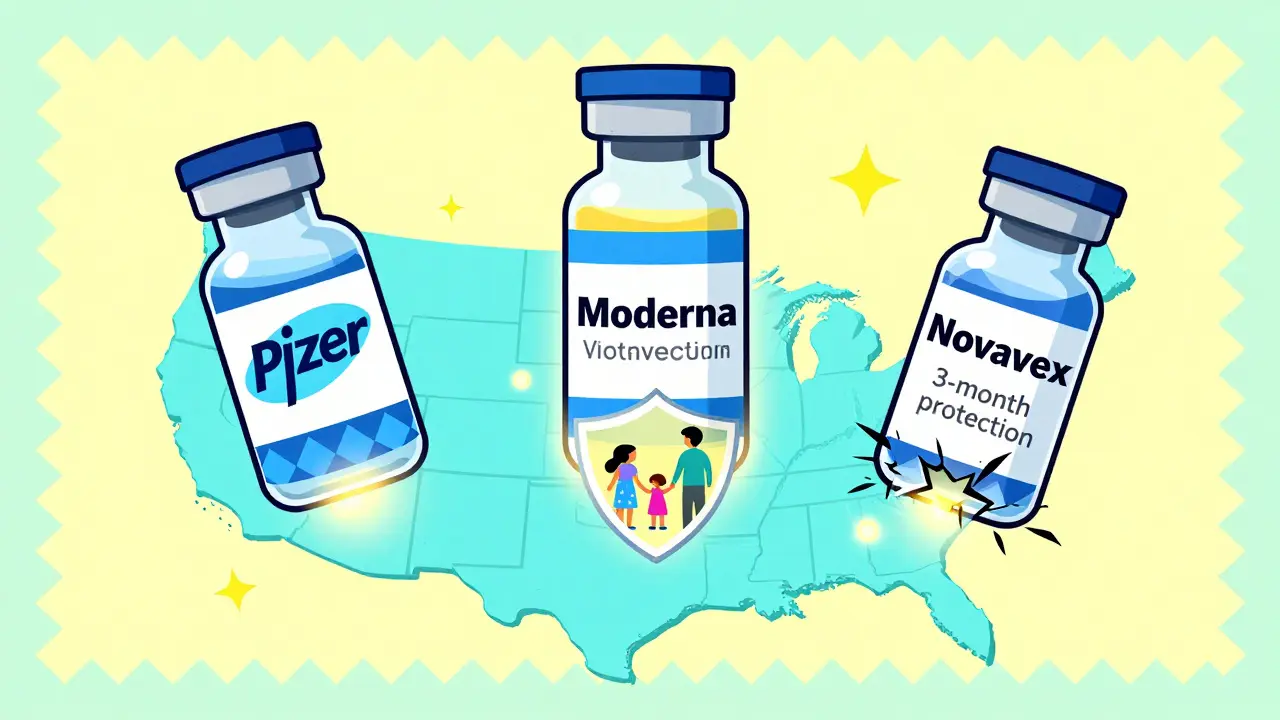
- Pfizer and Moderna: Both target KP.2, a strain that was common in early 2024. They’re mRNA vaccines and work fast.
- Novavax: This one targets JN.1, a different Omicron subvariant. But here’s the surprise: even though it’s designed for JN.1, lab tests show it also protects well against KP.2 and KP.3. It’s a protein-based vaccine, so it’s a good option for people who prefer not to get mRNA.
These aren’t perfect. You can still catch COVID after vaccination. But they’re excellent at keeping you out of the hospital. Ohio State University Health found the strongest protection lasts about three months after the shot, then slowly drops. That’s why annual shots matter.
Side effects? Most people report nothing serious. According to June 2025 data from Healthgrades, 87% of people had mild or no side effects. The most common: sore arm (28%), fatigue (32%), and headache (19%).
How Is COVID Treated Today?
If you test positive, treatment depends on your risk level. Healthy young adults? Rest, fluids, and over-the-counter meds for fever and pain are usually enough. Most recover in 5 to 10 days.
But if you’re over 65, pregnant, diabetic, or have heart or lung disease, you need to act fast. Antiviral pills like Paxlovid (nirmatrelvir/ritonavir) are still the gold standard. They cut your risk of hospitalization by nearly 90% if taken within five days of symptoms. Don’t wait. Call your doctor the moment you feel sick.
Other options include remdesivir (given as an IV infusion) and bebtelovimab, though the latter is less commonly used now due to variant changes. Monoclonal antibodies like clesrovimab, approved in June 2025, are now used for RSV, not COVID-so they’re not part of the standard toolkit anymore.
There’s no magic cure. Antibiotics don’t work. Ivermectin doesn’t work. Hydroxychloroquine doesn’t work. Stick to what’s proven. If your doctor prescribes something, ask for the evidence. Don’t trust TikTok advice.
Why Vaccines Still Matter-Even If You’ve Had It Before
A lot of people think, “I had COVID in 2022. I’m good.” Not true. Immunity from infection fades. And the virus changes too fast for natural immunity to keep up. A 2025 study in the Journal of Medical Virology showed people who got infected before 2023 had almost no protection against XFG or Nimbus.
Vaccines don’t just protect you. They protect your family, your coworkers, your elderly neighbor. That Reddit user who said, “I got Stratus after my October 2024 booster-just three days of congestion. My unvaccinated neighbor needed oxygen”? That’s the story now. Vaccines aren’t about never getting sick. They’re about not getting *really* sick.
And the data backs it up. In 2025, hospitals saw 1,247 daily COVID hospitalizations-down from summer peaks, but still 23% higher than January 2025. Almost all of those patients were unvaccinated or hadn’t had a shot in over a year.
What Should You Do Right Now?
Here’s the simple plan:
- Get your 2025-2026 vaccine if you haven’t already. Don’t wait until you’re sick.
- If you feel symptoms-sore throat, congestion, fever-take a rapid test. Don’t guess.
- If positive and high-risk, contact your doctor within 24 hours for antiviral options.
- Wear a mask in crowded indoor spaces, especially if you’re around vulnerable people.
- Stay home if you’re sick. Even if it’s mild. You’re still contagious.
There’s no need to live in fear. But there’s every reason to be smart. We’ve moved past panic. Now we’re in the phase of smart management. Annual vaccines, quick testing, and timely treatment are the new normal.
What About Long COVID?
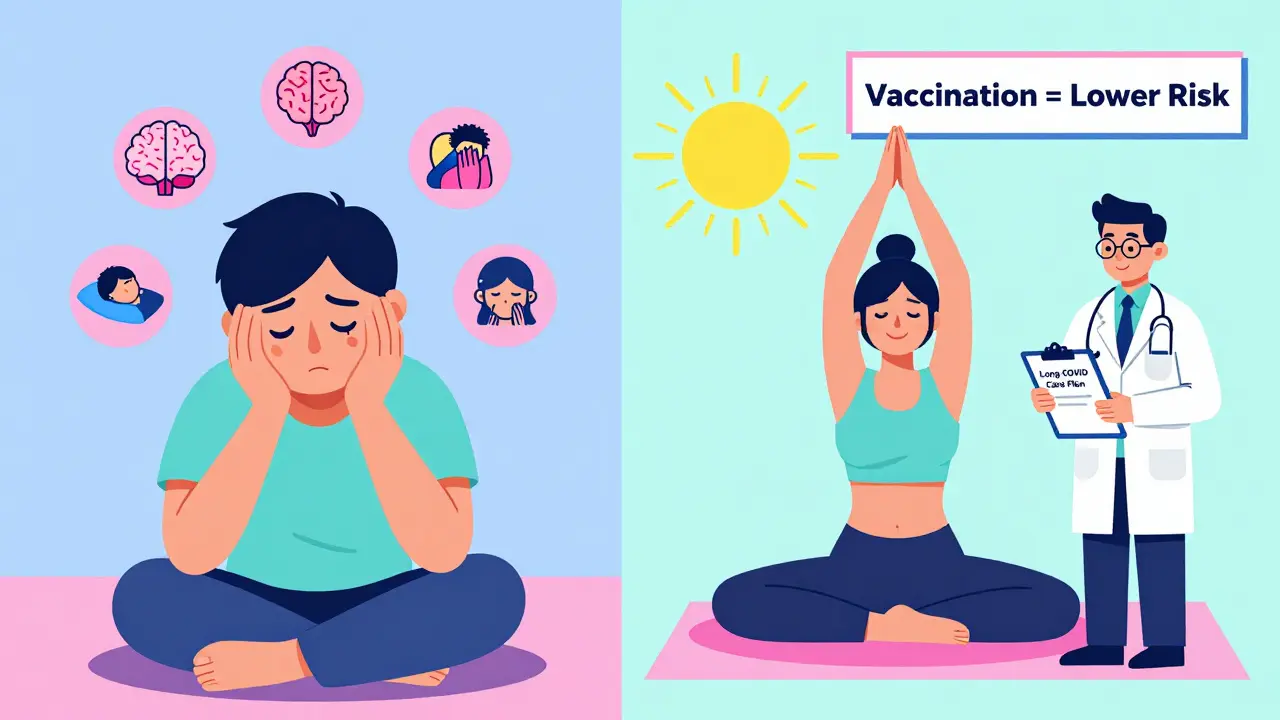
It’s not rare. It’s not imagined. One in five people who’ve had COVID still deal with symptoms years later. Fatigue. Brain fog. Trouble breathing. Sleep problems. Anxiety. It’s not just physical-it’s mental, too.
Doctors are starting to treat it like a chronic condition. Physical therapy, cognitive rehab, pacing strategies, and mental health support are now part of standard care. If you’re struggling, don’t wait for it to go away on its own. Talk to your doctor. There are programs, support groups, and even clinical trials helping people rebuild.
And if you’ve never had it? Vaccination is your best shield against long-term damage. The risk of developing long COVID is significantly lower if you’re vaccinated before infection.
Are the new COVID vaccines safe?
Yes. The 2025-2026 vaccines use the same proven technology as earlier ones. Over 400 million doses have been given in the U.S. since 2020. Side effects are usually mild and short-lived. Serious reactions are extremely rare. The CDC and FDA continue to monitor safety closely.
Can I still get COVID even if I’m vaccinated?
Yes. No vaccine prevents infection 100%. But vaccinated people are far less likely to get severely ill, need hospital care, or die. Breakthrough infections tend to be milder and shorter. The goal isn’t to stop every case-it’s to stop the worst outcomes.
Which vaccine should I choose: Pfizer, Moderna, or Novavax?
All three are effective. Pfizer and Moderna target KP.2. Novavax targets JN.1 but also protects well against KP.2 and KP.3. If you’re comfortable with mRNA, either Pfizer or Moderna works. If you prefer a non-mRNA option, Novavax is a solid choice. Talk to your doctor if you have allergies or specific health concerns.
Do I need a booster if I had COVID recently?
Yes, but wait. The CDC recommends waiting at least three months after your infection or positive test before getting the updated vaccine. This gives your immune system time to respond naturally, then boosts it with the vaccine for longer protection.
Is COVID still a threat in 2026?
It’s not a pandemic anymore, but it’s still a threat. It causes hospitalizations, long-term health issues, and deaths every year-especially among older adults and those with chronic conditions. Annual vaccination, testing, and smart precautions keep the risk low. Ignoring it isn’t bravery-it’s unnecessary risk.

12 Comments
pradnya paramita
February 3, 2026 AT 23:46The XFG variant's immune evasion profile is quite concerning-its spike protein mutations (S:K417N, S:E484K) significantly reduce neutralizing antibody binding, especially in individuals with pre-2023 immunity. The KP.2-targeted mRNA vaccines still induce robust T-cell responses, which is why hospitalization rates remain low despite high transmissibility. For long COVID, emerging biomarkers like elevated IL-6 and autoantibodies against G-protein-coupled receptors are now being used in clinical stratification. If you're experiencing persistent fatigue, consider a cardiopulmonary exercise test (CPET) and autonomic nervous system evaluation-many centers now offer specialized long COVID clinics.
Jamillah Rodriguez
February 5, 2026 AT 10:53so like... i got the new shot last week and now my arm feels like it’s been in a blender? 😩 i just wanted to nap, not become a lab rat. also why does everyone act like this is the end of the world? it’s just a cold with extra steps. 🙄
Roshan Gudhe
February 6, 2026 AT 23:05It’s interesting how we’ve shifted from panic to pragmatism. The virus didn’t disappear-it evolved, and so did we. We used to treat it like a monster. Now we treat it like a seasonal tenant. But the real question isn’t whether the vaccines work-it’s whether we’ve learned to live with uncertainty. Long COVID isn’t just a medical condition; it’s a social one. People who suffer from it are often dismissed as ‘overreacting.’ Yet their pain is real, and their resilience deserves more than just a footnote in a CDC report. Maybe the next evolution isn’t in the virus… but in how we care for each other.
Rachel Kipps
February 8, 2026 AT 19:36i just wanted to say thank you for this post. i had covid in 2021 and still get brain fog sometimes. no one believed me back then. now i feel seen. 🙏
Shelby Price
February 8, 2026 AT 21:27so… if i got the 2024 booster and then got infected in late 2025, do i still need the 2025-2026 shot? or is my body like, ‘we good’? 🤔
Jesse Naidoo
February 9, 2026 AT 13:06they’re lying. the vaccines are just a cover-up for the real agenda. you think they’d spend billions on boosters if it wasn’t about control? look at the side effect reports-doctors are scared to speak up. i know people who got paralyzed after the shot. they just delete the posts. 🤫
Lorena Druetta
February 11, 2026 AT 06:31Thank you for this comprehensive and compassionate overview. It is imperative that we continue to prioritize evidence-based public health measures. Vaccination remains the most effective tool to mitigate severe outcomes. Let us not underestimate the collective responsibility we bear toward our most vulnerable populations. With gratitude and care, we move forward.
Zachary French
February 12, 2026 AT 19:33bro the whole thing is a scam. they made a virus to sell vaccines. now they’re just recycling the same mRNA sludge every year like it’s a new iPhone. i got the last one and my dog got sick. coincidence? i think not. also, who’s paying the CDC? 🤑
Daz Leonheart
February 13, 2026 AT 18:43you got this. if you’re feeling tired after the shot, rest. if you’re worried about long covid, talk to your doc. small steps matter. you’re not alone in this. 🤝
Coy Huffman
February 14, 2026 AT 21:21the thing i love about this post is how it doesn’t sugarcoat but also doesn’t scare. it’s like… yeah, it’s still here, but we’ve got tools now. it’s not perfect, but it’s progress. reminds me of how we handled flu seasons in the 90s-same energy, different tech. 🌱
Kunal Kaushik
February 16, 2026 AT 02:22just got my shot today. sore arm, no fever. felt like i did a workout. i’ll take that over a week in bed any day. 🙌
pradnya paramita
February 17, 2026 AT 08:16Replying to @7452: Yes, you still need the 2025-2026 shot. Hybrid immunity (infection + vaccination) provides broader protection, but the KP.2 component in the new vaccine is critical-your prior infection likely targeted an obsolete strain. The CDC’s 3-month waiting period after infection is designed to maximize immune maturation. Delaying beyond that risks suboptimal response. Also, consider checking your neutralizing antibody titers if you’re immunocompromised-some clinics offer post-vaccine serology panels.