
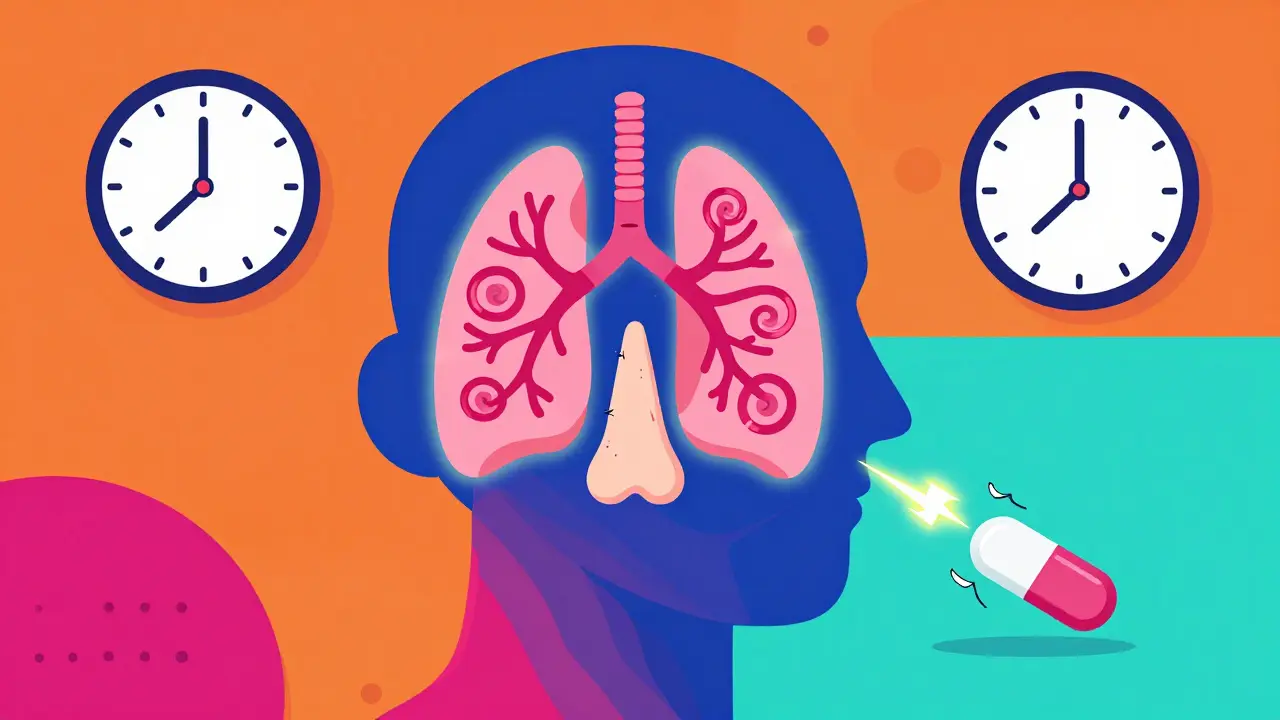
What Is Aspirin-Exacerbated Respiratory Disease?
Aspirin-Exacerbated Respiratory Disease, or AERD, isn’t just a bad reaction to painkillers. It’s a chronic condition that hits adults between 20 and 50, mostly women, and it ties together three serious problems: asthma, chronic nasal polyps, and severe breathing reactions when taking common pain relievers like aspirin or ibuprofen. This trio is also called Samter’s Triad, named after the doctors who first mapped it out in the 1960s.
Unlike typical allergies, AERD doesn’t involve IgE antibodies or hay fever-style triggers like pollen. Instead, it’s rooted in how your body handles inflammation. When you take aspirin or other NSAIDs, your body overproduces leukotrienes - powerful inflammatory chemicals that swell your airways, clog your sinuses, and trigger asthma attacks. That’s why even if you avoid these drugs, your symptoms keep getting worse. The disease doesn’t wait for triggers; it keeps burning on its own.
How Do You Know If You Have AERD?
There’s no single blood test or scan that confirms AERD. Diagnosis comes down to your story - your symptoms, your history, and what happens when you’re exposed to NSAIDs.
If you’ve had asthma since adulthood, along with recurring nasal polyps that keep coming back after surgery, and you’ve ever had a bad reaction to aspirin, ibuprofen, or naproxen - you’re likely dealing with AERD. These reactions usually hit fast: within 30 to 120 minutes after swallowing the pill. You might get a stuffy nose, wheezing, chest tightness, or even full-blown asthma requiring emergency care.
When the history isn’t clear, doctors use a supervised aspirin challenge to confirm it. This isn’t something done at a regular clinic. It’s a controlled test in a hospital or allergy center with resuscitation equipment on standby. You start with a tiny dose - 20 to 30 milligrams - and it’s doubled every 90 to 120 minutes until you hit 325 mg or react. Most people complete it in 5 to 6 hours. If your breathing drops, your nose swells, or your peak flow falls by 20%, it’s confirmed.
Supporting clues include high eosinophils in your blood (over 500 cells/μL) and elevated leukotriene E4 in your urine. These aren’t diagnostic on their own, but they add weight when combined with your symptoms.
What Happens If You Just Avoid Aspirin and NSAIDs?
A lot of patients think avoiding NSAIDs will fix everything. It doesn’t. AERD keeps progressing even if you never touch another pill.
Nasal polyps grow back. Asthma gets harder to control. Your sense of smell fades - sometimes completely. One study found 78% of patients felt their daily life was severely limited by constant nasal congestion. About 45% needed at least one sinus surgery within two years of diagnosis.
Avoiding NSAIDs is still important - not because it cures AERD, but because it prevents dangerous flare-ups. But if you only avoid the drugs, you’re managing symptoms, not the disease. That’s why most patients need more than just avoidance.
Medical Treatments: What Actually Works?
There are three main layers of treatment: nasal rinses, inhalers, and targeted drugs.
High-volume steroid sinus rinses are the first-line defense. Using a squeeze bottle with 50 to 100 mg of budesonide, twice a day, can shrink polyps by 30 to 40% in just eight weeks. This isn’t a spray - it’s a full rinse that floods your sinuses. Most patients report better breathing and less post-nasal drip.
Intranasal sprays like fluticasone help too, but they’re not as powerful as rinses. They’re good for maintenance, especially if you can’t do rinses daily.
For asthma, standard treatment is a combination inhaler: fluticasone and salmeterol, two puffs twice a day. This improves lung function by 15 to 20% in most patients. But if your asthma is still flaring, you’re probably still inflamed deep in your airways.
That’s where leukotriene blockers come in. Zileuton (taken four times a day) cuts leukotriene production by 75% in two weeks. About 28% of users call it “extremely effective.” Montelukast (one pill a day) helps some, but only 15% report big improvements. It’s cheaper, but less powerful.
For severe cases, biologics are changing the game. Dupilumab, given as a shot every two weeks, reduces polyp size by 55% and improves quality of life scores by 40% in 16 weeks. Mepolizumab, given monthly, cuts eosinophil counts by 85% and reduces the need for repeat surgeries by 57%. These drugs don’t cure AERD, but they can stop the spiral - if you can afford them. Many patients struggle with cost, especially those under $50,000 a year in income.
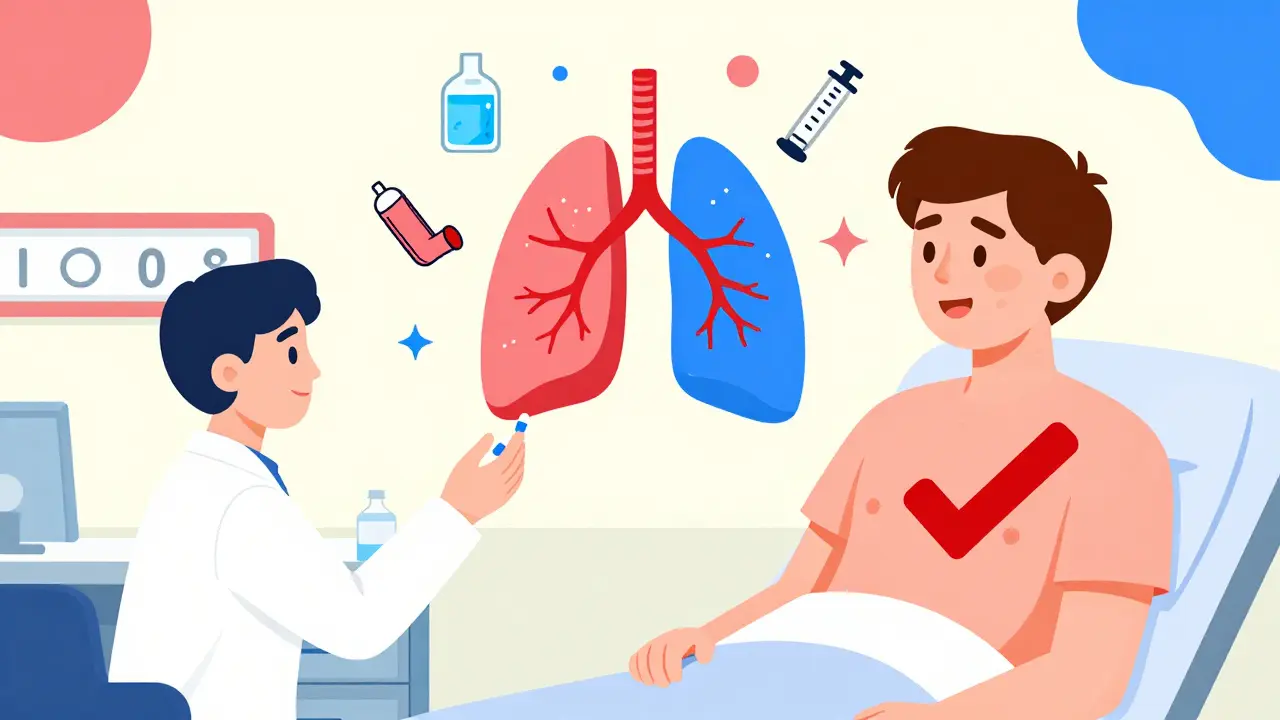
Aspirin Desensitization: The Game-Changer
If you’ve had sinus surgery and your polyps keep coming back, you need to hear this: aspirin desensitization is the most effective long-term treatment for AERD.
The process starts like the diagnostic challenge - but it’s done with one goal: to make your body tolerate aspirin. You take increasing doses over two days, just like in the test, until you reach 325 mg without a reaction. Over 98% of patients make it through.
Then comes the hard part: you take 650 mg of aspirin twice a day - for life. No skipping. No breaks. Missing just two or three doses means you lose your tolerance and have to go through the whole process again.
But the payoff is huge. People who stick with it see:
- Polyp recurrence drop from 85% to 35% after two years
- Need for oral steroid bursts fall from 4.2 to 1.1 per year
- Improved sense of smell - 82% report major gains, with smell test scores jumping from 12.4 to 23.7 out of 40
- Less asthma flares, fewer ER visits, and better sleep
Studies show it’s cost-effective too. Each desensitization costs about $12,500 more than standard care - but it saves $18,500 per avoided sinus surgery. Over a lifetime, that’s tens of thousands saved.
Who Shouldn’t Try Desensitization?
It’s not for everyone. If you have severe heart disease, active peptic ulcers, or a history of stomach bleeding, aspirin can be dangerous. If you can’t commit to taking two pills every day, every single day - don’t start. You’ll end up worse off.
About 15% of potential candidates are ruled out because of these risks. Also, if you’ve had multiple failed surgeries or are already on high-dose biologics, your doctor might recommend skipping desensitization and focusing on meds instead.
Why Surgery Alone Isn’t Enough
Functional endoscopic sinus surgery (FESS) is common for AERD patients. It clears the blockage, opens the sinuses, and gives you immediate relief.
But here’s the truth: without aspirin desensitization, 60 to 70% of patients get polyps back within 18 months. Surgery fixes the damage - but it doesn’t stop the inflammation that causes it.
When you combine FESS with daily aspirin therapy, recurrence drops to 25 to 30% at two years. That’s a 65% reduction in polyp regrowth compared to surgery alone. Experts call this combo the gold standard. If you’re scheduled for surgery, ask your doctor if desensitization is right for you - before the operation.
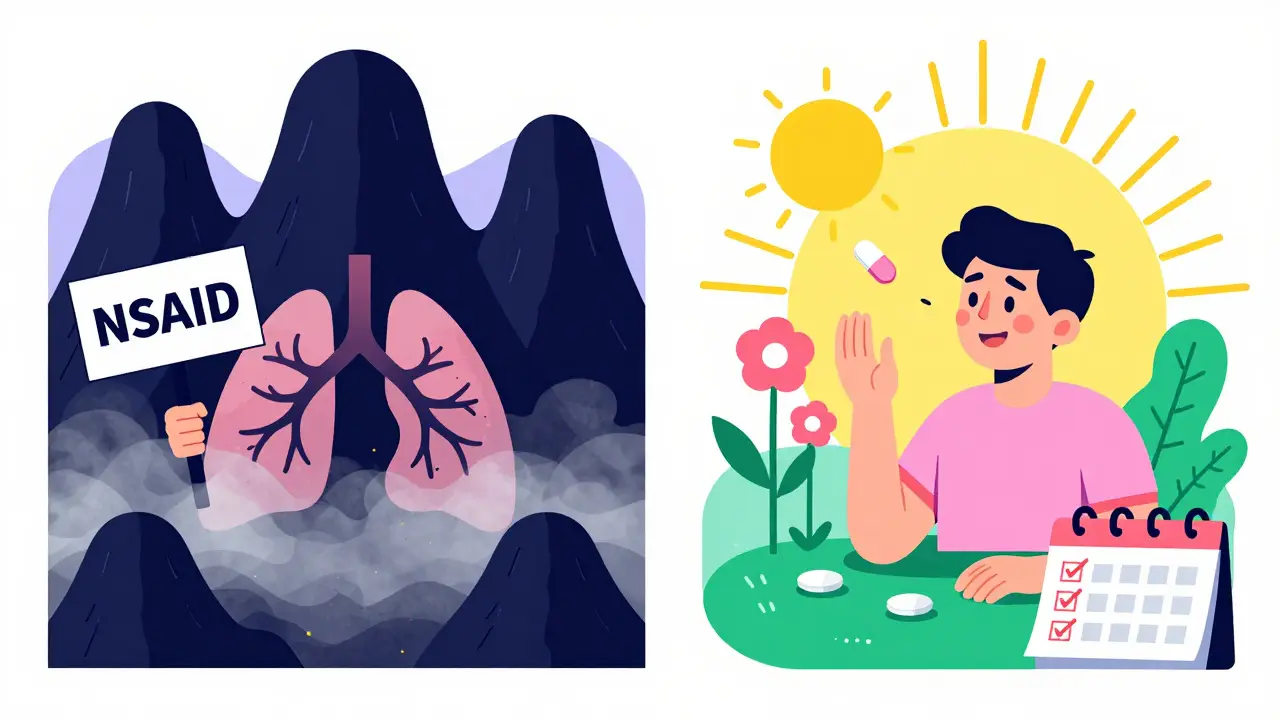
Real Patient Experiences
Online communities like r/SamtersTriad and AERD Warriors are full of stories. One man said he hadn’t smelled coffee in 12 years. After desensitization, he cried the first time he smelled it again. Another woman said she stopped using her rescue inhaler for the first time in five years.
But it’s not all easy. About a third of patients say the desensitization process itself is brutal - nasal congestion, wheezing, and fatigue for hours. Some get stomach pain from daily aspirin and need to switch to enteric-coated versions or add a proton pump inhibitor.
And hidden NSAIDs? Big problem. Cold medicines, menstrual pain relievers, topical gels - all can trigger reactions. Patients learn to read labels like detectives.
Where Can You Get Help?
There are only about 35 dedicated AERD centers in the U.S., mostly at big academic hospitals. Most community allergists aren’t trained to do aspirin challenges or manage long-term desensitization. Only 18% of allergists feel confident handling AERD cases.
That’s why telemedicine has become a lifeline. Many patients start locally, then consult remotely with a specialist center for guidance on dosing, biologics, or desensitization planning. Penn Medicine and Brigham and Women’s Hospital have published open protocols and patient toolkits in eight languages - making it easier for doctors everywhere to follow best practices.
What’s Next for AERD Treatment?
The future is looking brighter. New drugs like tipelukast (MN-001), which blocks two inflammation pathways at once, are showing promise in early trials. Dupilumab combined with aspirin therapy is already proving better than either alone.
Regulators are stepping in too. The FDA’s 2023 draft guidelines are standardizing safety rules for aspirin challenges across the country. That means more centers will be able to offer the treatment safely.
But access is still unequal. Only 22% of rural AERD patients can reach a specialist within 100 miles. Insurance coverage for biologics and desensitization remains patchy. Until that changes, many will keep suffering - not because the treatments don’t work, but because they’re out of reach.
Bottom Line: You Can Take Back Control
AERD is not a death sentence. It’s not even a life sentence of constant misery. With the right diagnosis, the right combo of treatments - especially aspirin desensitization after surgery - you can regain your breathing, your smell, and your life.
It takes work. It takes commitment. But for the 14% of asthmatics with nasal polyps who have AERD, this is the most powerful intervention they’ll ever get.
Don’t accept worsening symptoms. Don’t assume your asthma is just getting worse. Ask your doctor: Could this be AERD? And if so - is desensitization right for me?
Can you outgrow Aspirin-Exacerbated Respiratory Disease?
No. AERD is a lifelong condition that starts in adulthood and doesn’t go away. Even if symptoms improve with treatment, the underlying inflammation remains. Stopping daily aspirin therapy or skipping follow-ups leads to rapid return of polyps and asthma flare-ups. There’s no cure, but with consistent management, symptoms can be controlled for decades.
Is aspirin desensitization safe?
Yes - but only when done under strict medical supervision. The procedure carries risks of severe asthma attacks or anaphylaxis, which is why it must occur in a facility with emergency equipment and trained staff. Outside of this setting, it’s dangerous. Once desensitized, daily aspirin therapy is generally safe for most patients, though about 22% develop stomach issues that require dose adjustments or protective medications.
What pain relievers are safe for AERD patients?
Acetaminophen (Tylenol) is generally safe at standard doses. Some patients can tolerate COX-2 inhibitors like celecoxib (Celebrex), but this must be tested individually under medical supervision. Avoid all traditional NSAIDs - aspirin, ibuprofen, naproxen, diclofenac - even in topical forms. Always check labels on cold and flu medicines, as many contain hidden NSAIDs.
Can AERD cause loss of smell permanently?
Yes - if left untreated. Chronic inflammation and polyps can damage the olfactory nerves over time. Studies show that without intervention, up to 60% of patients experience significant or total loss of smell. But with aspirin desensitization and proper medical care, smell function improves in 82% of patients, often returning to near-normal levels. Early treatment is key.
How long does it take to see results from aspirin desensitization?
Improvement starts within weeks. Nasal congestion and breathing often improve within 4 to 6 weeks. Polyp shrinkage and smell recovery take longer - usually 3 to 6 months. Full benefits, including reduced need for steroids and surgeries, are seen after 12 to 24 months of consistent daily aspirin use.
Do I need to keep doing sinus rinses after desensitization?
Yes. Daily steroid sinus rinses remain a cornerstone of care even after desensitization. Aspirin controls systemic inflammation, but rinses directly target the nasal and sinus lining. Stopping rinses increases the risk of polyp regrowth. Most patients continue them indefinitely as part of their maintenance routine.
Can children get AERD?
Very rarely. AERD is almost exclusively an adult-onset disease, typically starting between ages 20 and 50. Cases in teenagers are extremely uncommon, and there are virtually no documented cases in young children. If a child has asthma and nasal polyps, other conditions like cystic fibrosis or primary ciliary dyskinesia should be ruled out first.
What happens if I miss a dose of aspirin after desensitization?
Missing one or two doses usually doesn’t cause a reaction. But if you miss three or more consecutive days, your tolerance can be lost. In 68% of cases, patients who skip this long need to undergo the full desensitization process again. That’s why sticking to a daily schedule - even on weekends or holidays - is critical. Setting phone reminders or using pill organizers helps.

11 Comments
Tatiana Bandurina
January 22, 2026 AT 22:35I've been living with AERD for 12 years. No one tells you how much it steals from you - not just breathing, but the smell of rain, coffee, your kid's hair. Desensitization saved me. I take 650mg twice daily like clockwork. No skips. Ever. The polyps are gone, my lungs don't scream anymore, and I can taste my food again. It's not easy, but it's worth every pill.
Philip House
January 23, 2026 AT 14:26Funny how Americans treat this like some revolutionary breakthrough. We've been doing this in India for decades - aspirin desensitization isn't new, it's just now getting fancy labels and biologics. The real issue? Pharma's profit model. They'd rather sell you $14,000 biologics than a 5-cent aspirin. Stop treating a systemic inflammation problem like a product to monetize.
Akriti Jain
January 25, 2026 AT 06:37They never mention the hidden agenda. 🤔 The FDA 'standardizing safety rules'? That's just to make sure only big hospitals can do it - keeps the little clinics out. And don't get me started on how 'telemedicine is a lifeline'... sure, if you're lucky enough to have WiFi and a doctor who doesn't ghost you. Meanwhile, rural folks are still dying because their local ER doesn't even know what 'leukotriene' means. 🧠💀
Mike P
January 26, 2026 AT 03:47Let me break this down for the folks still clinging to 'avoidance is enough.' You're not managing AERD - you're just delaying the inevitable. Polyps grow back. Smell dies. Asthma gets worse. Desensitization isn't a 'treatment' - it's a lifestyle upgrade. And yeah, you gotta take aspirin every day. No, you can't just take it when you feel like it. It's not a vitamin. It's maintenance. Like brushing your teeth. Except your sinuses are screaming if you skip.
Jasmine Bryant
January 26, 2026 AT 06:53I just got diagnosed last month and I'm still learning. I didn't know steroid rinses were supposed to be full flushes, not sprays. My ENT just handed me a bottle and said 'use it twice a day.' I thought it was like nasal spray... turns out I was doing it wrong. Also - anyone else have trouble finding enteric-coated aspirin that's not $20 a bottle? I'm on a tight budget and the pharmacy keeps saying 'it's not covered.'
arun mehta
January 27, 2026 AT 19:41This is one of the most comprehensive and scientifically accurate summaries of AERD management I have encountered in the English language. The integration of clinical data, patient outcomes, and economic analysis demonstrates a profound understanding of the disease burden. It is imperative that healthcare systems worldwide adopt these protocols, particularly in low-resource settings where access to biologics remains limited. The aspirin desensitization protocol, when executed with precision, remains the most cost-effective intervention available.
Chiraghuddin Qureshi
January 29, 2026 AT 12:53In India, we call this 'Samter’s Triad' but most doctors don't even know the name. I had to travel 800km to find someone who'd even consider aspirin desensitization. My mom cried when I came back smelling my chai again. 🙏 I'm so grateful. But why does this feel like a secret club? Why aren't family doctors trained? Why do we have to beg for basic care? 🌏❤️
Lauren Wall
January 30, 2026 AT 18:32If you're not taking daily aspirin after desensitization, you're not serious about your health. Period.
Ryan Riesterer
February 1, 2026 AT 00:16The 68% recurrence rate post-missed doses aligns with the pharmacokinetic half-life of leukotriene suppression. The mechanism is well-documented: COX-1 inhibition reverses within 72 hours, leading to unchecked 5-LOX pathway activation. This isn't anecdotal - it's enzymatic inevitability. Compliance isn't optional; it's a biochemical imperative.
Liberty C
February 2, 2026 AT 20:08Oh honey, let me tell you - this isn't medicine. It's a cult. 'Take aspirin every day or you're a failure'? 'Your smell is your soul'? Please. You're being gaslit by overpriced allergists who charge $500 for a 2-hour challenge and then sell you $10,000 shots. You don't need to be 'desensitized.' You need to stop being bullied into lifelong pharmaceutical dependency. I went off aspirin. My polyps came back. So what? I'm breathing. I'm alive. And I didn't sell my soul to Big Pharma.
shivani acharya
February 3, 2026 AT 21:54I’ve been doing this for 7 years and let me tell you - the system is rigged. They tell you desensitization is the answer, but then they charge you $12k for the procedure and don’t cover the aspirin because it’s ‘over the counter.’ Meanwhile, the same hospital bills you $2,000 for a ‘follow-up consultation’ to check your peak flow. And don’t get me started on the ‘hidden NSAIDs’ - every cold medicine, every cream, every supplement has it. I read labels like I’m decoding a spy novel. My husband says I’m paranoid. I say: ‘Honey, I’ve been in the ER three times because I didn’t know ibuprofen was in my pain relief gel.’ And now I’m on dupilumab because my insurance won’t cover the aspirin protocol unless I’m ‘failing everything else.’ So I’m failing everything else. So I get the shot. So they make money. So I get to smell my daughter’s shampoo again. So I’m grateful. So I hate them. So I keep going. So I’m alive. So I’m angry. So I’m tired. So I’m still here.