
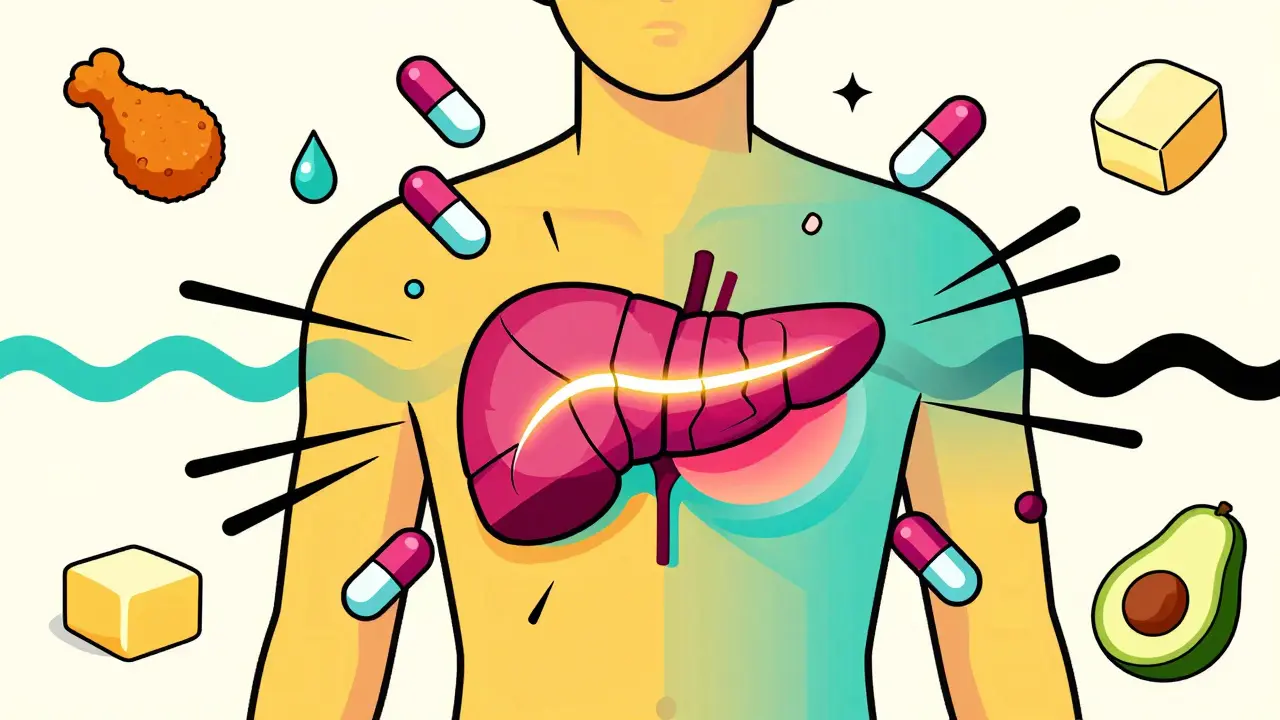
Chronic pancreatitis isn’t just a digestive issue-it’s a life-altering condition that turns everyday meals into a gamble and pain into a constant companion. If you or someone you know has been diagnosed, you’re not alone. Around 50 in every 100,000 people in Western countries live with this disease, and for most, the pain doesn’t go away. Unlike acute pancreatitis, which flares up and fades, chronic pancreatitis slowly destroys the pancreas over years. The organ loses its ability to make digestive enzymes and insulin, and the pain? It often becomes the main problem-worse than the digestive issues.
Why the Pain Won’t Go Away
Pain is the number one reason people with chronic pancreatitis seek help. Studies show 80 to 90% of patients struggle with persistent abdominal pain. It’s not just a stomach ache. It’s a deep, burning, sometimes stabbing pain that can last for hours or days. It often radiates to the back and gets worse after eating, especially fatty foods. Many patients describe it as constant, even when they’re not eating.The pain comes from inflammation, scarring, and nerve damage in and around the pancreas. Over time, the pancreas hardens, ducts get blocked, and nerves become hypersensitive. This isn’t just physical-it’s neurological. That’s why regular painkillers like ibuprofen often don’t help much. The World Health Organization pain ladder is the standard guide doctors follow. Start with acetaminophen (up to 4,000 mg a day). If that doesn’t cut it, move to nerve-targeting drugs like gabapentin or pregabalin. These aren’t painkillers in the traditional sense-they calm overactive nerves. About 40 to 50% of patients get meaningful relief from them.
For those still in pain, tricyclic antidepressants like amitriptyline (10-75 mg at night) can help. Yes, it’s an antidepressant, but it’s been proven to reduce nerve pain in chronic pancreatitis. About half of patients report improvement. When all else fails, tramadol is often the go-to opioid. It’s less addictive than morphine or oxycodone, but still carries risks. About 30% of patients eventually need stronger opioids, but doctors are cautious. Long-term opioid use leads to dependence in 25 to 30% of cases, according to the European Association for the Study of the Pancreas.
Enzyme Therapy: More Than Just Pills
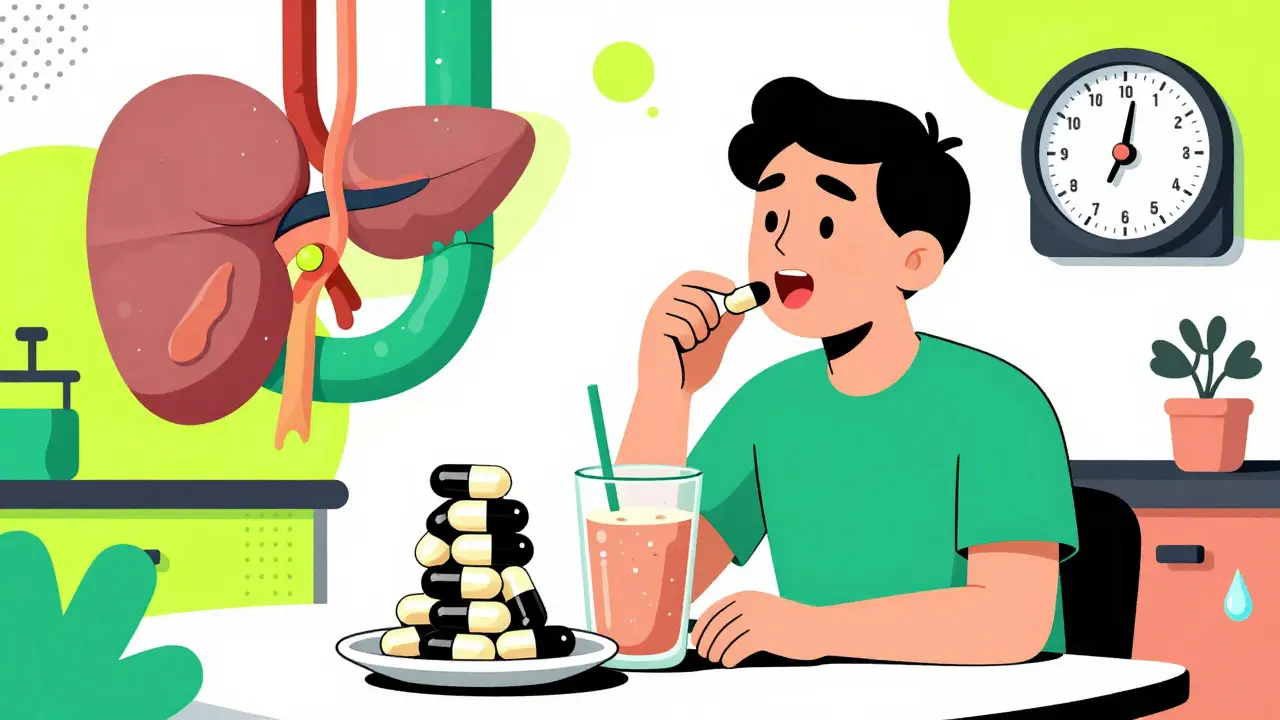
When the pancreas stops making enzymes, food doesn’t break down. That leads to diarrhea, weight loss, and nutrient deficiencies-especially in fat-soluble vitamins A, D, E, and K. That’s where pancreatic enzyme replacement therapy (PERT) comes in. You don’t just take enzymes when you feel bloated. You take them with every meal and snack, right at the first bite. Miss the timing, and the enzymes won’t work.Dosing is critical. Experts recommend 25,000 to 80,000 lipase units per meal. That’s a lot of pills-often 6 to 12 per meal. Brands like Creon®, Zenpep®, and Pancreaze® are the most common. The cost? Between $300 and $1,200 a month, depending on your dose and insurance. Many patients stop taking them because of the pill burden and price.
Here’s something surprising: high-dose PERT may actually reduce pain in some people. A 2017 meta-analysis found that 45% of patients saw a 2 to 3 point drop on a 10-point pain scale. Why? It’s thought that better digestion reduces pressure in the pancreatic ducts. But this only works in early-stage disease. In advanced cases, the damage is too great, and enzymes help less.
If you’re on a non-enteric coated enzyme (like some older brands), you’ll need a proton pump inhibitor (PPI) like omeprazole. Stomach acid kills the enzymes before they can work. Enteric-coated pills (like Creon) are designed to survive the stomach and release in the small intestine. Always check with your pharmacist-some generic versions aren’t coated the same way.
Nutrition: What to Eat and What to Avoid
Diet isn’t just about calories-it’s about survival. Many patients are told to go low-fat. That’s because high-fat meals trigger pain in 60 to 70% of people. But here’s the catch: the evidence that low-fat diets reduce pain isn’t rock solid. Still, most dietitians recommend 40 to 50 grams of fat per day. That means skipping fried food, heavy cream, butter, and fatty meats.But you can’t just cut fat and hope for the best. You need to replace it with something digestible. That’s where medium-chain triglycerides (MCTs) come in. Unlike regular fats, MCTs don’t need pancreatic enzymes to be absorbed. They go straight from the gut to the liver. Products like Peptamen® are specially formulated with MCTs and hydrolyzed proteins. One small 2010 study showed patients who drank three cans a day for 10 weeks cut their pain by 30%.
Antioxidants are another tool. A 2013 study gave patients a daily mix of selenium, beta-carotene, vitamin C, vitamin E, and methionine. After six months, 52% had less pain compared to 23% in the placebo group. It’s not a cure, but for some, it’s a noticeable improvement.
Don’t forget vitamins. Up to 70% of chronic pancreatitis patients are deficient in fat-soluble vitamins. Your doctor should check your levels every 6 to 12 months. You’ll likely need high-dose supplements-sometimes 10 to 100 times the daily recommended amount.
When the Pills and Diet Aren’t Enough
For many, medical management hits a wall. That’s when specialists consider procedures. One option is a celiac plexus block. A needle is inserted near the nerves that carry pain signals from the pancreas. Alcohol or steroids are injected to numb them. About 50 to 60% of patients get relief for 3 to 6 months. One patient in Alberta described it as “nine months of near-complete relief after two years of agony.”Endoscopic procedures like ERCP with stents can help if the pancreatic duct is blocked. It gives 60 to 70% of patients short-term relief, but the blockage often comes back. Surgery is the last resort-but sometimes the best option.
The Frey procedure removes the inflamed part of the pancreas and opens the main duct. At five years, 70 to 80% of patients are pain-free. Total pancreatectomy with islet autotransplantation (TPIAT) removes the whole pancreas but transplants your own insulin-producing cells back into your liver. It gives 85 to 90% pain relief. But you’ll need lifelong insulin injections. Still, for patients stuck on high-dose opioids with no quality of life, it’s life-changing.
The Hidden Struggle: Mental Health and Daily Life
Chronic pancreatitis doesn’t just hurt your body-it breaks your spirit. On patient forums, 65% say their pain is poorly controlled. Many have tried 8 or more medications over years. One Reddit user wrote: “After trying eight different regimens, gabapentin at 2,400 mg/day with tramadol was the first thing that worked.”The average time from first symptoms to diagnosis? Two to three years. During that time, people are told they’re anxious, stressed, or just “sensitive.” That delays care and deepens the trauma.
Yoga and mindfulness aren’t just wellness trends. A University of Pittsburgh study found that patients who did yoga twice a week for 12 weeks improved their quality-of-life scores by 35%. That’s not just feeling better-it’s being able to sleep, work, or sit with your kids again.
What’s Next? Hope on the Horizon
The field is slowly changing. A new enzyme formulation called LipiGesic™, with better pH-controlled release, showed 20% better fat absorption in recent trials. The NIH just launched a $15 million initiative to find better pain treatments. Researchers are now looking at genetic markers to predict who will develop severe pain-so we can intervene earlier.And the opioid crisis has forced doctors to rethink. Since 2016, opioid prescriptions for chronic pancreatitis have dropped 40%. That’s good for public health-but risky if patients are left with uncontrolled pain. New techniques like dorsal root ganglion stimulation (a spinal implant that blocks pain signals) are showing 50 to 60% success in early trials.
What’s clear is this: chronic pancreatitis isn’t a single problem. It’s a web of pain, enzyme failure, malnutrition, and emotional toll. Managing it means working with a team-gastroenterologist, dietitian, pain specialist, and sometimes a surgeon. There’s no magic pill. But with the right combination of medication, enzymes, diet, and support, many people find a life worth living again.

9 Comments
Siobhan K.
December 21, 2025 AT 12:33Let me tell you, the enzyme pill burden is real. I used to take 12 pills with every meal, and I’d forget half the time. Then I started using a pill organizer with alarms - game changer. No more ‘why is my poop floating again?’ moments. Also, MCT oil in coffee? Yes. It’s disgusting at first, but your body learns to love it.
Brian Furnell
December 22, 2025 AT 22:26Regarding PERT dosing: the 25,000–80,000 lipase unit range is based on fat content, not meal size - critical distinction. Many patients underdose because they assume ‘small snack = small dose.’ But even a tablespoon of peanut butter requires 20K units. And if you’re on a PPI, ensure it’s taken 30 minutes pre-meal - otherwise, gastric pH neutralization fails, and the enteric coating dissolves prematurely. This isn’t just ‘take pills with food’ - it’s precision pharmacology.
mukesh matav
December 23, 2025 AT 23:43Been living with this for 11 years. Took me 3 years to get diagnosed. Doctors kept saying ‘stress.’ I lost 40 lbs before someone finally ordered a CT. Now I’m on Creon, MCT shakes, and gabapentin. Not perfect, but I can hold my kid again. That’s enough.
Peggy Adams
December 25, 2025 AT 20:10They say ‘low-fat diet’ but what they really mean is ‘starve yourself and blame your pain on you.’ I’ve seen the pharma ads for Creon - same company that pushed opioids. Coincidence? I think not.
Theo Newbold
December 27, 2025 AT 16:02Let’s be honest: 80% of these ‘success stories’ are from people who still have some pancreatic function left. In advanced fibrosis, PERT does nothing. The pain is neurogenic, not digestive. And yes, opioids are risky - but so is letting someone suffer for years because doctors are scared of DEA audits. This isn’t medicine. It’s risk management dressed in clinical guidelines.
Meina Taiwo
December 27, 2025 AT 22:53Antioxidants help. Take them daily. Vitamin D levels matter more than you think.
Southern NH Pagan Pride
December 29, 2025 AT 08:47Did you know the NIH funding drop in 2018 was tied to a secret meeting with Big Pharma? They don’t want a cure - they want lifelong prescriptions. That’s why they push enzymes and gabapentin. Look at the patents. The real breakthrough? Celiac plexus block - but it’s not FDA-approved for ‘off-label’ pain relief. They’ll never tell you that.
John Hay
December 30, 2025 AT 03:55Yoga? Really? I’m not some zen monk. I’m trying to get through the day without crying. If you want to help, stop telling people to breathe. Give them the damn meds that work.
Jon Paramore
December 30, 2025 AT 12:07For those on TPIAT: yes, you’ll need insulin. But you won’t be on 120 mg/day of tramadol anymore. The trade-off is brutal - but it’s not a trade-off if you’re bedridden. My cousin had it done last year. She’s back at work. She cries sometimes - not from pain, but because she finally sleeps through the night. That’s not a cure. It’s a reset.