
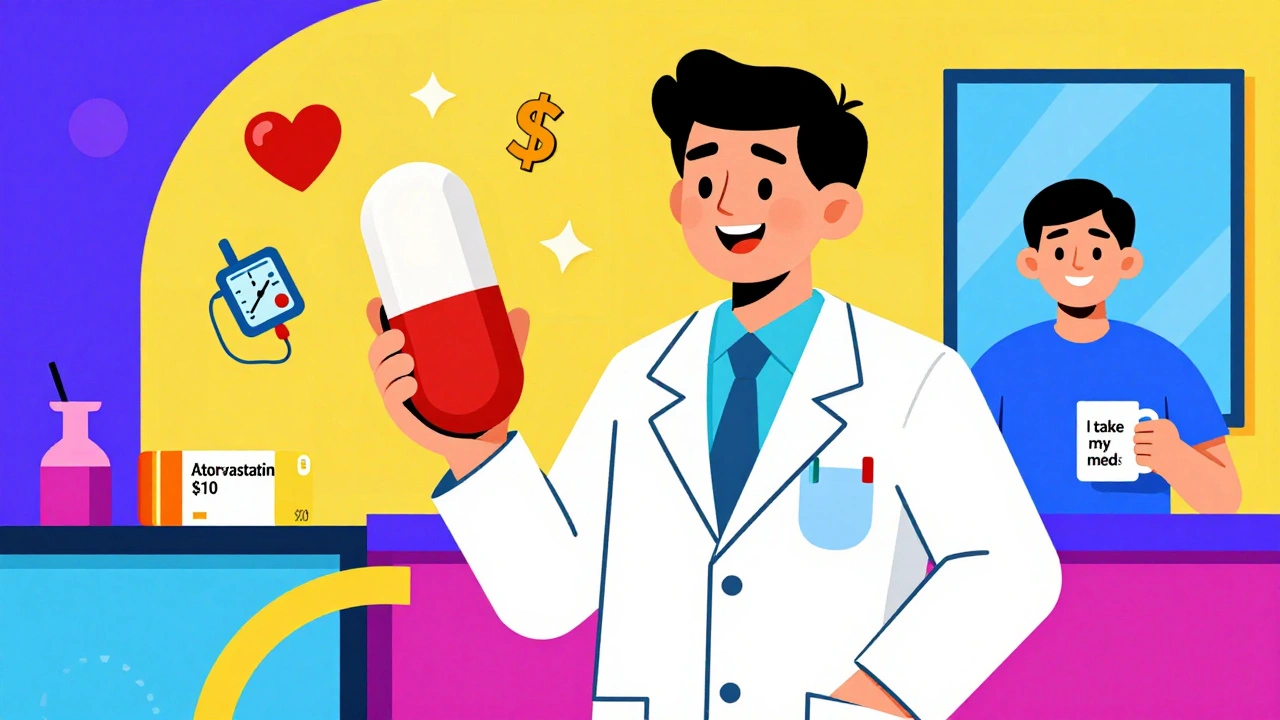
Every year, employees miss work or perform below their best because they skip their meds. Not because they don’t care - but because they’re confused, scared, or can’t afford them. That’s where pharmacists come in. In today’s workplace wellness programs, pharmacists aren’t just handing out pills. They’re turning around costly, dangerous habits by quietly pushing one simple idea: generic medications work just as well, and they save money.
Why Generics Matter More Than You Think
You’ve probably seen the price difference. Brand-name Lipitor costs $200 a month. Generic atorvastatin? $10. Same active ingredient. Same FDA approval. Same results. Yet, nearly half of patients still refuse to switch - not because they’re misinformed, but because they’ve been told for years that generics are "inferior." The data doesn’t lie. In the U.S., generics make up 90% of all prescriptions filled - but only 22% of total drug spending. That’s $300 billion saved every year, just by choosing the right pill. And it’s not just about cash. The CDC says better medication adherence could prevent 125,000 deaths annually. Most of those deaths come from chronic conditions like high blood pressure, diabetes, and high cholesterol - the very conditions where generics are most commonly used.Pharmacists Are the Missing Link
Employers spend millions on wellness programs: gym memberships, mental health apps, smoking cessation tools. But if employees aren’t taking their meds, none of it matters. That’s where pharmacists step in. Unlike doctors, who see patients for 10 minutes, pharmacists see them every time they refill a prescription. They’re the ones who notice when someone hasn’t picked up their blood pressure med in three months. They’re the ones who hear the quiet fear: "Will this cheap pill even work?" Pharmacists don’t just hand out generics. They explain them. They use the Orange Book - the official FDA list of therapeutic equivalents - to show patients that generic metformin is just as effective as Glucophage. They tell stories: "I take generic ibuprofen every day. My knee doesn’t know the difference." One pharmacist in Melbourne told me about a nurse who came in terrified after her doctor switched her from brand-name Zoloft to sertraline. "I thought I’d feel like a zombie," she said. The pharmacist sat down, showed her the FDA bioequivalence data (80-125% absorption range), and said, "This is the same medicine. The only difference is the price tag." Two weeks later, the nurse sent a note: "I feel better than I have in years. And I’m not broke."How Workplace Programs Are Using Pharmacists
Large employers - think Walmart, Amazon, or big hospitals - are bringing pharmacists onsite or into telehealth platforms. These aren’t just pharmacists doing refills. They’re doing full Medication Therapy Management (MTM) sessions: reviewing every pill a person takes, spotting interactions, flagging duplicates, and suggesting cheaper, equally effective options. Here’s how it works in practice:- An employee with type 2 diabetes gets a call from the company’s wellness team. "Your meds are costing you $180/month. We can cut that to $25 with generics. Want to talk?"
- A pharmacist reviews their profile. Notices they’re taking two different statins. Explains why they only need one.
- They check the employer’s formulary. Find a generic that’s covered at 100% with no copay.
- They call the doctor’s office. Get approval for the switch. Send the new script to the pharmacy.
- They follow up in 30 days. Did they refill? How do they feel?

Why Employers Are Paying Attention
Employers aren’t doing this because they’re nice. They’re doing it because it saves money - and not just on pills. A 2023 survey by the Business Group on Health found 68% of large employers now include pharmacist services in their wellness programs. Why? Because every $1 spent on pharmacist care saves $7.20 in medical costs. That’s not a guess. It’s from the American Pharmacists Association’s 2024 economic study. Think about it: if an employee with hypertension skips their meds, they’re more likely to have a stroke. That means weeks off work, rehab, maybe long-term disability. A $10 generic pill prevents all that. And it’s not just about drugs. Pharmacists help employees understand their benefits. Many don’t know their plan covers generics at $0 copay. Others think "brand name" means better. Pharmacists clear that up - fast.What’s Holding Pharmacists Back?
It’s not the science. It’s the rules. In 49 U.S. states, pharmacists can substitute generics without a doctor’s OK - as long as they’re therapeutically equivalent. But in some places, they still need prescriber approval for every switch. That kills speed. That kills savings. One pharmacist on Reddit wrote: "In my state, I can substitute generics, but I need the doctor’s permission for therapeutic interchange. So I call the office. They say no. I call again. Two weeks later, the patient gives up." Then there’s the lack of training. Not all pharmacists know how to talk to employers about formularies, MAC lists, or PBM contracts. That’s changing. Companies like McKesson and CVS Caremark now offer training modules on pharmacoeconomics - how to explain cost savings to HR teams, how to present data, how to make the case for pharmacist-led programs. And then there’s the stigma. Some doctors still think pharmacists are overstepping. But studies show pharmacists choose the right generic substitution 98.7% of the time - when they follow the rules.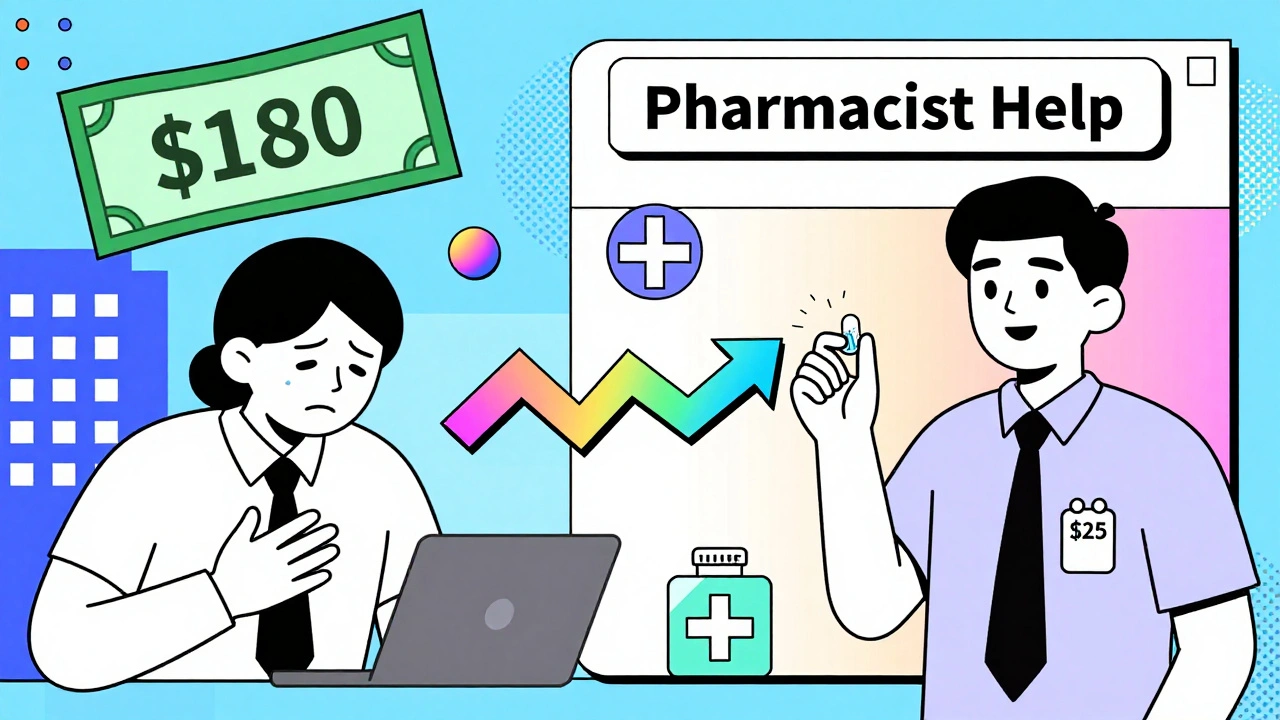
What Employees Say
Surveys show 78% of employees feel more confident about generics after talking to a pharmacist. That number jumps to 92% for those managing chronic conditions. A Walmart Health Center in Texas tracked 1,200 employees enrolled in their pharmacist-led wellness program. After six months:- Prescription costs dropped 23%
- Medication adherence rose from 58% to 82%
- Emergency room visits for uncontrolled diabetes fell by 31%
The Future Is Already Here
By 2027, the American Pharmacists Association predicts 85% of large employer wellness programs will include pharmacist-led medication optimization. It’s not a dream. It’s a math problem. The cost of drugs keeps rising. The workforce is aging. Chronic disease is growing. And pharmacists are the only healthcare professionals who see patients every time they refill a prescription - and who are trained to make the connection between cost, adherence, and health outcomes. Workplace wellness isn’t about yoga mats and smoothie bars. It’s about making sure people take the right pills. And pharmacists? They’re the ones making sure those pills are affordable, effective, and actually taken.Frequently Asked Questions
Are generic medications really as safe as brand-name drugs?
Yes. The FDA requires generics to have the same active ingredient, strength, dosage form, and route of administration as the brand-name version. They must also meet the same strict standards for purity, stability, and bioequivalence - meaning they’re absorbed into the body at the same rate and to the same extent. Generic drugs are tested in labs and in real patients. If they don’t work the same way, they don’t get approved.
Why do some people still prefer brand-name drugs?
It’s mostly about perception. Many people believe "brand" means better quality, or they’ve had a bad experience with a generic in the past - maybe the pill looked different, or they were misinformed. Pharmacists help by explaining that color, shape, or filler ingredients don’t affect how the medicine works. They also point out that many "brand" drugs are actually made by the same company that makes the generic - just sold under a different label.
Can pharmacists switch my medication without my doctor’s approval?
In most states, yes - if the generic is listed as therapeutically equivalent in the FDA’s Orange Book. But some states require prescriber approval for certain switches, especially for narrow-therapeutic-index drugs like warfarin or thyroid meds. Pharmacists always check state laws and follow protocols. If they can’t switch automatically, they’ll call the doctor to request the change - and often get approval because they’re providing evidence-based, cost-saving options.
How do pharmacists know which generic is the best choice?
They use tools like the FDA’s Orange Book to verify therapeutic equivalence. They also check the employer’s formulary and the pharmacy’s Maximum Allowable Cost (MAC) list to find the lowest-priced generic that’s covered. Many use integrated pharmacy systems that flag cost-saving alternatives automatically. The goal isn’t just to pick any generic - it’s to pick the right one that’s covered, effective, and affordable.
Do workplace wellness programs really save money?
Yes. Studies show every dollar spent on pharmacist-led medication management saves $7.20 in overall healthcare costs. That’s because better adherence leads to fewer hospitalizations, ER visits, and complications. For example, an employee who takes their blood pressure med consistently avoids a stroke - which could cost over $100,000 in care and lost productivity. Pharmacists help prevent those events before they happen.

13 Comments
Mark Curry
December 6, 2025 AT 08:38Generics saved my life. I was skipping my blood pressure med because it cost $150 a month. Switched to the generic-$12. No side effects. No drama. Just my heart not screaming at me anymore. 😊
aditya dixit
December 7, 2025 AT 02:45It’s fascinating how a simple substitution can ripple through an entire system. Pharmacists, often overlooked, are the quiet architects of public health. Their knowledge isn’t just technical-it’s deeply human. They bridge the gap between science and survival. In countries like India, where cost is a barrier, this work isn’t just helpful-it’s revolutionary.
Annie Grajewski
December 8, 2025 AT 21:41Oh wow, so now pharmacists are doctors? Next they’ll be telling us to stop breathing if it costs too much. 😏
Mark Ziegenbein
December 9, 2025 AT 23:12Let’s be real here-this isn’t about wellness it’s about corporate cost-cutting dressed up in white coats. The same companies that pay CEOs $50 million a year now want us to believe that $10 pills are the key to productivity? Where’s the compassion? Where’s the dignity? We’re not machines that just need the right firmware update. We’re people who deserve better than being herded into the cheapest option like cattle at auction. And don’t get me started on how they never mention the fact that generics are often made in the same factories as brand names-just repackaged by the same corporations. This isn’t healthcare. It’s branding with a side of guilt.
Norene Fulwiler
December 11, 2025 AT 19:01My mom’s a pharmacist in rural Ohio. She told me about a guy who came in crying because he couldn’t afford his insulin. She switched him to a generic, walked him through how to use the pharmacy discount card, and called his doctor to get it approved. Two weeks later, he brought her a pie. Said he hadn’t felt this good in five years. That’s not just business-that’s humanity. We need more of this, not less.
Krishan Patel
December 13, 2025 AT 08:54This is why America is collapsing. You let unlicensed pharmacists make medical decisions? No doctor approval? This is how people die. You think a pill with a different color is the same? You’re a fool. The FDA is a joke. The system is rigged. The pharmaceutical companies own everything. And now you want pharmacists to be the new gatekeepers? No. No. No.
Stephanie Bodde
December 14, 2025 AT 08:27I work in HR at a mid-sized tech firm. We added pharmacist MTM last year. Adherence jumped from 55% to 80%. ER visits dropped. People actually started talking about their health. One employee said, ‘I didn’t know I could get my meds for free.’ That’s not a win for the company-that’s a win for people. Thank you, pharmacists.
Philip Kristy Wijaya
December 14, 2025 AT 10:54One must consider the broader geopolitical implications of this trend. The commodification of pharmaceuticals under the guise of wellness is a direct byproduct of late-stage capitalism’s erosion of bodily autonomy. Pharmacists, once custodians of scientific integrity, are now reduced to corporate agents enforcing formulary compliance. The Orange Book is not a tool of liberation-it is a bureaucratic instrument of control. And the fact that employees are being conditioned to equate affordability with efficacy reveals a terrifying normalization of health as a transactional good rather than a fundamental right.
Jennifer Patrician
December 15, 2025 AT 03:26Generics are laced with fillers from China. The FDA doesn’t inspect those factories. You think your $10 pill isn’t full of heavy metals? My cousin’s husband took a generic and ended up in the ICU. They never told him it was made in a warehouse with no running water. This is a cover-up. Big Pharma doesn’t want you to know the truth.
Ali Bradshaw
December 15, 2025 AT 12:57My mate in Glasgow said his GP switched him to a generic statin and he felt better than ever. Said the only difference was his bank account. Simple. Effective. No fanfare. Just good sense. Pharmacists are the unsung heroes. Wish we had more of them here.
an mo
December 15, 2025 AT 22:41Let’s not romanticize this. Pharmacists are being deployed as cost-control mechanisms within a broken system. The real issue isn’t generics-it’s that healthcare is privatized. You don’t fix a broken system by making the cheapest option more accessible-you fix it by making healthcare a right. This is corporate virtue signaling wrapped in a lab coat. The $7.20 ROI? That’s just the accounting department’s way of saying ‘we’re still making a profit.’
Jimmy Jude
December 17, 2025 AT 15:28People think they’re saving money with generics, but they’re just trading one kind of suffering for another. I’ve seen it. The pill looks different, the packaging is cheap, and suddenly you’re not sure if it’s working. You start doubting yourself. You start doubting the system. You start doubting your own body. And then you stop taking it. Because if you can’t trust the pill, how can you trust your health? This isn’t empowerment. It’s psychological erosion disguised as efficiency.
Rupa DasGupta
December 17, 2025 AT 19:44I hate to say it but... I’m the reason this system works. I used to skip meds. I thought generics were poison. Then my pharmacist sat with me for 45 minutes. Showed me the studies. Told me about her own dad who took generic metformin for 12 years. Said, ‘Your life matters more than the label.’ I cried. I took it. I’m alive. I’m working. I’m not a statistic. And now I tell everyone. I’m not a hero. I just needed someone to care enough to explain. 💔❤️