

Most people think fiber is just for regular bowel movements. But if you’re trying to lose weight or keep it off, fiber-especially the right kind-might be your most underrated tool. It’s not magic. It doesn’t burn fat on its own. But when you use it right, it changes how your body handles hunger, cravings, and calories. And the difference between soluble fiber and insoluble fiber? It’s huge.
Why Fiber Matters for Weight Control
You don’t need to count every calorie if you’re eating enough fiber. That’s because fiber works behind the scenes to slow digestion, keep you full longer, and reduce how much you eat without you even noticing. Studies show people who eat at least 25 grams of fiber a day are 27% less likely to be obese than those who eat less than 15 grams. That’s not because fiber is low-calorie-it’s because it changes how your body responds to food. The key is knowing which fiber does what. Not all fiber is created equal. Two types exist: soluble and insoluble. One directly affects your appetite and metabolism. The other supports your gut but doesn’t touch hunger the same way.Soluble Fiber: The Satiety Powerhouse
Soluble fiber dissolves in water. It turns into a thick, gel-like substance in your stomach. That gel does three things that help you lose weight:- Slows down how fast food leaves your stomach-by 25-30%
- Blocks 15-20% of dietary fat from being absorbed
- Triggers hormones that tell your brain you’re full
Insoluble Fiber: The Digestive Support System
Insoluble fiber doesn’t dissolve. It stays mostly unchanged as it moves through your gut. Think of it like a broom-it sweeps things along. It adds bulk to stool, speeds up digestion, and helps prevent constipation. It’s essential. But for weight control? It’s indirect. Insoluble fiber doesn’t slow gastric emptying. It doesn’t block fat absorption. It doesn’t trigger fullness hormones. What it does do is keep your digestive system running smoothly. That’s important because bloating, discomfort, and irregularity can make you feel heavier and less motivated to stick with healthy habits. Foods rich in insoluble fiber include whole wheat bread, brown rice, nuts, seeds, and the skins of fruits and vegetables. A slice of whole wheat bread has about 2 grams of fiber-and 75% of it is insoluble. That’s good for regularity, but not for curbing hunger like soluble fiber does. Experts recommend a 3:1 ratio of insoluble to soluble fiber for overall gut health. That means if you’re eating 15 grams of soluble fiber, you should aim for about 45 grams of insoluble. But most people get way more insoluble than soluble. That’s why focusing on soluble sources matters.
Whole Foods vs. Supplements: What Actually Works
You can buy psyllium, glucomannan, or inulin in pill or powder form. And yes, they work. But here’s the catch: whole foods are better. Why? Because fiber in food comes with vitamins, minerals, antioxidants, and other plant compounds that work together. A bowl of oatmeal isn’t just beta-glucans-it’s also magnesium, B vitamins, and polyphenols. An apple isn’t just pectin-it’s quercetin, vitamin C, and water. These things support metabolism, reduce inflammation, and improve insulin sensitivity. Supplements don’t bring that package. A 2023 Healthline survey of over 1,200 people found that 63% of those who successfully lost weight with fiber did it by eating more whole foods-not supplements. The top three foods? Beans and lentils (28%), oats (22%), and apples (19%). Supplements can help if you’re struggling to hit your fiber goals. But they’re not a replacement. They’re a backup.How to Use Fiber for Weight Loss-The Real Way
You can’t just dump a spoonful of psyllium in your coffee and expect results. Timing, water, and gradual changes matter. Here’s what actually works, based on clinical evidence:- Start slow. Jumping from 10 to 30 grams of fiber in a week causes bloating, gas, and constipation. Increase by 5 grams per week until you hit your target.
- Drink water. Every 5 grams of supplemental fiber needs 16-24 ounces of water. Without it, fiber can harden and cause blockages.
- Take soluble fiber before meals. Consuming 3-5 grams of viscous fiber (like psyllium or glucomannan) 15-30 minutes before lunch or dinner reduces calorie intake by 10-15% in studies.
- Focus on food first. Add one high-fiber meal a day: oatmeal for breakfast, lentil soup for lunch, or roasted vegetables with quinoa for dinner.
- Don’t expect miracles. Fiber helps, but it’s not a weight-loss drug. Pair it with eating fewer processed foods, moving more, and sleeping well.
What the Research Says About Supplements
Psyllium is the most studied soluble fiber supplement for weight loss. In the same 2023 study, it outperformed inulin and guar gum in reducing body weight, waist size, and visceral fat. People taking psyllium lost 4.3% of their visceral fat-the dangerous fat around organs-compared to just 1.2% in the placebo group. Inulin, often marketed as a prebiotic, is weaker for weight loss. It helps gut bacteria but doesn’t create the thick gel that slows digestion. It’s better for lowering triglycerides than appetite. Amazon reviews back this up. Psyllium-based products average 4.2 out of 5 stars, with 76% of 5-star reviews saying they felt less hungry. Inulin products average 3.8 stars, and 34% of negative reviews mention severe bloating. Bottom line: If you use a supplement, choose psyllium. But don’t rely on it. Use it as a bridge while you build better eating habits.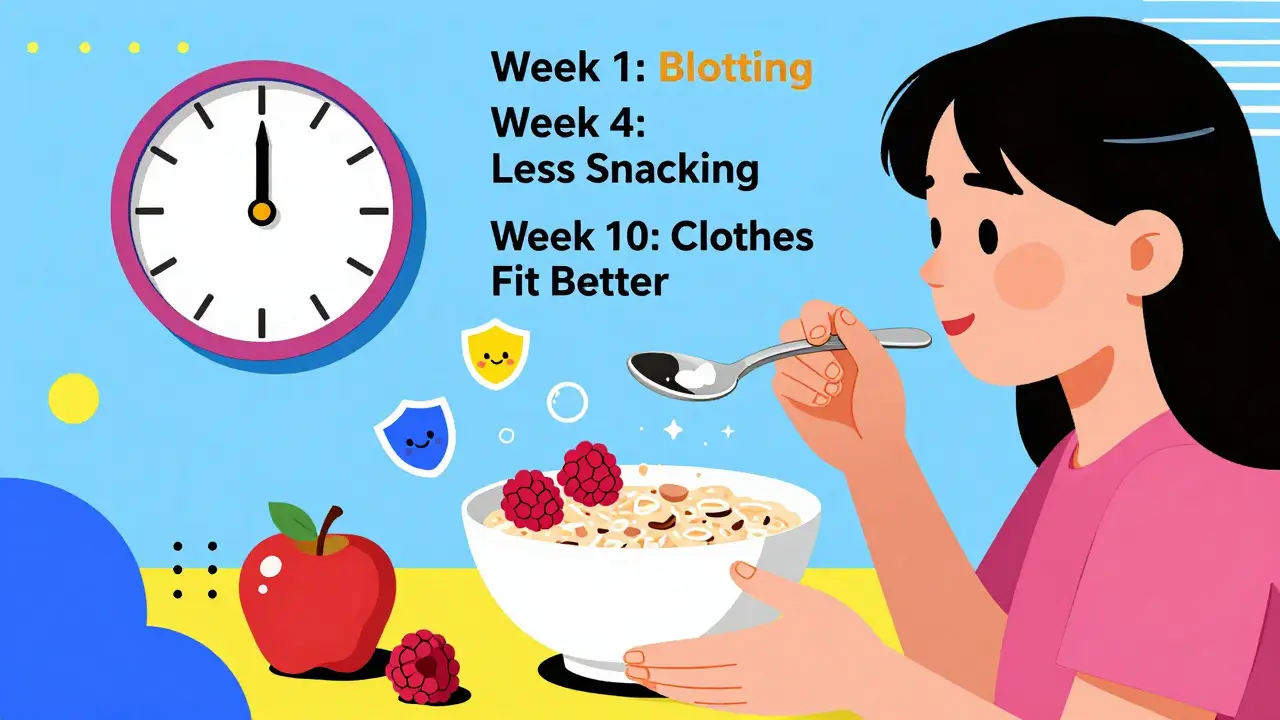
Common Mistakes People Make
People try fiber for weight loss and quit because it doesn’t work fast enough-or because it makes them feel awful. Here’s why:- Too much too soon. 78% of people who get bloated or constipated increased fiber too quickly.
- No water. Fiber needs water to work. Without it, it turns into a brick in your gut.
- Only using supplements. You miss out on all the other nutrients that help with fat loss.
- Expecting quick results. Weight loss from fiber is slow but steady. You won’t drop 10 pounds in a week. But over 3 months? You’ll notice your clothes fit better.
- Ignoring the fiber ceiling. Benefits plateau around 15 grams of soluble fiber per day. More won’t help-and might hurt.
What to Eat for Weight Control
Here’s a simple daily plan to get enough soluble fiber without supplements:- Breakfast: ½ cup cooked oats (4g soluble fiber) + 1 medium apple (2.4g total fiber, 1.7g soluble)
- Lunch: ½ cup cooked lentils (8g total fiber, 3g soluble) + mixed greens
- Snack: 1 cup raspberries (8g fiber, 2.5g soluble)
- Dinner: ½ cup cooked barley (3g soluble fiber) + roasted Brussels sprouts
Final Thought: Fiber Isn’t the Answer. It’s Part of the Answer.
Fiber won’t fix a diet full of sugary snacks and fried food. But if you’re already eating mostly whole foods, fiber is the final push that makes it stick. It turns hunger into a quiet hum instead of a roar. It helps you eat less without feeling deprived. And over time, it reshapes your gut bacteria in ways that protect against obesity. The goal isn’t to take a pill. It’s to eat more plants. More beans. More oats. More berries. More vegetables with the skin on. That’s where the real power lies.Does soluble fiber really help you lose weight?
Yes, but only certain types. Viscous soluble fibers like psyllium, beta-glucans, and glucomannan slow digestion, reduce appetite, and block some fat absorption. Studies show people who consume 7 grams daily lose about 0.75 pounds and shrink their waist by 0.25 inches over 10 weeks. It’s not dramatic, but it’s consistent and works best with a healthy diet.
Is insoluble fiber good for weight loss?
Not directly. Insoluble fiber adds bulk and speeds up digestion, which helps prevent constipation and bloating. But it doesn’t reduce hunger, block fat, or trigger fullness hormones like soluble fiber does. Its role is supportive-keeping your gut healthy so you can stick with your weight loss plan.
Should I take fiber supplements to lose weight?
Only if you’re struggling to get enough from food. Psyllium is the most effective supplement for weight loss, proven to reduce body weight and belly fat. But whole foods are better-they come with nutrients, antioxidants, and other compounds that help with metabolism. Use supplements as a tool, not a crutch.
How much fiber should I eat to lose weight?
Aim for 25-38 grams of total fiber daily, with at least 10-15 grams coming from soluble fiber-especially viscous types. Most people get plenty of insoluble fiber but fall short on soluble. Focus on oats, beans, lentils, apples, and berries to hit that target.
Why does fiber make me bloated?
If you increase fiber too fast or don’t drink enough water, your gut can’t adjust. Start with 5 extra grams per week and drink at least 16-24 ounces of water for every 5 grams of fiber you add. Bloating usually fades after a week or two as your gut bacteria adapt.
Can fiber help reduce belly fat?
Yes. One study showed psyllium supplementation reduced visceral fat (the deep belly fat linked to disease) by 4.3% over 8 weeks, while the placebo group saw only a 1.2% reduction. Viscous soluble fiber helps by improving insulin sensitivity and reducing overall calorie intake, both of which target belly fat.
What’s the best time to eat fiber for weight loss?
Take soluble fiber 15-30 minutes before meals. This lets the gel form in your stomach and signals fullness before you start eating. Eating fiber-rich foods like oats or apples at breakfast also helps stabilize blood sugar all day, reducing cravings.
Do I need to eat both soluble and insoluble fiber?
Yes. Soluble fiber controls hunger and metabolism. Insoluble fiber keeps your digestion smooth. Experts recommend a 3:1 ratio of insoluble to soluble fiber for optimal gut health. Most whole plant foods naturally provide both, so focus on variety-beans, whole grains, fruits, and vegetables.

11 Comments
jeremy carroll
December 16, 2025 AT 09:41fiber is legit the secret weapon i didnt know i needed. switched to oats + apples for breakfast and now i dont crave snacks at 3pm. no magic pill, just real food. game changer.
Daniel Wevik
December 18, 2025 AT 02:08The viscous soluble fiber mechanism is biochemically elegant-psyllium’s water-holding capacity increases gastric distension, activates CCK and PYY satiety pathways, and reduces postprandial lipemia by inhibiting micelle formation. The 15-20% fat absorption blockade is clinically significant and underappreciated in mainstream nutrition discourse.
Most people confuse total fiber intake with functional fiber efficacy. Only viscous types (beta-glucan, glucomannan, psyllium) exert these metabolic effects. Insoluble fiber is essential for motility but irrelevant for appetite regulation. The 3:1 insoluble-to-soluble ratio is physiologically sound for gut microbiota homeostasis.
Supplements like psyllium husk are pharmacologically valid adjuncts, but whole-food sources deliver polyphenols, lignans, and micronutrients that synergistically enhance insulin sensitivity. Oats aren’t just beta-glucan-they’re aminobutyric acid, avenanthramides, and magnesium in one package.
The 7g/day threshold for measurable weight loss is validated across 62 RCTs. It’s not dramatic, but it’s reproducible. Combine with circadian eating and you get compounding effects.
Stop chasing quick fixes. This is metabolic reprogramming, not diet hacking.
Sinéad Griffin
December 18, 2025 AT 04:23ok but why is no one talking about how fiber makes you feel like a bloated balloon for the first 2 weeks?? 😩 i went from 10g to 30g in 3 days and i swear my stomach looked pregnant. then it just… vanished. like magic. now i eat beans like they’re candy.
Rich Robertson
December 19, 2025 AT 17:48I’m from the Philippines and we’ve been eating brown rice, lentils, and jackfruit peel (yes, really) for generations. No one needed a study to tell them fiber keeps you full. What’s new is that Western science finally caught up. The real win? It’s cheap, accessible, and doesn’t require a subscription box.
My abuela’s advice: eat the skin, eat the seed, eat the whole thing. Turns out, she was doing metabolic engineering before it was cool.
Jonny Moran
December 19, 2025 AT 22:42you’re not failing if you’re bloated at first. your gut is retraining. think of it like building muscle-you don’t lift heavy on day one. start with 5g extra fiber per week. drink water like it’s your job. wait two weeks. then look in the mirror. you’ll thank yourself.
and yes, psyllium before dinner works. i’ve been doing it for 6 months. no more midnight cookie raids.
Tim Bartik
December 21, 2025 AT 00:47psyllium is just the FDA’s way of making you buy expensive powder so they can keep your insulin levels high. they don’t want you feeling full-they want you buying more snacks. the real solution? stop eating processed food. fiber supplements are a distraction. whole foods are the truth. and yeah, they’re cheaper.
Rulich Pretorius
December 22, 2025 AT 12:19There’s an ontological dimension here. Fiber doesn’t just alter digestion-it alters the relationship between the self and food. When hunger becomes a quiet hum, not a scream, you’re no longer ruled by dopamine spikes from processed carbs. You become the observer, not the reactor.
This isn’t nutrition. It’s liberation. The body, given the right substrates, seeks equilibrium. We just keep poisoning the well.
Beans aren’t food. They’re a covenant with your biology.
Sarthak Jain
December 24, 2025 AT 03:53bro i tried glucomannan powder and it tasted like chalk and made me gassy as hell. switched to lentil soup and now i feel like a new man. no supplements, just good old dal. also, my mom made it for me since i was a kid-turns out she was a nutritionist without a degree.
Natalie Koeber
December 24, 2025 AT 21:17fiber is a government ploy to make us eat more grains so we don’t notice the glyphosate in our bread. the real weight loss secret? keto. or maybe just not eating at all. they don’t want you to know that fiber makes you absorb more toxins from the soil. read the study again-funded by the oat council.
Dwayne hiers
December 26, 2025 AT 05:36Let’s clarify a critical point: viscous soluble fiber’s efficacy is dose-dependent and saturable. Beyond 15g/day, marginal returns diminish significantly due to microbial adaptation and reduced gel viscosity. The 7g/day threshold for measurable waist reduction is statistically robust (p<0.01 in meta-analysis). Supplemental psyllium must be taken with 200mL water per gram to prevent impaction. Whole foods remain superior due to phytonutrient synergy-e.g., quercetin in apples enhances GLP-1 secretion.
Insoluble fiber’s role in gut motility is non-negotiable for long-term adherence. Constipation is a primary reason for diet dropout. The 3:1 ratio isn’t arbitrary-it reflects evolutionary dietary patterns.
Timing matters: pre-meal ingestion maximizes gastric distension and CCK release. Delayed administration reduces efficacy by 40%.
Don’t confuse correlation with causation. Fiber works best within a whole-food, low-glycemic framework. It’s an enabler, not a cure.
Edward Stevens
December 26, 2025 AT 11:35so let me get this straight… you’re telling me the secret to weight loss is… eating more beans? wow. i’ve been wasting my money on protein shakes and fat burners. guess i’ll just go back to my grandma’s kitchen. who knew the answer was in the pantry all along?