
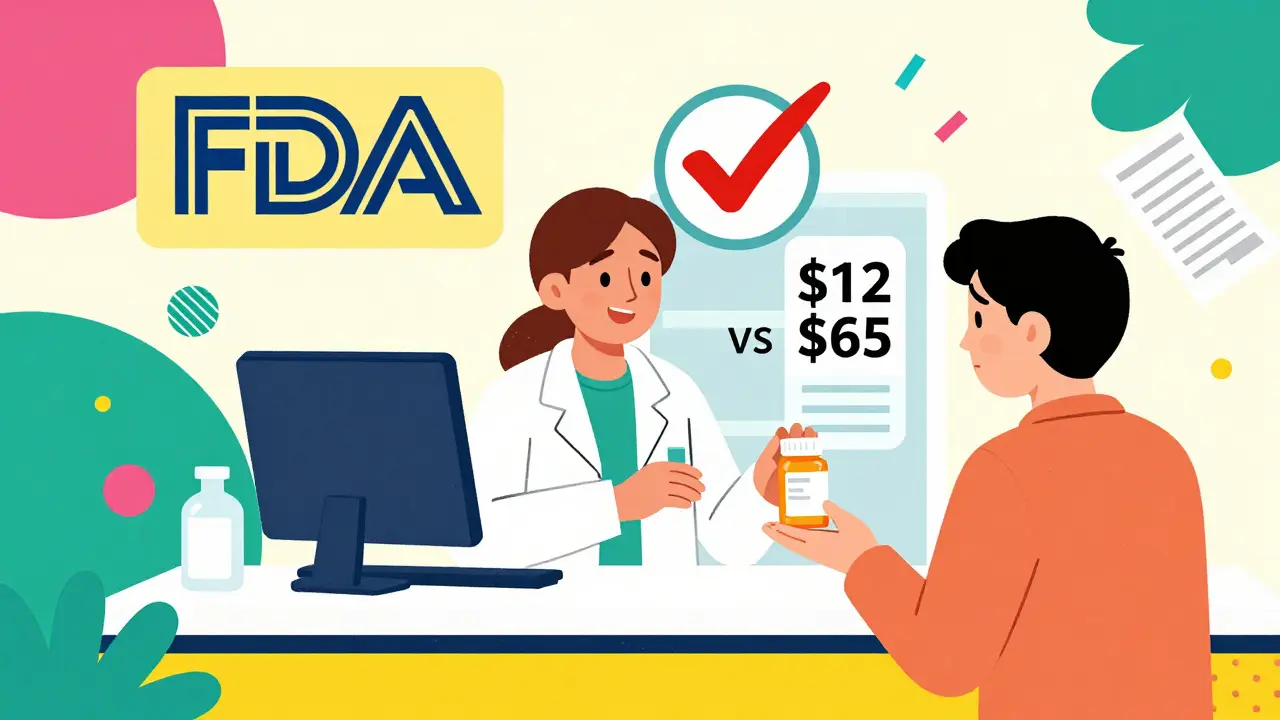
When you pick up a prescription at your local pharmacy, you might not think twice about getting a generic pill instead of the brand-name version. But if you’re hospitalized and your IV antibiotics get switched to a different drug, that’s a whole different story. The way medications are substituted in a retail pharmacy versus a hospital pharmacy isn’t just a minor difference-it’s a fundamental shift in how care is delivered, who makes the call, and what’s at stake.
Who Decides and How?
In a retail pharmacy, the pharmacist is the one making the substitution decision. State laws give them the legal right to swap a brand-name drug for a generic version if it’s approved as therapeutically equivalent by the FDA. This happens at the counter, often without the prescriber even knowing. The main driver? Cost. Insurance plans push for generics because they save money-sometimes $50 or more per prescription. In 2023, retail pharmacies substituted generics in over 90% of eligible cases, saving patients and insurers an estimated $317 billion annually. But in a hospital? It’s not up to the pharmacist alone. Substitutions happen through a formal process led by a Pharmacy and Therapeutics (P&T) committee. This group includes doctors, pharmacists, nurses, and sometimes administrators. They review clinical data, cost, and safety before approving a switch-say, from one antibiotic to another-for an entire unit or patient population. These decisions aren’t made at the dispensing window. They’re built into clinical pathways, documented in the electronic health record, and require physician notification within 24 hours under Joint Commission standards.What Drugs Are Affected?
Retail substitution mostly sticks to pills and capsules-oral solid dosage forms. Over 97% of substitutions in community pharmacies involve these simple, stable medications. Think blood pressure pills, cholesterol meds, or diabetes drugs. Specialty medications like injectables, biologics, or compounded creams? Almost never substituted at retail. Only about 13% of specialty drugs are even eligible for substitution, according to 2023 data from Express Scripts. Hospitals, on the other hand, regularly swap complex drugs. Nearly 70% of therapeutic interchanges in hospitals involve IV medications, including antibiotics, antifungals, and chemotherapy agents. Biologics-expensive, complex drugs made from living cells-are also swapped under strict protocols. For example, a hospital might switch a patient from one brand of insulin to another because it’s on the formulary and equally effective. These aren’t just cost-saving moves; they’re clinical decisions aimed at optimizing treatment, reducing side effects, or improving outcomes.Why the Difference? Legal Rules vs Clinical Logic
Retail substitution is a transaction. It’s governed by 50 different state laws. In 32 states, pharmacists must tell you verbally that a generic was substituted. In 18, you need to sign a form. The goal is transparency and patient choice, even if the patient doesn’t fully understand the implications. Hospital substitution is a clinical process. It’s governed by institutional policy, federal regulations like CMS Conditions of Participation, and accreditation standards from the Joint Commission. There’s no patient consent form at the bedside. Instead, the substitution is documented in the EHR, triggers clinical alerts, and is reviewed by the care team. A nurse might see a note: "Vancomycin switched to linezolid per P&T protocol-monitor for GI side effects." That’s not a cost cut. That’s a care plan.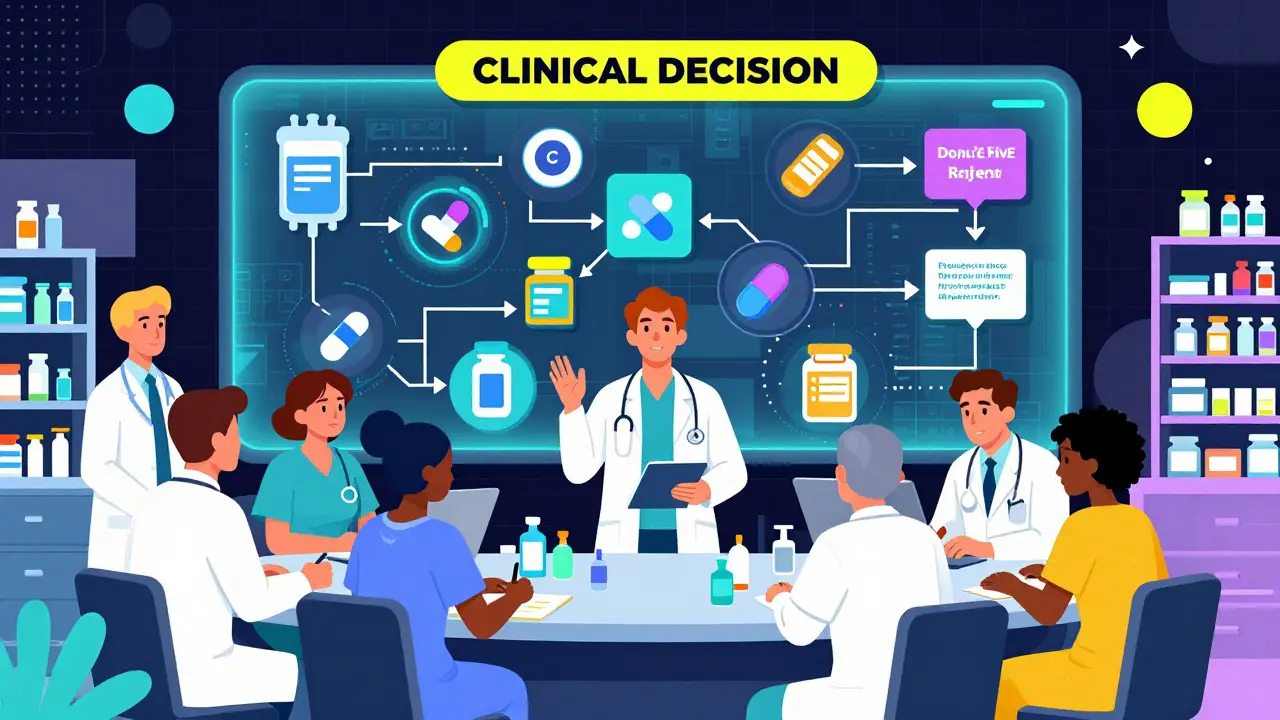
Who Benefits-and Who’s at Risk?
Retail substitution saves money, and patients often appreciate it. A 2023 survey found that 78% of patients said they liked saving money with generics. But there’s a downside. About 14% of patients report confusion or anxiety when they get a different-looking pill. Some worry the generic isn’t as strong. Others refuse it because their doctor told them brand-name was better. That’s when pharmacists have to call the prescriber, fight with the insurance company, and sometimes end up dispensing the more expensive drug anyway. In hospitals, the focus is on safety and effectiveness. Switching antibiotics based on lab results or infection patterns can reduce complications like C. difficile infections. One hospital reported a 30% drop in C. difficile cases after switching from broad-spectrum penicillins to narrower alternatives. But here’s the catch: when patients leave the hospital, their substitution history often doesn’t follow them. A 2022 study found that nearly 24% of medication errors during hospital-to-home transitions were tied to uncoordinated substitution practices. The hospital switched your blood thinner. The retail pharmacy didn’t know. You got the old version. That’s how mistakes happen.The Human Side: What Pharmacists Actually Deal With
Retail pharmacists spend a lot of time managing insurance hurdles. One pharmacist on a popular forum described spending 45 minutes on the phone trying to get prior authorization for a generic that insurance refused to cover. The patient was frustrated. The doctor was annoyed. The pharmacist was stuck in the middle. Sixty-four percent of retail pharmacists say prior authorization delays are their biggest headache when substituting. Hospital pharmacists? They’re busy educating doctors. One shared how they had to train 15 different medical teams on a new antibiotic protocol after the P&T committee approved a switch. It’s not about money-it’s about making sure every clinician understands why the change happened, what to watch for, and how to document it. That’s a full-time job.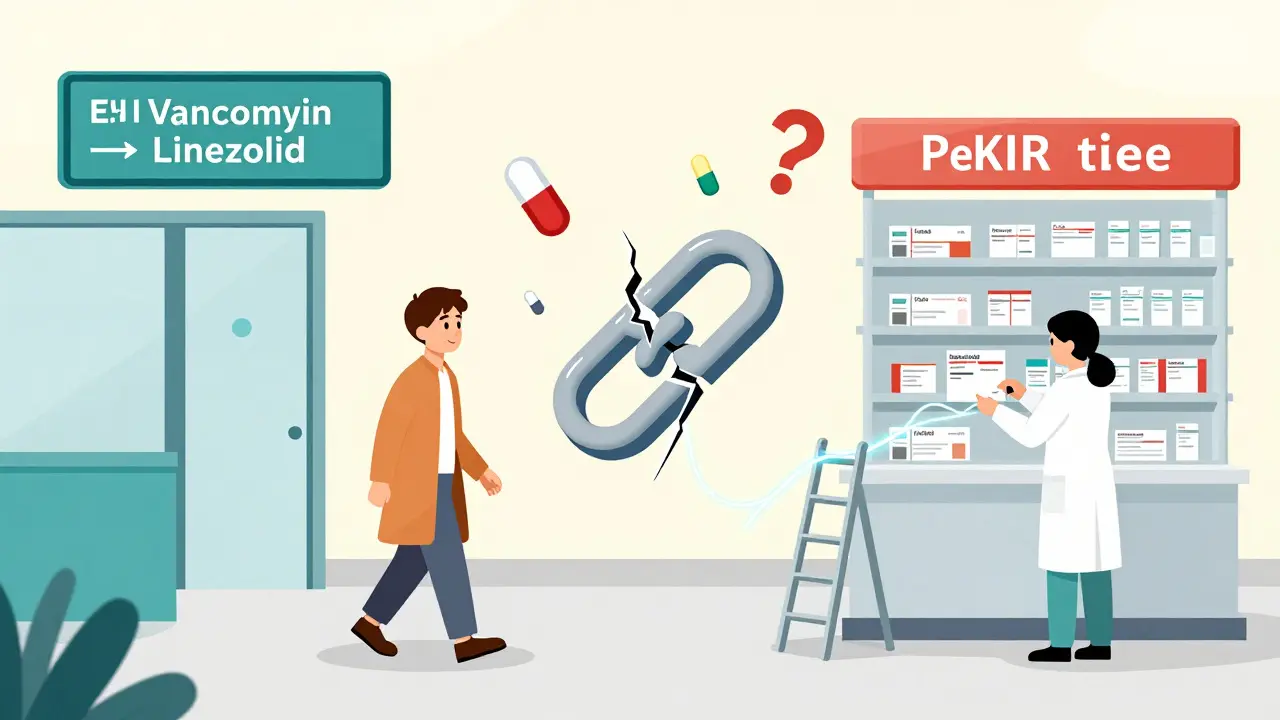
What’s Changing? The Push Toward Alignment
The system is starting to adapt. In 2024, new federal rules require insurers and providers to share substitution records electronically. Hospitals and retail pharmacies are beginning to link their systems. Epic and Cerner are rolling out modules that can flag when a patient’s medication was changed during hospitalization, so the community pharmacist knows not to revert to the old version. Some hospitals now have discharge pharmacists who meet with patients, review all medication changes, and call the retail pharmacy to ensure the right drug is filled. Retail chains like CVS and Walgreens are starting to receive electronic discharge summaries that include substitution history. These efforts are still early-but they’re growing.What This Means for You
If you’re a patient: know that your medication might change depending on where you get it. Ask questions. Don’t assume a generic is the same as your brand. If you’re switching from hospital to home, bring a list of everything you were on, including any substitutions made during your stay. If you’re a pharmacist or student: understand that retail and hospital substitution aren’t the same thing. One is about transactions and compliance. The other is about clinical decision-making and systems integration. Mastering both is what makes a truly skilled pharmacist.Future Outlook
By 2028, experts predict that 78% of healthcare systems will have integrated substitution protocols. The lines between retail and hospital practices are blurring-not because one is better, but because patient safety demands it. The goal isn’t to make them identical. It’s to make sure they talk to each other.Can a retail pharmacist substitute a brand-name drug for a generic without the doctor’s permission?
Yes, in all 50 states, retail pharmacists have legal authority to substitute an FDA-approved generic for a brand-name drug unless the prescriber specifically writes "Do Not Substitute" or the patient refuses. This is allowed under state pharmacy practice acts, which govern outpatient dispensing. However, some states require the pharmacist to notify the patient verbally or in writing, and in a few cases, written consent is needed for the first substitution.
Why do hospitals use therapeutic interchange instead of simple generic substitution?
Hospitals use therapeutic interchange because they’re treating complex, often critically ill patients. A generic version of a pill might be safe, but switching from one IV antibiotic to another isn’t just about cost-it’s about clinical effectiveness, side effect profiles, and infection control. Therapeutic interchange is a formal process led by a P&T committee that reviews clinical evidence, safety data, and cost before approving a switch across entire patient populations. It’s a clinical decision, not a transaction.
Are biosimilars substituted the same way in retail and hospital pharmacies?
No. In retail, 23 states have passed laws allowing pharmacists to substitute biosimilars for brand biologics under specific conditions, similar to generic substitution. But in hospitals, biosimilar substitution is handled through the P&T committee process, just like other therapeutic interchanges. Hospitals require formal protocol approval, clinical education, and documentation in the EHR. Retail substitution is patient-facing; hospital substitution is system-driven.
Why is substitution during hospital-to-home transitions risky?
When a patient is discharged, their hospital medication list may include substitutions made during their stay-like switching from vancomycin to linezolid. But if that change isn’t clearly communicated to the retail pharmacy or the patient’s primary care provider, the community pharmacist may refill the original drug. This mismatch causes medication errors. In 2022, the Institute for Safe Medication Practices found that 23.8% of medication errors during care transitions were linked to uncoordinated substitution practices between hospital and retail settings.
Do retail and hospital pharmacists need different skills to handle substitution?
Absolutely. Retail pharmacists need strong communication and insurance navigation skills. They’re often the frontline defense against patient confusion and insurance denials. Hospital pharmacists need deep clinical knowledge and systems expertise. They must understand formularies, interpret lab data, lead committee discussions, and integrate substitutions into electronic health records. While both roles require clinical judgment, the context, tools, and decision-making processes are fundamentally different.
