
Imagine you're reading a book, but instead of the whole story, you only get a one-paragraph summary of the entire plot. You'd know the general idea, but you'd miss every twist, turn, and emotional peak. That is exactly what it's like relying solely on HbA1c to manage diabetes. While a three-month average is useful, it hides the dangerous dips and spikes that actually dictate how you feel every day. This is where Time in Range is a clinical metric defined as the percentage of time a person with diabetes spends within their target glucose range, typically 70-180 mg/dL (3.9-10.0 mmol/L). By using a Continuous Glucose Monitor (CGM), we can finally see the full story of our blood sugar, leading to far better health outcomes and fewer scary surprises.
What Exactly is Time in Range?
If you've been using a CGM, you know it's not just a fancy finger-prick replacement. It's a data machine. Most sensors take a reading every few minutes, providing thousands of data points every two weeks. Time in Range (TIR) is the way doctors summarize all that noise into a usable percentage. For most adults, the "gold standard" target is spending at least 70% of the day-about 17 hours-between 70 and 180 mg/dL. When you hit this mark, you're significantly lowering your risk of long-term complications.
But TIR isn't the only number on the screen. To get the full picture, you need to look at the other two slices of the pie: Time Below Range (TBR), which tracks hypoglycemia (lows), and Time Above Range (TAR), which tracks hyperglycemia (highs). A person might have a great average glucose level, but if they are swinging wildly from 50 mg/dL to 250 mg/dL, their TIR will be low, and their risk of emergency room visits will be high. This is why the 2025 American Diabetes Association (ADA) Standards of Care now emphasize these metrics as vital for daily management.
TIR vs. HbA1c: Why the Average Isn't Enough
For decades, the HbA1c test has been the king of diabetes metrics. It tells you your average blood sugar over the last 90 days. But here is the problem: averages lie. You could have a perfect HbA1c of 7%, but that could be because you are consistently at 150 mg/dL, or it could be because you spend half your time in a coma-inducing low and the other half in a dangerously high spike. The average is the same, but the health reality is completely different.
| Feature | HbA1c | Time in Range (TIR) |
|---|---|---|
| Data Type | Three-month average | Real-time percentage |
| Visibility | Hidden spikes/dips | Reveals every fluctuation |
| Feedback Loop | Slow (every 3 months) | Instant (minutes/hours) |
| Technology | Lab blood test | CGM Wearable |
| Primary Goal | Long-term average | Daily stability and safety |
Think of it this way: HbA1c is like looking at a photo of a car's odometer to see how far it traveled. TIR is like watching the speedometer in real-time. One tells you the distance; the other tells you if you're speeding or about to crash.
Turning Data Into Action: How to Use Your Metrics
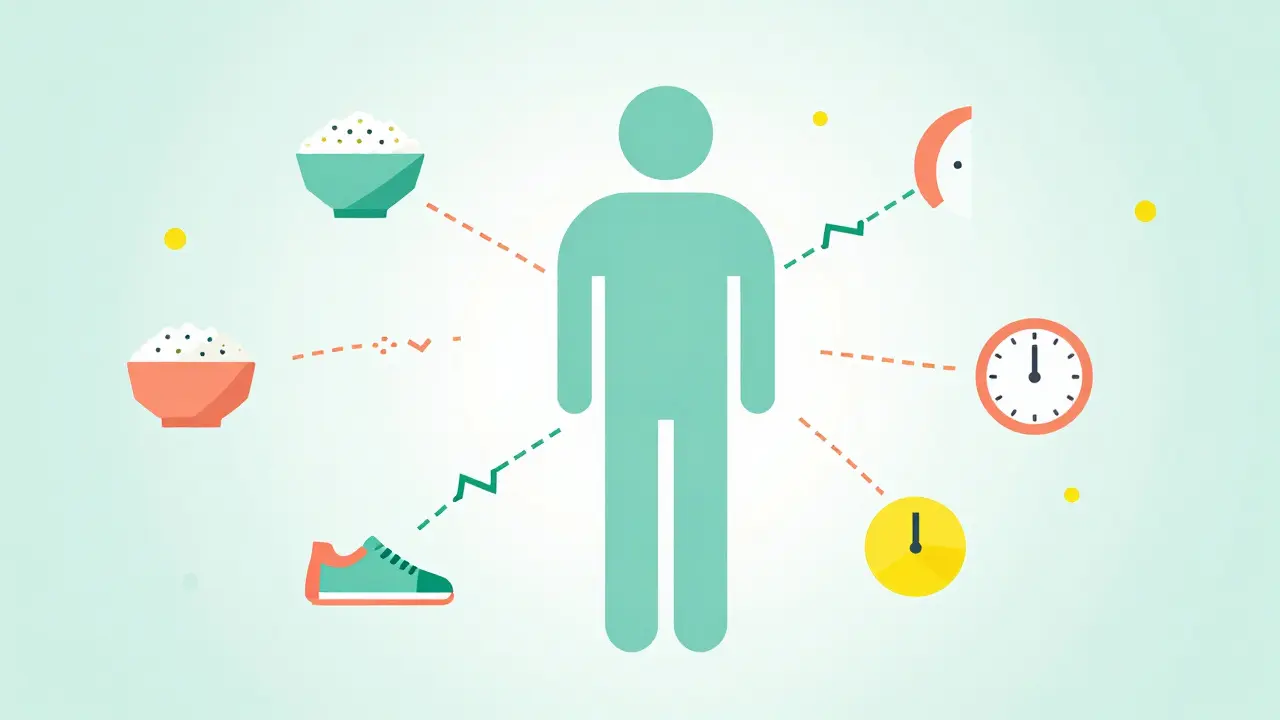
Data is useless if you don't do anything with it. The real magic of TIR happens when you start spotting patterns. For example, some people find that "healthy" brown rice actually sends their blood sugar skyrocketing, while others realize a 15-minute walk after dinner keeps them in range for the rest of the night. This level of personalized insight is impossible with a once-a-quarter lab test.
To get a clinically valid reading, you need a minimum of 14 days of data with at least 70% active wear time. Once you have that, look for these specific patterns:
- The Morning Spike: If your TIR drops every day at 4 AM, you might be dealing with the Dawn Phenomenon.
- The Post-Meal Crash: If you spend too much time in TBR after eating, you may be over-correcting with insulin.
- The Exercise Dip: Notice if your glucose drops too low during a workout, allowing you to adjust your carb intake beforehand.
Broadening the Reach: TIR for Type 2 Diabetes
For a long time, CGMs and TIR were seen as tools primarily for people with type 1 diabetes or those on intensive insulin therapy. That's changing. The 2025 ADA guidelines have made a massive shift, recommending that adults with Type 2 Diabetes who use glucose-lowering medications other than insulin should also consider CGM. Why? Because type 2 diabetes is just as dynamic, and the risks of hyperglycemia are just as real.
Recent research, including work by Dr. A. Goshrani, suggests that TIR could become the new gold standard for type 2 management. By focusing on the percentage of time spent in range, patients can avoid the "glucose rollercoaster" that often leads to burnout and medication non-compliance. When you can see a graph prove that a specific medication is working, you're more likely to stick with the treatment plan.
Common Hurdles and Pro Tips for Success
It's not all smooth sailing. Wearing a sensor for 14 days can be annoying. You might deal with skin irritation or the frustration of a sensor that needs calibration. Moreover, looking at a screen and seeing a red bar for "Time Above Range" can be discouraging. The key is to treat the data as a tool, not a grade on a report card.
If you're feeling overwhelmed by the numbers, try these strategies:
- Focus on one variable: Don't try to fix your breakfast, lunch, and exercise all in one week. Spend seven days just tracking your breakfast TIR.
- Use the "Tight Range": Some advanced users track "Time in Tight Range" (70-140 mg/dL) to get even closer to the patterns seen in people without diabetes.
- Sync with your doctor: Don't just bring the CGM report to your appointment; ask your provider to help you identify the "why" behind the dips and spikes.
What is a good Time in Range percentage?
For most non-pregnant adults with diabetes, the general clinical target is to spend at least 70% of the day within the 70-180 mg/dL (3.9-10.0 mmol/L) range. However, your doctor may set a different individualized goal based on your age, health history, and specific needs.
Can I have a good HbA1c but a bad Time in Range?
Yes. Because HbA1c is an average, it can mask extreme swings. You could have a target HbA1c of 7% but spend a significant amount of time in dangerous hypoglycemia (below 70 mg/dL) and hyperglycemia (above 180 mg/dL) that cancel each other out in the average.
How often should I check my TIR?
While CGMs provide real-time data, TIR is most meaningful when viewed over a 14-day period. This helps filter out one-off anomalies (like a single high-sugar meal) and reveals the actual patterns of your glucose control.
Is Time in Range only for people who use insulin?
No. While it was once primarily used by insulin users, the 2025 ADA guidelines recommend CGM and TIR for adults with type 2 diabetes using various glucose-lowering medications to help them achieve and maintain their glycemic goals.
What happens if my TIR is below 70%?
If your TIR is low, it's a signal to investigate the "why." Check your Time Above Range and Time Below Range. If you're spending too much time high, you may need to adjust medications or diet. If you're spending too much time low, you might be over-medicating or skipping snacks. Always consult your healthcare provider before making changes.
