
When you’re breastfeeding and get sick, the last thing you want is to choose between getting better and keeping your baby fed. Many mothers panic when a doctor prescribes an antibiotic, fearing they’ll have to stop nursing. But here’s the truth: most antibiotics are safe to take while breastfeeding. You don’t need to pump and dump unless your doctor specifically says so. The key is knowing which ones are safe-and which ones to avoid.
Which Antibiotics Are Safe for Breastfeeding?
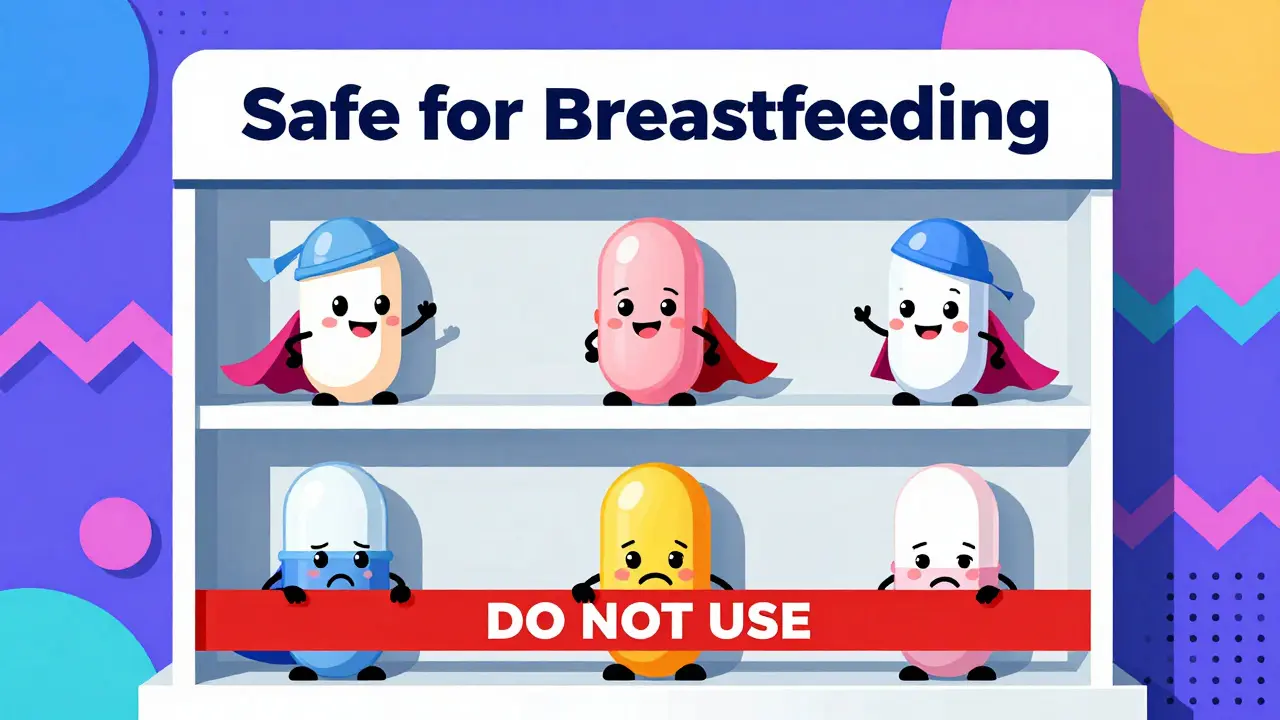
The safest antibiotics fall into Lactation Risk Category L1, meaning they’ve been studied extensively and show no adverse effects in breastfed infants. These include:- Penicillins like amoxicillin and ampicillin: These are the gold standard. Less than 0.05% of the maternal dose ends up in breast milk. In over 2,000 documented cases, no serious side effects were reported.
- Cephalosporins like cephalexin and ceftriaxone: Just as safe as penicillins. Transfer into milk is minimal, and they’re commonly used for mastitis, urinary tract infections, and postpartum infections.
- Vancomycin: Used for serious infections like MRSA. It doesn’t absorb well in the baby’s gut, so even if it gets into milk, it won’t cause harm.
These drugs are preferred by the American College of Obstetricians and Gynecologists (ACOG) and the American Academy of Pediatrics (AAP). If your doctor reaches for one of these, you can breathe easy. You can keep nursing normally.
Antibiotics That Need Caution
Some antibiotics are considered L2 or L3-meaning they’re likely safe but require monitoring. These include:- Azithromycin (a macrolide): Only 0.3% of the dose transfers into milk. Studies show no major issues in infants. It’s often used for respiratory infections.
- Fluconazole: Used for yeast infections like thrush. Even though it transfers fully into milk, no harmful effects have been found in over 1,800 cases.
- Metronidazole: Often prescribed for bacterial vaginosis or C. diff. While transfer is low (0.5-1%), some babies may develop loose stools or yeast overgrowth. The NHS says you don’t need to stop breastfeeding unless you’re on a very high dose. Most doctors recommend a standard 500mg dose three times a day-no need to pump and dump.
- Doxycycline: Safe for short-term use (up to 21 days) in breastfeeding mothers. Long-term use can affect tooth color in babies, but that’s only a concern with weeks of daily use.
If you’re prescribed one of these, your baby should be watched for changes in stool consistency, irritability, or signs of oral thrush (white patches in the mouth). But in most cases, you can continue nursing without interruption.
Antibiotics to Avoid While Breastfeeding
A few antibiotics carry real risks and should be avoided unless there’s no other option:- Chloramphenicol: Linked to "gray baby syndrome," a rare but fatal condition in newborns. This drug is rarely used today, but if it’s prescribed, ask why-and insist on alternatives.
- Nitrofurantoin: Avoid if your baby is under one month old or has G6PD deficiency (more common in babies of African, Mediterranean, or Southeast Asian descent). It can cause hemolytic anemia in vulnerable infants.
- Trimethoprim/sulfamethoxazole (Bactrim): Not safe for babies under two months, especially if they have jaundice. This combo can displace bilirubin and raise the risk of kernicterus, a dangerous brain injury.
If your infection requires one of these, your doctor should explain why the benefit outweighs the risk. In many cases, there’s a safer alternative. Don’t be afraid to ask: "Is there another antibiotic that won’t affect my baby?"
How to Minimize Your Baby’s Exposure
Even with safe antibiotics, you can reduce your baby’s exposure even further:- Take the dose right after breastfeeding. This lets your body clear the drug before the next feeding. Studies show this reduces infant exposure by 30-40%.
- Use the lowest effective dose. Your doctor should prescribe the shortest course possible. Don’t take antibiotics "just in case."
- Watch for changes in your baby. Loose stools, fussiness, or diaper rash could be signs of a reaction. Thrush (white patches in the mouth) is common with antibiotics-ask your pediatrician about nystatin if needed.
Most babies show no reaction at all. One mother on Reddit shared: "Took amoxicillin for mastitis. My 6-week-old didn’t act any different. Kept nursing like normal." That’s the norm, not the exception.
What to Do If Your Baby Has Side Effects
If your baby develops diarrhea, thrush, or a rash after you start an antibiotic, don’t panic-but don’t ignore it either.- Diarrhea: Common with clindamycin (a higher-risk antibiotic). If it’s mild, keep nursing. Probiotics like Lactobacillus reuteri can help. If it’s bloody or lasts more than 48 hours, call your pediatrician.
- Thrush: A yeast infection in the baby’s mouth or your nipples. It’s often caused by antibiotics killing off good bacteria. Your doctor can prescribe antifungal drops for your baby and cream for your nipples.
- Unusual sleepiness or poor feeding: Rare, but if your baby becomes lethargic or won’t nurse, get checked immediately.
Remember: most side effects are mild and temporary. Stopping breastfeeding rarely fixes the problem-treating the baby’s symptoms does.

Tools to Help You Make Smart Choices
You don’t have to guess whether an antibiotic is safe. Use these trusted resources:- LactMed: A free, searchable database from the National Institutes of Health. It covers over 1,700 medications with detailed transfer rates and infant risk levels. Download the app-it’s free and works offline.
- InfantRisk Center: Call 806-352-2519 for real-time advice from pharmacists who specialize in breastfeeding safety. They handled over 1,200 antibiotic questions in 2022 alone.
- AAFP Medication Safety Cards: Many clinics now give out printed guides listing safe and unsafe antibiotics. Ask for one.
These tools are backed by data, not opinions. If your doctor doesn’t know about them, share them. You’re your baby’s best advocate.
Why This Matters More Than Ever
In 2023, the CDC added breastfeeding safety as a new metric for antibiotic stewardship programs. Hospitals are now being measured on how often they choose safe options for nursing mothers. Why? Because unnecessary weaning is still a huge problem.One in five mothers stops breastfeeding because they were told an antibiotic wasn’t safe-when it actually was. That’s not just a loss of nutrition. It’s a loss of immune protection, bonding, and long-term health benefits for your baby.
Meanwhile, antibiotic resistance is rising. Thirty-four percent of urinary tract infections now require riskier antibiotics because the first-line ones no longer work. That means more moms will face tough choices. Knowing the facts helps you push back when needed.
Final Takeaway: You Can Breastfeed and Take Antibiotics
You don’t have to choose between your health and your baby’s. Most antibiotics are safe. Penicillins and cephalosporins are your best friends. Avoid chloramphenicol, nitrofurantoin, and Bactrim in newborns. Use LactMed or call InfantRisk if you’re unsure. Take your dose after nursing. Watch your baby. And keep going.Every time you nurse after taking a safe antibiotic, you’re giving your baby protection-not just from germs, but from the fear that you have to stop.
Can I take amoxicillin while breastfeeding?
Yes. Amoxicillin is one of the safest antibiotics for breastfeeding mothers. It transfers in very small amounts (less than 0.05% of your dose) into breast milk and has been used safely in millions of nursing mothers. No serious side effects have been reported in breastfed infants.
Will antibiotics make my baby fussy or give them diarrhea?
Sometimes, but it’s usually mild. Antibiotics can disrupt the baby’s gut bacteria, leading to looser stools or diaper rash. Thrush (a yeast infection) is also common. These are temporary and treatable. If your baby has bloody stools, high fever, or refuses to feed, contact your pediatrician-but don’t stop breastfeeding. Continuing to nurse helps restore healthy gut flora.
Should I pump and dump after taking antibiotics?
Almost never. Pumping and dumping is only recommended for a few specific drugs like high-dose metronidazole (2g single dose) or certain chemotherapy agents. For the vast majority of antibiotics-including amoxicillin, cephalexin, and azithromycin-there’s no need. Your baby will be fine. Taking the dose right after a feeding reduces exposure even more.
Is clindamycin safe for breastfeeding?
Clindamycin is classified as L3-moderately safe. About 2-3% of the maternal dose gets into breast milk, and around 18% of breastfed infants develop diarrhea. It’s still used when necessary-for serious infections like abscesses or MRSA-but it’s not a first choice. If you must take it, monitor your baby closely for loose stools or fussiness. Probiotics may help.
What if my baby is premature or has jaundice?
Premature babies and those with jaundice are more sensitive to certain drugs. Avoid trimethoprim/sulfamethoxazole (Bactrim) in babies under two months, especially if bilirubin is high. Nitrofurantoin should be avoided in babies with G6PD deficiency, which is more common in certain ethnic groups. Always tell your doctor your baby’s age, weight, and health status before taking any antibiotic.

11 Comments
Angel Molano
January 13, 2026 AT 14:53Stop pumping and dumping. It’s not 2005 anymore. Most antibiotics are fine. Your baby will be fine.
Diana Campos Ortiz
January 14, 2026 AT 07:28I took amoxicillin for a UTI while nursing my 3-month-old. He didn’t even notice. Just kept eating like a champ. Seriously, moms, stop panicking over nothing. You’re not harming your baby.
lucy cooke
January 14, 2026 AT 15:27How tragic that we’ve reduced motherhood to a pharmacological risk assessment. We’ve turned the sacred act of nursing into a spreadsheet of L1-L3 categories, as if the bond between mother and child can be quantified by drug transfer rates. What happened to intuition? To trust? To the ancient wisdom of bodies knowing what to do?
Don’t get me wrong-I’m grateful for science. But when we outsource our maternal instincts to NIH databases and algorithmic safety scores, we’ve already lost something irreplaceable. The real question isn’t whether amoxicillin is safe-it’s whether we’ve forgotten how to feel safe.
Kimberly Mitchell
January 16, 2026 AT 03:18Regarding metronidazole: the 2020 Cochrane review on maternal metronidazole use in lactation (DOI:10.1002/14651858.CD012435.pub3) demonstrated no statistically significant increase in infant GI disturbances at standard dosing (500mg TID), contradicting outdated AAP guidelines from 2012. The NHS recommendation is evidence-based; the fear-mongering around this drug is largely anecdotal and perpetuated by non-clinical forums. Please consult LactMed before self-diagnosing risks.
Adam Rivera
January 17, 2026 AT 03:24Just wanted to say thanks for this. I’m a dad, and my wife was freaking out about her antibiotic for mastitis. I printed this out and read it to her. She cried-not from stress, but because someone finally said it’s okay to keep going. We’re so lucky to have resources like this.
John Tran
January 18, 2026 AT 12:46Okay but like… what if your baby is like… super sensitive? Like my niece? She got diarrhea from my sister taking a single dose of cephalexin and then cried for 3 days straight? Like… what even is science if it doesn’t account for my niece’s trauma? I mean, I’m not saying everyone’s wrong, but… what if it’s different for your kid? You know? Like… maybe we should just… not take anything? Just… be safe?
Anny Kaettano
January 19, 2026 AT 00:05As a neonatal nurse and a breastfeeding mom myself, I’ve seen too many moms stop nursing because they were misinformed. Antibiotics like penicillins and cephalosporins are L1-meaning the risk is negligible. The real danger? Weaning prematurely. That’s when you lose the IgA antibodies, the microbiome seeding, the cortisol regulation. Your baby needs your milk more than they need a sterile gut. Keep nursing. Use probiotics if needed. And if your provider doesn’t know LactMed? Educate them. You’re not just a patient-you’re a vital part of the care team.
James Castner
January 20, 2026 AT 00:49The reductionist framing of breastfeeding safety as a checklist of L1-L3 categories reflects a broader cultural pathology: the commodification of maternal care into risk-minimization protocols. We have become so alienated from our physiological instincts that we now require institutional validation for the most primal act of nurturing. The human body does not operate on FDA risk tiers-it operates on evolutionary reciprocity. The infant’s gut is not a passive recipient of pharmaceutical byproducts but an active, co-adaptive ecosystem shaped by millennia of co-evolution with maternal biochemistry. To treat breastfeeding as a pharmacokinetic variable is to misunderstand the very nature of lactation: it is not a delivery system for nutrients, but a dynamic, living dialogue between two organisms. The true risk is not in the drug-it is in the erosion of trust between mother and child, mediated by clinical paternalism and algorithmic anxiety. We must return to embodied wisdom, not database-driven fear.
Vinaypriy Wane
January 20, 2026 AT 04:00Just want to say: I took clindamycin for a tooth abscess while nursing my 5-week-old. He had mild diarrhea for 48 hours-nothing serious. I gave him probiotics (L. reuteri DSM 17938), and it cleared up. Also, I took the dose right after he fed. No pump-and-dump. He’s now 18 months and thriving. Please don’t let fear stop you. You’re doing great.
mike swinchoski
January 21, 2026 AT 09:47Why are you even asking? If you’re taking antibiotics, you’re sick. Your baby is already exposed to your germs. So why are you so worried about a little medicine? Just nurse. Stop being dramatic. Your baby doesn’t need a PhD in pharmacology to survive. He needs you.
Robin Williams
January 23, 2026 AT 02:26My sister took Bactrim for a UTI and didn’t tell anyone. Baby got jaundice. Turned out he had G6PD. We didn’t know. Don’t be like her. Tell your doc your baby’s history. And if you’re not sure? Call InfantRisk. They’re real people. They answer. And they don’t judge. I wish I’d known this before my son was born.