
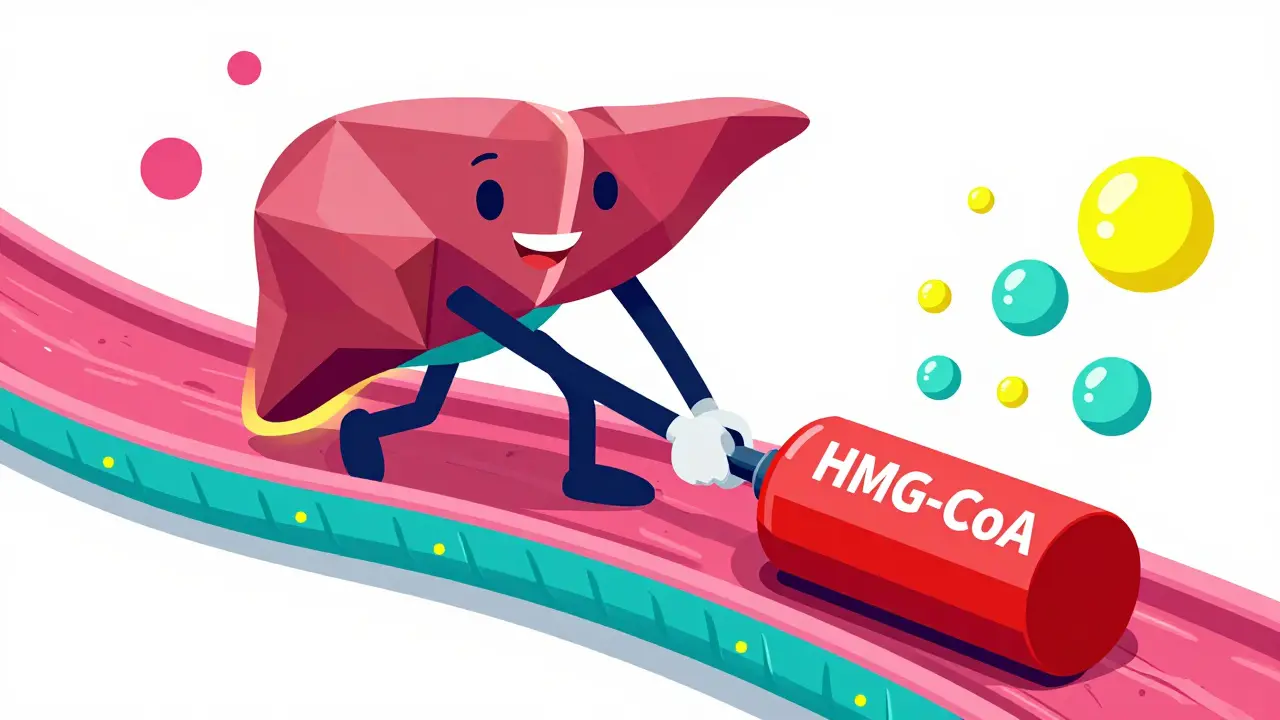
When you hear the word statin, most doctors think of a miracle drug. And for good reason. These medications have saved millions of lives by cutting heart attacks and strokes in half for people at risk. But for others, statins bring a different story - aching legs, stiff shoulders, and the constant fear that the cure might be worse than the disease.
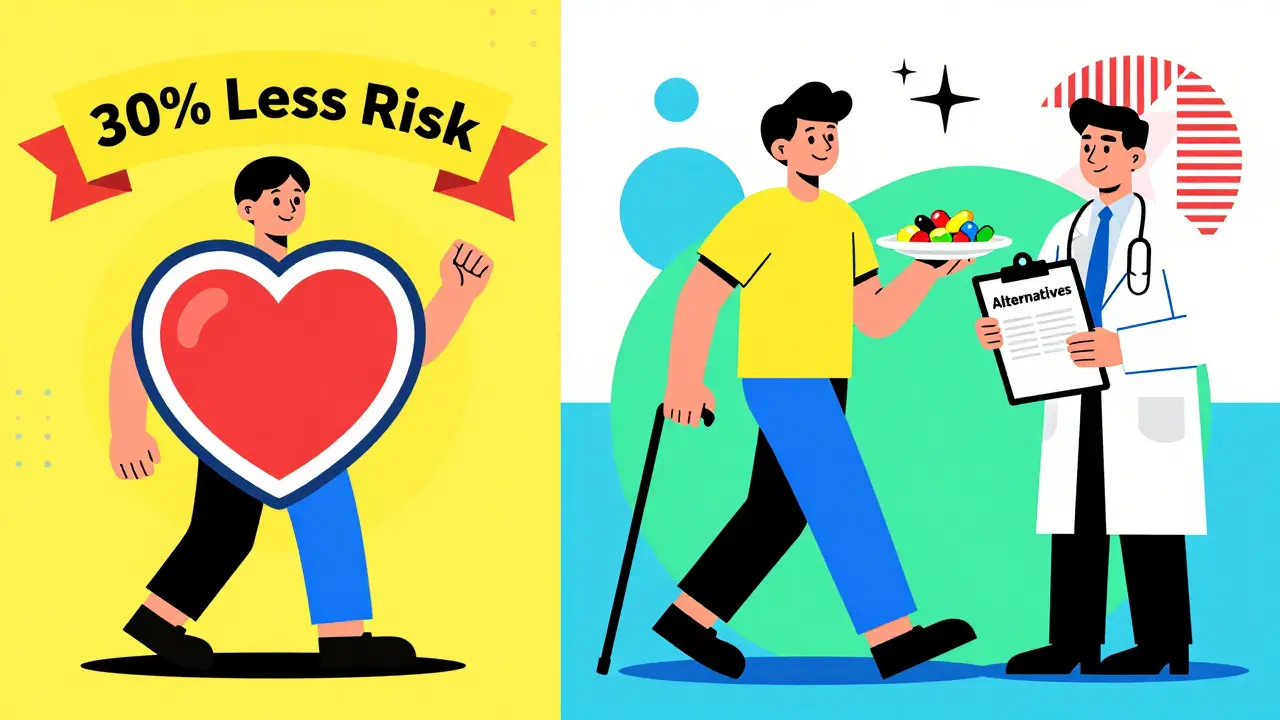
Let’s cut through the noise. Statins work. They lower LDL cholesterol - the kind that clogs arteries - by up to 60%. That’s not a guess. It’s backed by decades of studies like the 4S trial and the Heart Protection Study, where people on statins had 30% fewer major heart events. For someone with a history of heart disease, diabetes, or very high cholesterol, the math is simple: taking a statin cuts your risk of dying from a heart attack by nearly one-third. That’s not a small win. That’s life-changing.
How Statins Actually Work
Statins don’t just block cholesterol from food. They go straight to the source: your liver. Your body makes about 75% of its cholesterol naturally. That’s where the enzyme HMG-CoA reductase comes in - it’s the factory switch that turns on cholesterol production. Statins flip that switch off. When the liver makes less cholesterol, it starts pulling more LDL out of your blood to keep up. It’s like turning down a faucet and opening a drain at the same time.
The result? LDL levels drop by an average of 1.8 mmol/L (70 mg/dL). That’s not a minor tweak - it’s a full overhaul of your blood chemistry. But here’s the twist: statins do more than lower cholesterol. They calm inflammation in your artery walls, stabilize plaque so it doesn’t rupture, and help the lining of your blood vessels function better. That’s why even people with normal cholesterol but high inflammation (like those with diabetes or obesity) still benefit. It’s not just about numbers. It’s about protecting your arteries from the inside out.
The Muscle Pain Problem
Now, the flip side. Muscle pain. Not everyone gets it. But enough people do that it’s the number one reason people stop taking statins. Studies show between 5% and 29% of users report muscle aches, cramps, or weakness. Some feel it after a few weeks. Others notice it after six months. It’s not always dramatic. Sometimes it’s just harder to climb stairs. Or your shoulders feel heavy after gardening. Or you wake up with stiff legs that don’t loosen up until midday.
Here’s what most doctors don’t tell you: not all muscle pain from statins is the same. Most cases are mild - called myalgia - and don’t show up on blood tests. Only in rare cases (less than 0.1%) does it turn into rhabdomyolysis, where muscle tissue breaks down and can damage your kidneys. But even mild pain can be enough to make someone quit. A 2014 JAMA study found nearly half of statin users stop within a year. And guess what? Most of them didn’t have a heart attack. They just couldn’t stand the ache.
Why does this happen? Scientists think statins interfere with coenzyme Q10, a compound your muscles need for energy. They also mess with protein prenylation - a process that helps muscle cells repair themselves. It’s not just about cholesterol. It’s about how your muscles keep running.
Who’s Most at Risk?
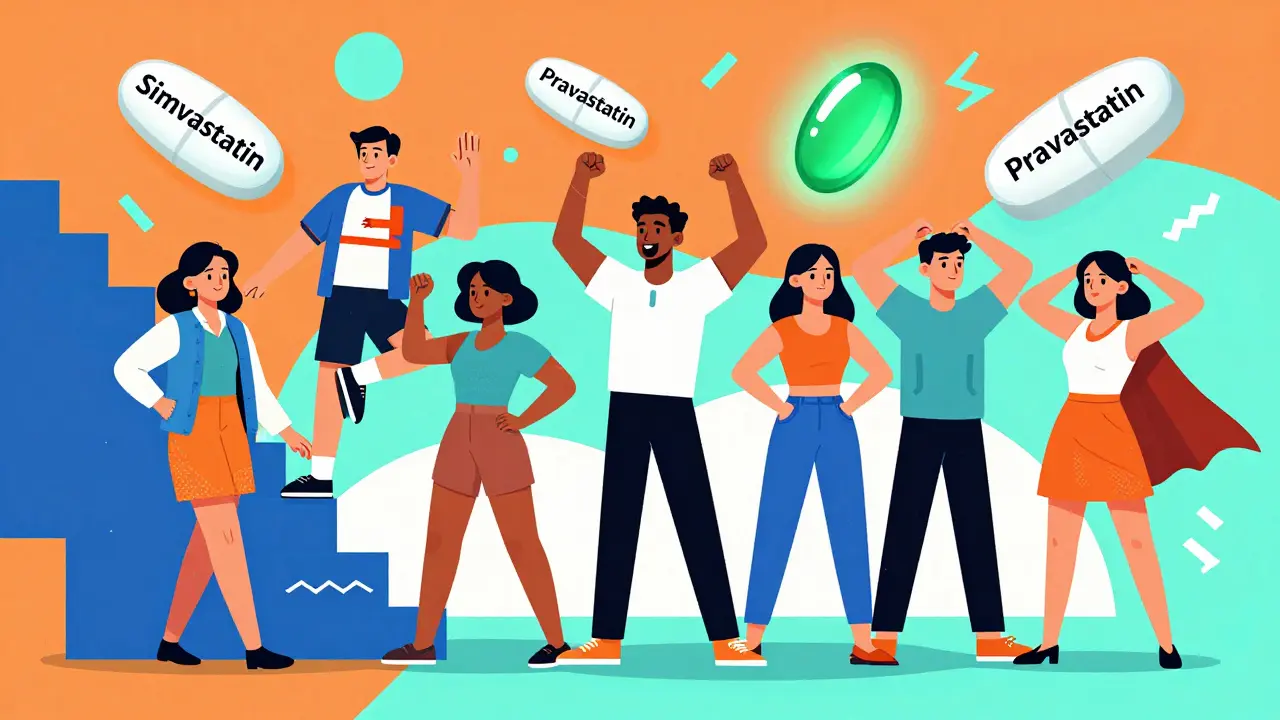
If you’re a woman over 65, especially if you’re small-framed or have kidney issues, your risk goes up. So does if you’re taking other meds like antibiotics (erythromycin), antifungals, or certain blood pressure drugs. People who drink grapefruit juice regularly - yes, that one grapefruit a day - have higher levels of some statins in their blood, which increases side effects. And if you’ve had muscle pain on one statin before, you’re more likely to get it on another.
Genetics play a role too. A gene called SLCO1B1 affects how your body clears simvastatin. If you have a certain version of it, your risk of muscle pain jumps. Most doctors don’t test for this - yet. But if you’ve had trouble before, it’s worth asking about.
What to Do If You Have Muscle Pain
You don’t have to suffer. And you don’t have to quit.
First, don’t assume it’s the statin. Muscle pain can come from thyroid issues, vitamin D deficiency, or just aging. Get your thyroid and vitamin D checked. Then, talk to your doctor about switching statins. Not all statins are equal. Pravastatin and fluvastatin are less likely to cause muscle issues. Rosuvastatin and atorvastatin are stronger, but also more likely to cause side effects. A simple switch from simvastatin to pravastatin can make all the difference.
Try a lower dose. Sometimes 10 mg of atorvastatin works just as well as 40 mg - with fewer side effects. Or switch to taking it every other day. Studies show that for many people, even intermittent dosing keeps LDL low enough to protect the heart.
Some people swear by coenzyme Q10 supplements. The science isn’t rock-solid, but in clinical practice, it helps a surprising number of people. Try 100-200 mg a day for a month. If the pain eases, it might be worth continuing.
And if nothing works? There are alternatives. Ezetimibe lowers cholesterol by blocking absorption in the gut. PCSK9 inhibitors are injectables that slash LDL by 60% - but they’re expensive. For many, the combo of ezetimibe and a low-dose statin gives the same protection as a high-dose statin alone - with fewer side effects.
The Real Choice
Here’s the truth no one says out loud: statins aren’t for everyone. They’re for people who need them. If you’ve had a heart attack, stroke, or have diabetes with high cholesterol - take the statin. The benefit is huge. But if you’re healthy, just have slightly high cholesterol, and feel awful on the pill - you’re not weak. You’re not failing. You’re just not the right candidate.
Stopping statins isn’t a failure. It’s a recalibration. Your doctor can still lower your risk with diet, exercise, and non-statin meds. The goal isn’t to take a pill forever. The goal is to stay healthy - without turning your life into a constant ache.
And if you’re one of those people who thought statins were a magic bullet? You’re not alone. But now you know: they’re powerful tools. Not perfect ones. And your body’s feedback? That matters more than any guideline.
Do statins really reduce heart attacks?
Yes. For people at high risk - those with a history of heart disease, diabetes, or very high LDL - statins reduce major heart events by about 30%. That’s based on decades of clinical trials involving hundreds of thousands of people. Every 1 mmol/L drop in LDL cholesterol lowers heart attack risk by 22%. For someone with a 20% risk of a heart attack in 10 years, statins can cut that to around 14%.
Is muscle pain from statins permanent?
No. In most cases, muscle pain goes away within weeks of stopping or switching statins. Some people feel better in days. A small number may have lingering symptoms, but this is rare. If pain continues after stopping the drug, it’s likely caused by something else - like vitamin D deficiency, thyroid problems, or arthritis. Always get it checked.
Can I take statins if I’m on other medications?
Some medications can increase statin side effects. Avoid combining statins with certain antibiotics (like erythromycin), antifungals (ketoconazole), or grapefruit juice - especially with simvastatin or lovastatin. Always tell your doctor about every pill, supplement, or herbal product you take. They can check for dangerous interactions. Newer statins like pravastatin or rosuvastatin have fewer interactions, so switching may be an option.
Are generic statins as good as brand names?
Yes. Generic atorvastatin, simvastatin, and rosuvastatin are chemically identical to their brand-name versions (Lipitor, Zocor, Crestor). The FDA requires them to work the same way. The only difference is cost. Generic statins can cost as little as $4 a month. There’s no reason to pay more unless your doctor recommends a specific brand for a medical reason - which is rare.
What if I can’t tolerate statins at all?
You still have options. Ezetimibe lowers LDL by 15-20% and can be used alone or with a low-dose statin. PCSK9 inhibitors like evolocumab or alirocumab cut LDL by 60% and are given as monthly injections. Lifestyle changes - a Mediterranean diet, daily walking, and weight loss - can reduce LDL by 20-30% on their own. For many people, combining these approaches gives strong protection without statins.

8 Comments
Nandini Wagh
February 26, 2026 AT 10:15Oh wow, finally someone says it out loud. I’ve been on simvastatin for 3 years and my legs feel like they’re filled with wet cement. My yoga instructor asked if I’d been kidnapped by a robot. I said no, just the pharmaceutical industry’s finest work. 🙃
And yes, I switched to pravastatin. My hamstrings thank you. My bank account too - $4/month is basically free therapy.
Holley T
February 26, 2026 AT 13:18I find it fascinating how the medical establishment has turned statins into this quasi-religious sacrament - take it or you’re a reckless idiot - while simultaneously ignoring the fact that the entire lipid hypothesis is built on shaky, industry-funded correlations that barely hold up under scrutiny. The fact that we’re still pushing these drugs as if they’re penicillin for the arteries is either gross negligence or a brilliant marketing campaign that’s lasted longer than the Soviet Union. And don’t even get me started on how ‘LDL reduction = life saved’ is used like a magic incantation while ignoring that many people with ‘high LDL’ live to 95 without ever taking a pill. The data is messy. The narrative? Clean. Too clean. Suspiciously clean.
Ashley Johnson
February 27, 2026 AT 04:05Statins are a scam. The whole thing. Big Pharma doesn’t want you to know that cholesterol isn’t even the real problem - it’s the glyphosate in your food and the 5G towers in your neighborhood. I stopped my statin and started taking colloidal silver and turmeric. My legs feel better. My skin glows. My neighbor says I look younger. Coincidence? I think not. Also, the FDA is controlled by shadow governments. Read the fine print on the label - it says ‘may cause muscle pain.’ MAY. That’s not a warning. That’s a suggestion. Like a polite nudge from a ghost.
Lillian Knezek
February 28, 2026 AT 00:52I tried statins. My muscles screamed. I cried. I Googled ‘statin rhabdo horror stories’ and now I sleep with a flashlight. 😭
Turns out my liver hates Big Pharma. Also, I heard on a podcast that statins cause autism in toddlers if you breathe near someone taking them. Not sure if true. But I’m not taking chances. 🤷♀️
Maranda Najar
February 28, 2026 AT 22:44I am weeping. Weeping, I tell you. Not for the broken bodies of the statin-sufferers - no, that’s too easy - but for the quiet, unspoken tragedy of a society that has outsourced its health to a pill. We’ve become a culture of chemical crutches, where ‘wellness’ is measured in milligrams, not movement. The human body, once a symphony of resilience, is now a malfunctioning machine we keep patching with synthetic bandaids. And when it screams? We call it ‘side effect.’ Not a warning. Not a plea. Just… noise.
I want to hug every person who quit statins and chose to walk instead. Who chose garlic over pills. Who chose sunlight over science. You are not failing. You are awakening.
Christopher Brown
March 2, 2026 AT 16:43Americans whining about muscle pain like it’s a war crime. In my country, people work 16-hour shifts with broken bones and still show up. Statins are cheap. Life is hard. Take the pill. Stop complaining.
Kenzie Goode
March 3, 2026 AT 07:11I appreciate how balanced this is. I was on a high-dose statin after my stent and thought I was doing everything right. Then I started feeling like I’d been hit by a truck every morning. I switched to pravastatin 10mg, added CoQ10, and now I hike twice a week. No drama. No guilt. Just… better.
It’s not about being anti-medical. It’s about being pro-body.
Bhaskar Anand
March 3, 2026 AT 17:35Statins are necessary. You think your yoga and turmeric will stop a heart attack? Ha. My uncle died at 58 because he listened to ‘natural health gurus.’ He had diabetes. High LDL. Didn’t take statins. Now he’s dead. And his wife is alone. You want to be healthy? Take the pill. Period. No drama. No ‘maybe.’ Just do it. Your life isn’t a TikTok trend.