
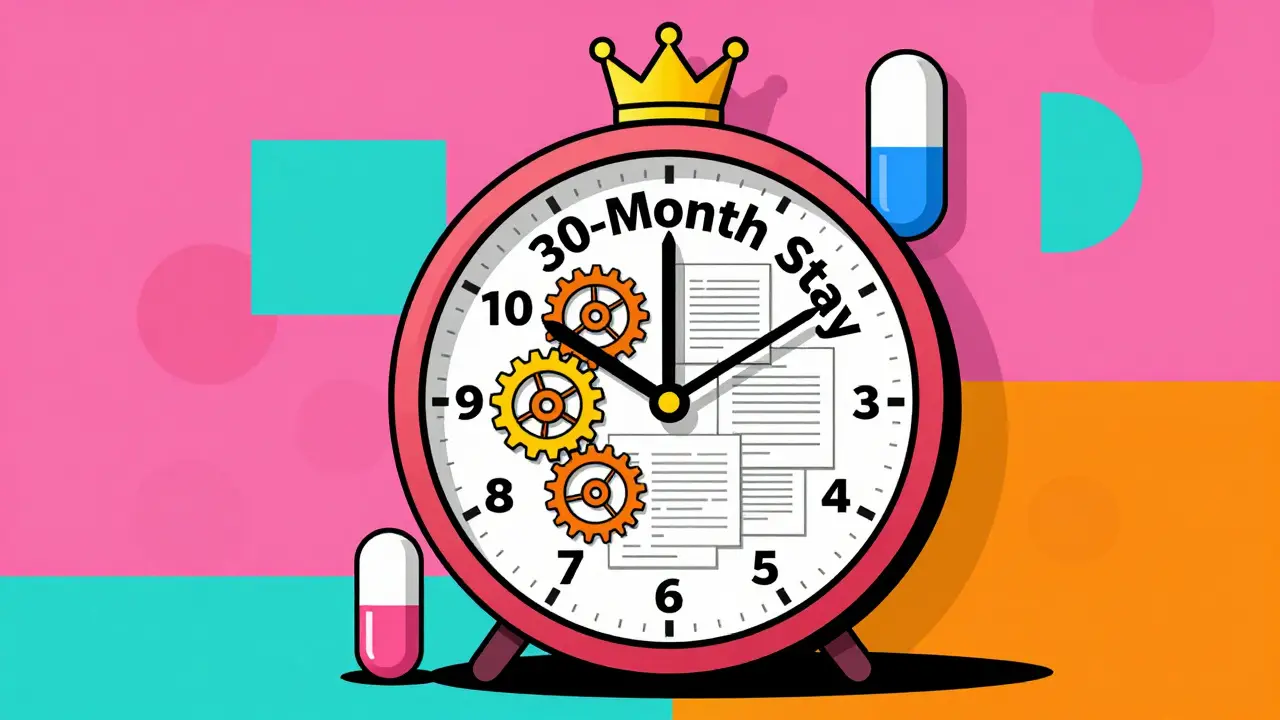
The 30-month stay is one of the most powerful tools in U.S. drug policy - not because it speeds up access to cheap medicines, but because it can hold them back for years. It’s not a law you hear about on TV, but it’s the reason millions of Americans pay hundreds of dollars more for prescriptions than they should. This isn’t about bad actors or corporate greed alone - it’s a system designed to balance innovation and access, but in practice, it often tips hard in favor of brand-name drug makers.
How the 30-Month Stay Actually Works
When a generic drug company wants to sell a copy of a brand-name medicine, they file something called an Abbreviated New Drug Application, or ANDA. But if that brand-name drug is still under patent, the generic maker has to challenge it. They do this by filing what’s called a Paragraph IV certification. It’s basically a legal notice saying: "We think your patent is invalid, or we won’t infringe it."
Once that notice is sent, the brand-name company has 45 days to sue. If they do, the FDA is forced to pause final approval of the generic drug for up to 30 months. That’s the 30-month stay. It doesn’t stop the FDA from reviewing the application. In fact, they can - and often do - give what’s called tentative approval during this time. But they can’t let the drug hit the market until the clock runs out or the court decides the patent is invalid.
Here’s the kicker: the 30-month clock doesn’t start when the lawsuit is filed. It starts when the last patent holder gets the notice. And if the lawsuit drags on past 30 months? The stay can extend. Courts can shorten it, but they rarely do. That means a generic drug can sit in limbo for years - even if the patent should’ve expired long ago.
Why This Matters: The Real Cost of Delay
In 2022, the FDA received over 1,000 ANDAs. Nearly 80% of them were under patent litigation. That’s not a coincidence. It’s the norm. And while the FDA can tentatively approve these drugs, final approval doesn’t mean immediate market entry. The median time between a 30-month stay ending and a generic drug actually launching? 3.2 years.
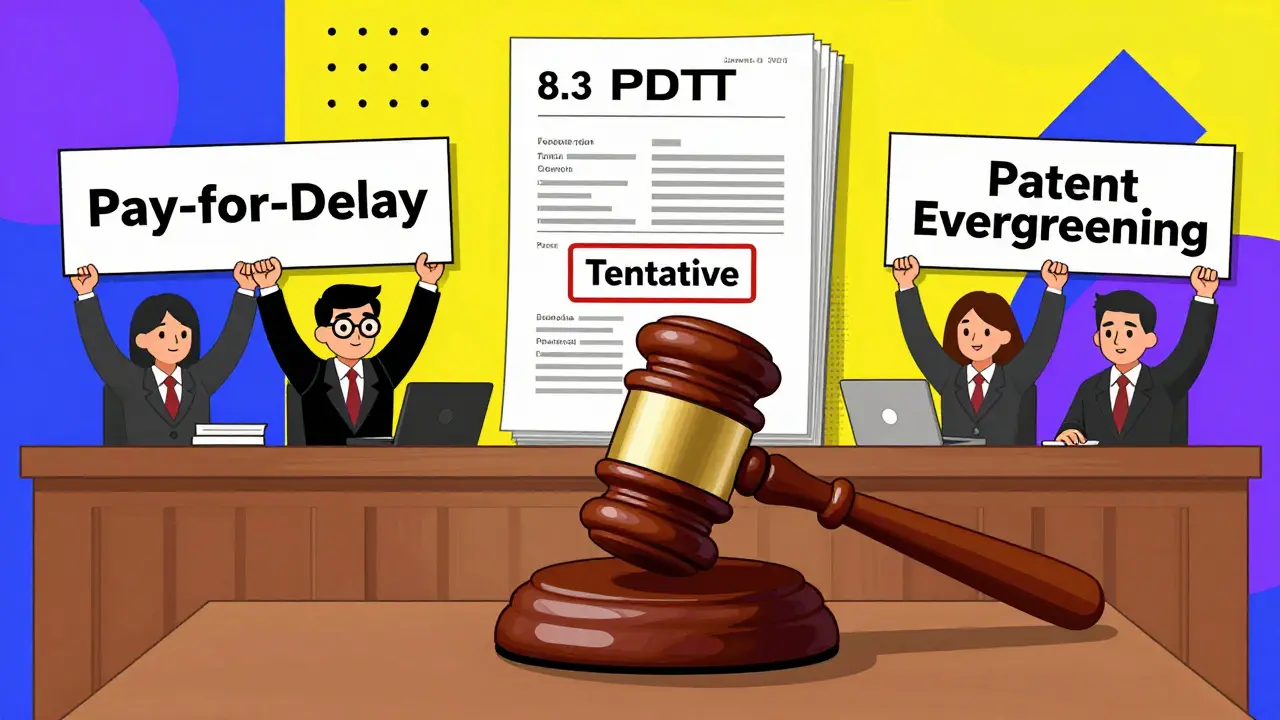
Why so long? Because the delay isn’t just legal. It’s commercial. Generic companies spend millions on litigation. They delay manufacturing ramp-up. They wait to see if a competitor will win first-to-file exclusivity. They fear being sued again on another patent. And brand-name companies? They use this time to tweak the drug - change the dosage, switch the pill shape, add a new coating - and file new patents. These aren’t breakthroughs. They’re tricks. A 2019 Brookings study found that 67% of patents listed for top-selling drugs were filed after the original approval. That’s patent evergreening. And it’s legal.
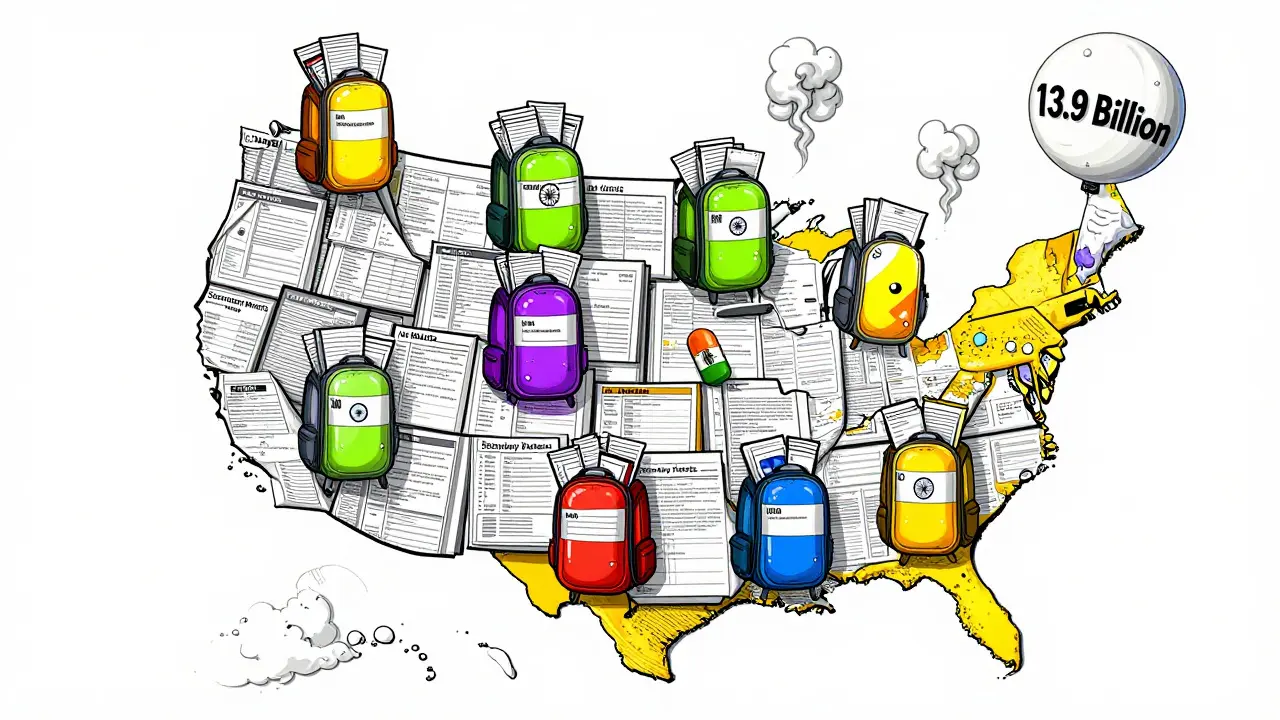
The result? A 2021 FTC report showed that 78% of Paragraph IV lawsuits ended in settlements that delayed generic entry beyond patent expiration. These aren’t court victories. They’re backroom deals. The generic company agrees to wait months or even years before launching - in exchange for a cut of the brand’s profits. This is called "pay-for-delay." And it’s costing U.S. consumers $13.9 billion a year in extra drug costs.
Who Wins? Who Loses?
Brand-name drug companies say the 30-month stay is necessary to protect innovation. Without it, they argue, no company would invest $2.6 billion to develop a new drug. And there’s truth to that. The system has helped bring over 14,000 generic drugs to market since 1984. But the numbers don’t lie: the average brand-name drug faces its first generic challenge 5.2 years after FDA approval. That’s not a rush to market. That’s a long runway for profits.
Meanwhile, generic manufacturers spend $3 to $5 million per ANDA just on patent litigation. A 2022 survey found 78% of them said the threat of litigation adds 6 to 9 months to their development timelines. That’s not just money. It’s time. Time they could’ve spent making more drugs.
And patients? They’re stuck paying full price. A 2022 Congressional Budget Office report found that generic competition typically drops drug prices by 80-85% within a year. But if the generic can’t launch because of a 30-month stay, that price drop doesn’t happen. For drugs like Humira, which had over 20 patents listed in the Orange Book, patients waited over a decade for affordable alternatives.
How It Compares to the Rest of the World
The U.S. is the only country that ties regulatory approval directly to patent litigation. In Europe, generic companies can file for approval as soon as the data exclusivity period ends - no lawsuits needed. Canada has a 24-month stay, but it’s simpler. No multiple patents. No endless litigation.
The U.S. system is uniquely complex. And it’s getting worse. In 1995, brand-name companies listed an average of 1.2 patents per drug in the FDA’s Orange Book. By 2022, that number had jumped to 8.3 patents. That’s not innovation. That’s a wall. And the 30-month stay is the gatekeeper.
What’s Changing? And What Could Change Next
Pressure is building. In 2023, Congress introduced the Affordable Prescriptions for Patients Act, which would cut the 30-month stay down to 18 months and ban stays for secondary patents. The FTC has called for reform, saying the system "creates unnecessary barriers." Even former FDA Commissioner Scott Gottlieb, once a defender, now admits the system is "stretched too thin."
The FDA itself is pushing for more transparency. Their 2023 draft guidance asks companies to list only patents that truly cover the drug’s active ingredient - not every minor variation. That could block a lot of frivolous lawsuits.
But the biggest shift might come from outside. Chinese and Indian manufacturers now make up 63% of all ANDA submissions. They’re not afraid of U.S. patent law. They’re building factories, hiring lawyers, and filing challenges faster than ever. And they don’t play by the same rules. If the 30-month stay is meant to protect U.S. innovation, it’s failing - because the next wave of generics won’t come from Pfizer or Merck. They’ll come from Sun Pharma and Cipla.
The Bottom Line
The 30-month stay was never meant to be a delay tactic. It was meant to be a pause - a chance for courts to decide patent disputes without chaos. But today, it’s a weapon. A tool for extending monopolies. A barrier for patients who can’t afford their meds. And a financial burden for companies trying to do the right thing.
There’s no magic fix. But if the stay were shortened, or if secondary patents couldn’t trigger it, generic drugs could reach patients months - even years - sooner. That’s not just policy. That’s money in people’s pockets. That’s health.
What triggers a 30-month stay in generic drug approval?
A 30-month stay is triggered when a generic drug manufacturer files a Paragraph IV certification challenging a patent listed in the FDA’s Orange Book, and the brand-name drug company files a patent infringement lawsuit within 45 days of receiving notice. Once the lawsuit is filed, the FDA is legally required to delay final approval of the generic drug for up to 30 months.
Can the FDA approve a generic drug during the 30-month stay?
Yes. The FDA can and often does issue "tentative approval" during the 30-month stay. This means the agency has reviewed the application and found it meets all scientific and regulatory standards - but it can’t authorize the drug for sale until the stay ends or the patent dispute is resolved. Tentative approval is common: in 2022, 78% of ANDAs received this status during litigation.
Why do some generic drugs launch years after the 30-month stay ends?
The 30-month stay only removes the legal barrier to approval. It doesn’t force a launch. Many generic manufacturers delay commercial production to avoid being first into a crowded market, wait for competitor litigation to resolve, or simply aren’t ready to scale manufacturing. Some even negotiate pay-for-delay deals with brand companies, agreeing to postpone launch in exchange for a share of profits. As a result, the median time between stay expiration and actual market entry is 3.2 years.
What is "patent evergreening," and how does it relate to the 30-month stay?
Patent evergreening is when brand-name drug companies file new patents on minor changes - like a new pill coating, dosage form, or manufacturing process - after the original patent expires. These aren’t new drugs, just tweaks. The 30-month stay allows these secondary patents to trigger new litigation delays. A 2019 Brookings study found 67% of patents listed for top-selling drugs were filed after the original approval, turning the stay into a tool for extending monopolies.
Does the 30-month stay apply to biologics?
No. Biologics - complex drugs like insulin, cancer therapies, and autoimmune treatments - are governed by a different law: the Biologics Price Competition and Innovation Act (BPCIA). Instead of a 30-month stay, they get 12 years of data exclusivity, with no automatic litigation-triggered delay. This makes biosimilar approval faster and less entangled in patent litigation than traditional small-molecule generics.
What’s the impact of the first applicant exclusivity?
The first generic company to successfully challenge a patent gets 180 days of exclusive marketing rights - meaning no other generics can enter during that time. This creates intense competition: in 2022, 72% of drugs with Paragraph IV challenges had multiple filers. But it also leads to strategic delays. Some companies file early just to claim the exclusivity window, then sit on it, preventing others from entering - even after their own patent challenge fails.

10 Comments
Benjamin Fox
February 18, 2026 AT 23:18This whole system is a joke 🤡 Brand names just keep slapping on new patents like it's a damn game of whack-a-mole. We're paying $500 for insulin while India churns out generics for $5. America's innovation? More like innovation theft.
Jana Eiffel
February 18, 2026 AT 23:54The 30-month stay was conceived as a procedural buffer, not a strategic weapon. Its transformation into a mechanism for monopolistic prolongation reflects a deeper institutional failure - one wherein legal frameworks, intended to mediate between public good and private incentive, have been co-opted by economic power. We must ask not only whether the system functions, but whether it still serves justice.
Tommy Chapman
February 19, 2026 AT 12:20Stop crying about drug prices. If you can't afford your meds, maybe don't live in a country that lets people get rich off sick people. I'm not mad at the companies - I'm mad at the idiots who think they deserve free medicine. Get a job. Or move to Canada.
Freddy King
February 20, 2026 AT 22:53The 30-month stay is essentially a regulatory friction vector that introduces latency into the generic entry function. What we're seeing isn't innovation - it's patent portfolio arbitrage. The FDA's tentative approval mechanism creates a pseudo-market state, where regulatory readiness ≠ commercial readiness. The real bottleneck? Capital allocation under asymmetric litigation risk. And yeah, pay-for-delay is just collusive oligopoly dressed up as settlement.
Laura B
February 21, 2026 AT 02:29I appreciate how detailed this is. I’ve been on a few meds that took forever to go generic, and it’s frustrating. It’s not just about money - it’s about dignity. When you’re choosing between rent and your prescription, this isn’t policy. It’s survival.
Robin bremer
February 21, 2026 AT 21:13bro the whole thing is rigged 😭 i mean like… why do we even have to deal with this? i just want my diabetes meds to be cheap and not have to wait 5 years for some lawyer to finish his coffee
Hariom Sharma
February 22, 2026 AT 07:42This is why India is the pharmacy of the world. We don’t play games with patents. We make medicine that saves lives. If America can’t fix this, maybe it’s time to stop pretending they’re the leaders in healthcare. We’ve been making affordable insulin for decades. You just need the will to do it.
Courtney Hain
February 23, 2026 AT 23:12You think this is about patents? Nah. This is a deep state operation. The FDA, Big Pharma, and the DOJ are all in bed together. The 30-month stay? It’s not even real - it’s a smokescreen. Behind it? A global cartel that controls the entire supply chain. They’re using patent litigation to hide the fact that they’re poisoning the water supply with microplastics and then charging you $1200 for the antidote. And don’t even get me started on the CDC’s role in suppressing biosimilar data. It’s all connected. Wake up.
Ashley Paashuis
February 24, 2026 AT 16:11The ethical tension here is profound. The system was designed to incentivize innovation while ensuring eventual access. Yet, the current implementation transforms a procedural pause into a structural barrier. One cannot reconcile the moral imperative of equitable healthcare with a legal architecture that systematically privileges profit over patient outcomes. Reform is not merely prudent - it is obligatory.
Arshdeep Singh
February 25, 2026 AT 04:44Lmao Americans think they invented medicine. We in India have been making generics since the 80s. You people sit around suing each other for 30 months while we ship pills to 150 countries. Your system isn't broken - it's designed to fail. The only thing that'll fix it? Competition. And we're coming.