
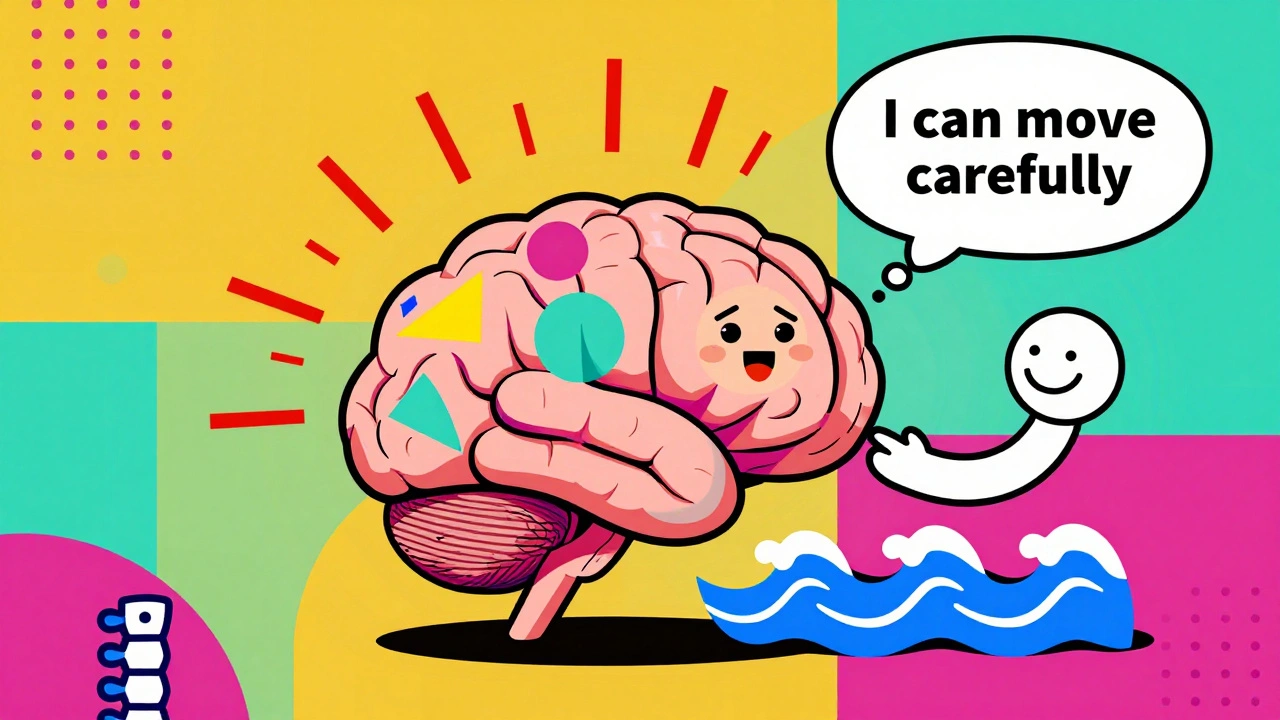
Chronic pain isn’t just a physical sensation-it’s a whole-body experience that rewires how you think, feel, and move. If you’ve been living with pain for months or years, you’ve probably tried medications, physical therapy, or injections. But what if the key to feeling better isn’t just fixing your body, but changing how your mind responds to pain? That’s where CBT for chronic pain comes in.
What Is CBT for Chronic Pain?
Cognitive Behavioral Therapy for Chronic Pain (CBT-CP) is a structured, evidence-based approach that helps people manage long-term pain by changing the way they think about it and react to it. It doesn’t erase pain, but it reduces how much control pain has over your life. Unlike traditional pain treatments that focus only on tissue damage, CBT-CP looks at the whole picture: your thoughts, emotions, behaviors, and physical sensations. It’s based on the idea that pain isn’t just a signal from your nerves-it’s shaped by your beliefs, fears, and habits. For example, if you believe “this pain means I’m getting worse,” you might avoid moving altogether. That avoidance leads to stiffness, weakness, and more pain. CBT breaks that cycle. It was developed in the 1970s and 1980s by pain psychologists like Dennis Turk and Robert Kerns, and today it’s the most studied psychological treatment for chronic pain. The U.S. Department of Veterans Affairs rolled out a nationwide CBT-CP program in 2010 after seeing how much it helped veterans with persistent pain.How CBT Actually Works for Pain
CBT-CP isn’t about “thinking happy thoughts” to make pain disappear. It’s practical. It gives you real tools you can use every day. Here’s how it works in practice:- Pain neuroscience education: You learn how pain works in the brain-not just the spine or joints. This helps reduce fear. Many people think pain = damage. But in chronic pain, the nervous system becomes oversensitive. Learning this reduces panic.
- Cognitive restructuring: You identify negative thoughts like “I’ll never get better” or “If I move, I’ll hurt more,” and replace them with balanced ones: “I can move carefully, and it won’t ruin me.”
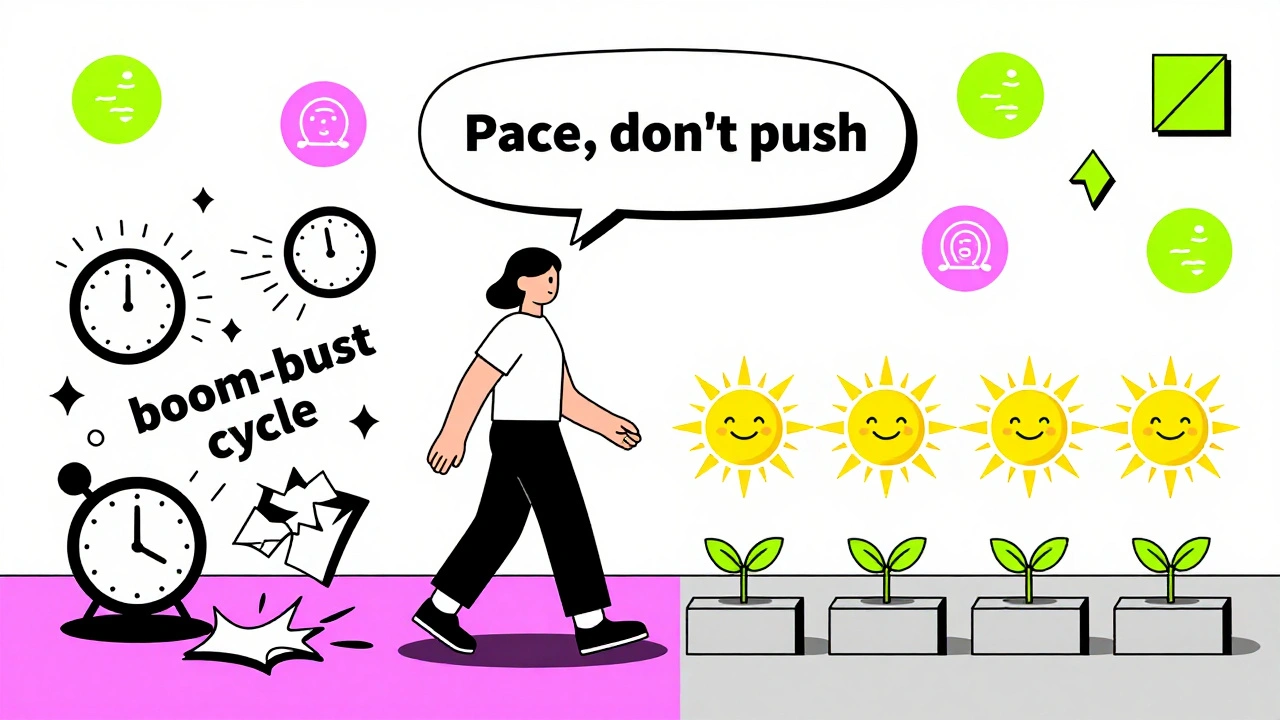
- Activity pacing: Instead of doing too much on good days and crashing afterward (the “boom-bust cycle”), you learn to spread activity evenly. This builds stamina without triggering flare-ups.
- Relaxation training: Techniques like diaphragmatic breathing and progressive muscle relaxation lower stress, which directly reduces pain sensitivity.
- Behavioral activation: You slowly reintroduce activities you’ve avoided-walking, socializing, hobbies-not because the pain is gone, but because you’re learning to live with it better.
A typical program lasts 8 to 16 weekly sessions, each 60 to 90 minutes long. Some are done one-on-one; others are group-based. The VA uses a 10- to 12-session workbook-style approach that’s been tested in thousands of patients.
What Does the Research Say?
A 2023 review of 13 studies (over 1,600 participants) confirmed CBT-CP is the most reliable psychological treatment for chronic pain. But here’s the truth: it doesn’t always make pain go down by a lot.- For pain intensity, improvements are modest. Only about 25% of studies showed a significant drop compared to usual care.
- For depression and anxiety, results are strong. Up to 75% of patients saw big improvements.
- For function and quality of life, the gains are meaningful. People report being able to cook, walk the dog, or play with their kids again-even if the pain is still there.
One major 2024 study (the STAMP trial) compared CBT-CP to mindfulness therapy in 254 people with chronic low back pain who were on opioids. Both treatments worked equally well. Neither made pain vanish, but both helped people reduce opioid use. In the CBT group, 36% cut their daily opioid dose-nearly double the rate of those getting usual care.
Experts agree: CBT-CP isn’t a magic cure. But it’s one of the few treatments that actually helps people reclaim their lives. As Dr. Robert Kerns, a leading pain psychologist, put it: “It targets the biopsychosocial mechanisms maintaining chronic pain.”
Who Benefits Most From CBT?
CBT-CP works best for certain types of pain and certain people.- Best for: Chronic low back pain, fibromyalgia, arthritis, and pain with anxiety or depression. People who are open to learning new skills and willing to practice daily.
- Less effective for: Pure neuropathic pain (like diabetic nerve pain) or when there’s no emotional component. Some studies show it doesn’t help men as much as women, though this is still debated.
Demographics matter too. Women make up 65% of CBT-CP patients. People with college degrees are more likely to try it. And those with depression are 81% more likely to benefit.
But here’s the key: it doesn’t matter if you’re young or old, rich or poor-if you’re tired of letting pain control you, CBT can help. The biggest predictor of success? Showing up. Patients who complete 80% or more of sessions are 2.3 times more likely to see improvement.
CBT vs. Other Treatments
How does CBT stack up against other options?| Treatment | Effect on Pain Intensity | Effect on Mood | Reduces Opioid Use? | Requires Daily Practice? |
|---|---|---|---|---|
| CBT for Chronic Pain | Moderate | Strong | Yes (36% reduce use) | Yes |
| Mindfulness Therapy | Moderate | Strong | Yes (similar to CBT) | Yes |
| Physical Therapy | Moderate | Minimal | No | Yes |
| Opioid Medications | Short-term relief | Can worsen depression | No-increases dependence | No |
| Acupuncture / Massage | Temporary relief | Mild | Yes (some) | No |
CBT doesn’t replace physical therapy-it complements it. People who do both report 40% greater improvement in function than those who do CBT alone. The same goes for combining CBT with pacing, gentle movement, or even biofeedback.
And unlike drugs, CBT has no side effects. No drowsiness, no constipation, no risk of addiction. That’s why it’s recommended as first-line treatment in 92% of international pain guidelines.
Real Stories: What Patients Say
In the STAMP trial, 78% of people said CBT helped them “regain control.” One woman, 45, with chronic back pain said: “Learning to pace activities prevented my boom-bust cycles. I don’t have to wait for pain to disappear to live.” On Reddit’s r/ChronicPain, 62% of posts about CBT are positive. Common praises:- “I have tools I can use when I’m in a flare-up.”
- “I stopped taking opioids because I finally felt like I could cope.”
- “I didn’t realize my fear of movement was making it worse.”
But not everyone loves it. About 29% of negative comments say: “It felt like they were blaming my pain on my mind.” Or: “Too hard to apply when I’m in severe pain.”
That’s a fair critique. CBT isn’t about denying pain. It’s about not letting pain dictate your choices. If you’re in a flare-up, you don’t push through-it’s about adjusting, not enduring.
Getting Started With CBT
Finding a qualified therapist is the biggest hurdle. Not all therapists are trained in CBT-CP. Look for someone with experience in chronic pain, not just anxiety or depression.- Ask: “Do you use a structured CBT protocol for chronic pain?”
- Check if they use tools like the Pain Catastrophizing Scale or Brief Pain Inventory.
- Ask about their training. The VA requires 40 hours of specialized training plus supervision.
If in-person therapy isn’t an option, virtual CBT (vCBT) works just as well. A 2021 study showed video-based CBT led to 30% or greater pain improvement in 3 months-same as in-person.
There are also FDA-cleared digital CBT apps for pain. They’re not a replacement for therapy, but they’re good for reinforcement. Some include daily reminders, pain tracking, and breathing exercises.
Barriers and How to Overcome Them
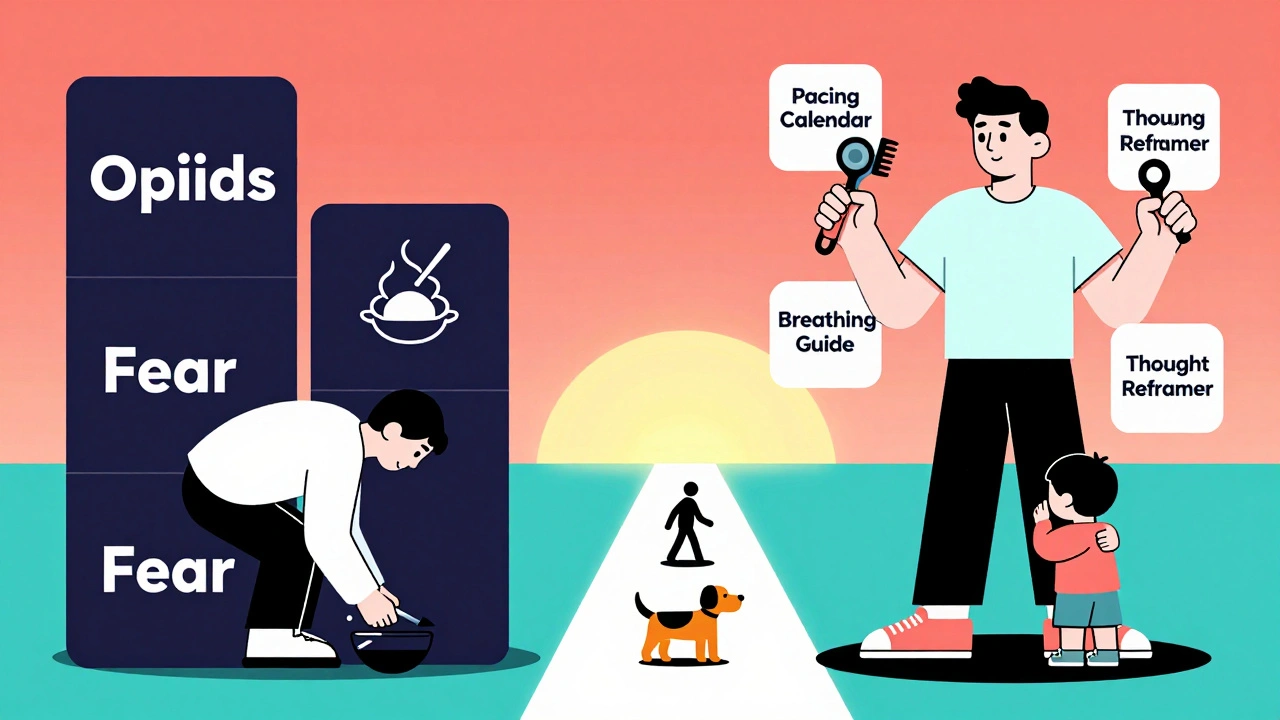
Despite the evidence, most people never try CBT. Why?- Insurance won’t cover it: Medicare only pays for 10 sessions a year-but you need 10 to 12 to complete the program. Commercial insurers vary: Aetna covers 8, UnitedHealthcare covers 12.
- Doctors don’t refer: Only 44% of primary care providers routinely suggest CBT.
- Patients are skeptical: 32% think “it’s all in my head.”
Solutions exist:
- Ask your doctor for a referral. Bring research if they’re unsure.
- Use telehealth. It improves attendance by 22%.
- Look for integrated care: clinics that offer CBT right next to your physical therapist or pain doctor. No-show rates drop from 29% to 12%.
What’s Next for CBT and Chronic Pain?
The future of CBT-CP is personalization. Researchers are now using AI to match patients with the right CBT techniques based on their pain type, mood, and behavior patterns.- Wearables that track activity and send alerts when you’re overdoing it.
- 4- to 6-session “brief CBT” programs showing promise in early trials.
- Integration with value-based payment models-hospitals are now paid for outcomes, not just procedures.
The NIH has invested $14.2 million (2024-2026) to improve CBT for opioid-treated patients. And by 2030, the American Pain Society predicts CBT use will triple as more insurers recognize its cost-saving potential.
Right now, only 15% of eligible U.S. patients get CBT. But with telehealth and digital tools, that number could rise to 85%-especially in rural areas where specialists are scarce.
Final Thoughts
CBT for chronic pain isn’t about fixing your body. It’s about reclaiming your life. If you’ve been stuck in a loop of pain → fear → inactivity → more pain, CBT gives you an exit strategy. It’s not easy. It takes effort. You have to practice, even on hard days. But unlike pills, the skills you learn last. You don’t need a prescription. You don’t need to wait for insurance approval to start learning. You can begin today-by noticing one thought that makes your pain feel worse, and asking: “Is that really true?”Chronic pain doesn’t have to be your whole story. CBT helps you write the next chapter.
Does CBT for chronic pain really work, or is it just in my head?
CBT doesn’t mean your pain isn’t real. Chronic pain is a physical condition, but your brain plays a big role in how you experience it. CBT helps you change unhelpful thoughts and behaviors that make pain worse-like avoiding movement or fearing flare-ups. Studies show it reduces depression, improves function, and helps people cut back on opioids. It’s not magic, but it’s backed by over 30 years of research.
How long does CBT for chronic pain take to work?
Most people start noticing changes in 4 to 6 weeks, especially in mood and activity levels. Pain intensity may not drop right away-many see small improvements after 8 to 12 sessions. The key is consistency. People who complete 80% or more of sessions are over twice as likely to see lasting results. It’s not a quick fix, but the skills stick with you long after therapy ends.
Can I do CBT for chronic pain on my own without a therapist?
You can start with self-guided apps or workbooks-many are FDA-cleared and evidence-based. But for best results, especially with severe pain or depression, working with a trained therapist is recommended. Therapists help you spot blind spots, adjust techniques, and stay motivated. Apps are great for reinforcement, but they can’t replace personalized feedback.
Is CBT better than physical therapy for chronic pain?
They work best together. Physical therapy improves strength and mobility. CBT improves your confidence, reduces fear of movement, and helps you stick with exercises. One study found people who did both improved 40% more than those who did CBT alone. If you can only pick one, choose based on your biggest barrier-if you’re too afraid to move, start with CBT. If you’re physically weak, start with PT.
Will CBT help me stop taking opioids?
Yes, for many people. In the 2024 STAMP trial, 36% of those in CBT reduced their daily opioid use, compared to only 17% in usual care. CBT helps you build coping skills so you don’t rely on pills to manage pain or stress. It doesn’t force you to quit, but it gives you alternatives. Always work with your doctor to taper safely.
What if I don’t believe CBT will work for me?
Skepticism is normal. Many patients feel the same way at first. The key is to try it with an open mind-not because you have to believe, but because you’re willing to test it. Think of it like a science experiment: “What if I try pacing for two weeks and track my pain and mood?” Most people find that even small changes create momentum. You don’t need to be convinced-you just need to show up.
Does insurance cover CBT for chronic pain?
Coverage varies. Medicare covers up to 10 sessions per year-often not enough. Commercial insurers like UnitedHealthcare cover 12, Aetna covers 8. Medicaid coverage depends on your state. Always call your insurer and ask: “Do you cover Cognitive Behavioral Therapy for Chronic Pain under mental health benefits?” If not, ask for a prior authorization using the diagnosis code G89.29 (chronic pain, other). Some clinics offer sliding-scale fees.

12 Comments
Jay Everett
December 3, 2025 AT 09:59Man, I wish I’d found this 5 years ago. CBT didn’t feel like magic, but it felt like I finally got a map instead of just a compass pointing to hell. I used to think moving meant ‘giving in’ to pain-now I know it’s like training a stubborn dog. Slow. Patient. No yelling. And yeah, I still have pain, but I don’t live in it anymore. 😊
मनोज कुमार
December 3, 2025 AT 19:21CBT is just neuroplasticity with a marketing budget. Real pain needs real intervention. Stop pathologizing suffering. You dont fix broken bones with affirmations. 🤷
Laura Baur
December 5, 2025 AT 02:40It’s fascinating how society has weaponized self-help language to absolve systemic failures. If chronic pain were treated as a legitimate medical emergency instead of a psychological inconvenience, we wouldn’t need ‘tools’-we’d need access to care, not cognitive reframing. The fact that this is even framed as a ‘solution’ speaks volumes about how little our healthcare system values human dignity. You don’t ‘manage’ a broken body-you fix it. Or you stop pretending it’s all in the mind. 🙄
Steve Enck
December 6, 2025 AT 18:37While the statistical efficacy of CBT-CP is statistically significant, one must interrogate the ontological underpinnings of its epistemological framework. The reduction of pain to a biopsychosocial construct inadvertently reifies Cartesian dualism, wherein the body becomes a mere vessel for cognitive modulation. One cannot empirically validate the subjective phenomenology of pain through behavioral conditioning alone. The VA’s implementation, while administratively efficient, risks commodifying suffering into a standardized protocol. This is not healing-it is institutional adaptation to an unsustainable paradigm.
Elizabeth Grace
December 6, 2025 AT 21:56Okay but like… I tried CBT and it felt so fake? Like my therapist was just nodding while I cried about how I couldn’t even sit down without screaming. I didn’t feel heard. I felt like I was being told to ‘think better’ while my body was falling apart. I get it works for some. But for me? It was just another way to be told I wasn’t trying hard enough. 😔
Lynn Steiner
December 7, 2025 AT 05:15USA is so lazy. In India, we just endure. No therapy. No apps. No ‘pacing’. You get up. You work. You don’t whine. This CBT nonsense is for people who think pain is a mood disorder. We don’t need to ‘restructure thoughts’-we need stronger muscles and less pity.
Joel Deang
December 8, 2025 AT 21:15bro i tried the app for 2 weeks and it was kinda cool? like it reminded me to breathe and track my pain and stuff. i still hate my back but now i dont panic every time i sneeze. also i spelled ‘cognitive’ wrong like 7 times in the journal lol. but hey, progress right? 🤪
Arun kumar
December 9, 2025 AT 18:08CBT is not magic but its real. In India we dont have access but i read 3 books and started pacing. My pain didnt go but my life got back. I walk 10 mins now. Before i couldnt even stand to make tea. Small wins matter. No need for fancy therapists. Just consistency.
Zed theMartian
December 9, 2025 AT 19:50Of course CBT ‘works’-it’s the perfect capitalist solution. Instead of paying for real treatment, we get people to pay for therapy to ‘accept’ their suffering. Brilliant. The system wins. You lose. And now you’re grateful for a breathing app. Bravo. 🎭
Ella van Rij
December 10, 2025 AT 10:43So… I did CBT. And guess what? I’m still in pain. But now I have a journal full of ‘balanced thoughts’ like ‘I can move carefully’ and ‘This isn’t damage’. Meanwhile, my insurance denied my MRI. Thanks, Karen. 🙃
dave nevogt
December 11, 2025 AT 08:59I’ve been living with fibromyalgia for 14 years. I tried everything. Opioids made me numb. PT made me sore. CBT didn’t take the pain away-but it stopped me from hating myself for having it. I used to think I was weak. Now I know I’m resilient. It’s not about fixing the body. It’s about learning to live inside it. Not perfectly. Just… enough.
Roger Leiton
December 12, 2025 AT 13:39Just tried the VA’s CBT workbook. 3 weeks in. I’m not cured. But I’m not crying in the shower every morning anymore. And I actually went to a concert last weekend. Didn’t think I could. The breathing thing? Weirdly helpful. Also, I didn’t know ‘catastrophizing’ was a word. Now I say it out loud when I catch myself. Feels like I’m stealing power back. 🙌