
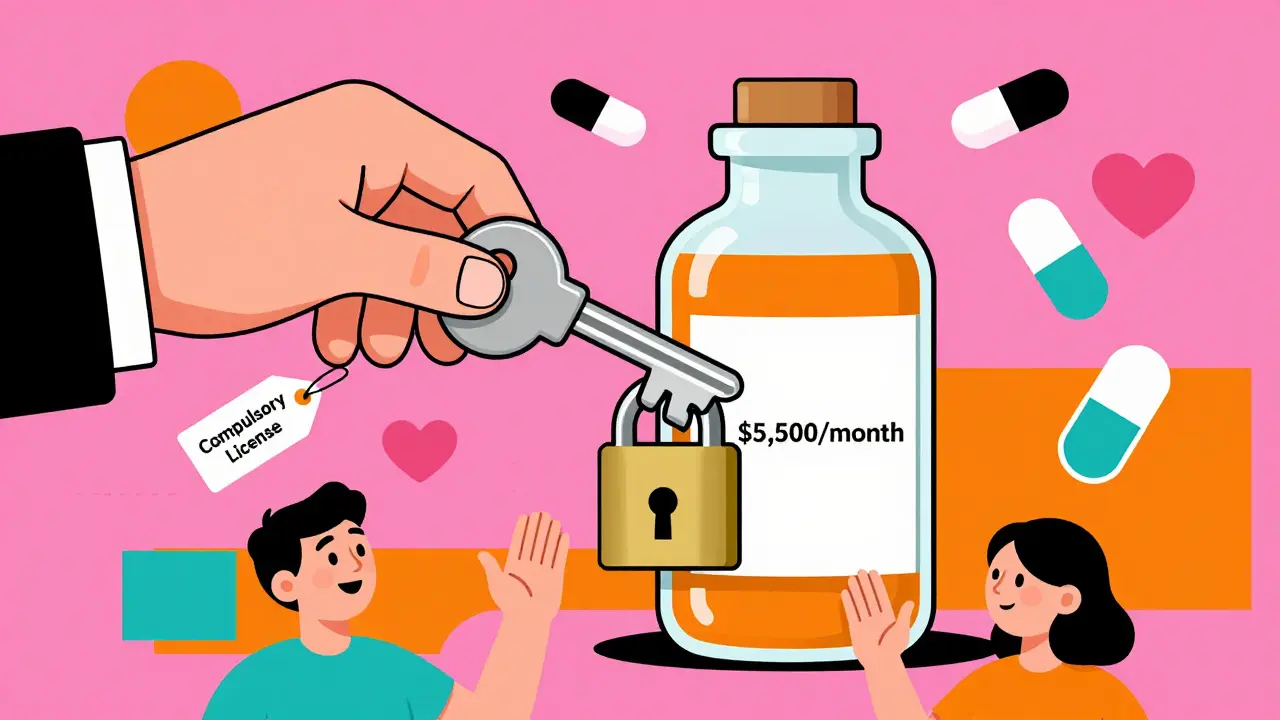
When a life-saving drug costs more than a family’s annual income, who gets to decide if it’s sold at a fair price? That’s where compulsory licensing comes in. It’s not a radical idea-it’s a legal tool written into international law, designed to let governments step in when patents block access to medicine, clean water tech, or emergency tools. You won’t hear about it often, but when it’s used, it changes lives.
What Compulsory Licensing Actually Means
Compulsory licensing lets a government authorize someone else to make or sell a patented product without the patent owner’s permission. Sounds shocking? It’s not. The patent system was never meant to be a monopoly that overrides human need. The 1994 TRIPS Agreement, which sets global rules for patents, explicitly allows this. Article 31 says governments can issue these licenses if there’s a public health crisis, national emergency, or if the patent holder isn’t making the product available at a reasonable price.
The patent owner still gets paid. That’s key. This isn’t theft. It’s compensation under pressure. The amount isn’t fixed-it’s based on the economic value of the license. In practice, that means governments negotiate a fair royalty, often a percentage of sales. In India, it’s typically 6% of net revenue. In the U.S., courts use 15 factors, including what similar licenses have paid before.
When It’s Used-Real Cases, Real Impact
Most compulsory licenses are for medicines. Between 2000 and 2020, 95% of all notifications to the WTO involved drugs. Here’s what happened in real places:
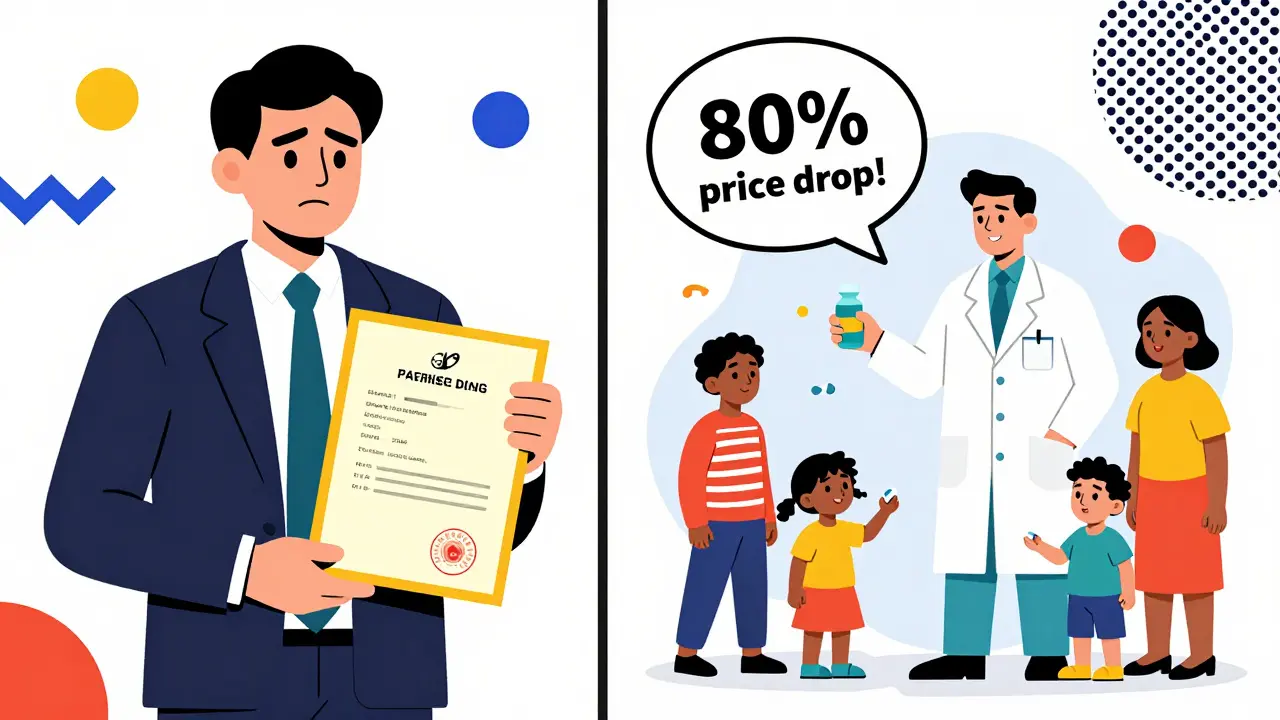
- In Thailand, in 2006, the government issued licenses for HIV and heart drugs. Abbott’s lopinavir/ritonavir dropped from $1,200 a year to $230. Bristol-Myers Squibb’s efavirenz fell from $550 to $200. That’s an 80% price cut.
- Brazil did the same with Merck’s efavirenz in 2007. The price per tablet went from $1.55 to $0.48. The government saved millions, and thousands kept taking their meds.
- India issued 22 compulsory licenses between 2005 and 2021. The most famous was for Nexavar, a liver cancer drug made by Bayer. The price fell from $5,500 a month to $175. Natco Pharma started making it. Patients lived longer.
These aren’t outliers. They’re proof that compulsory licensing works when it’s done right. The WHO found that in 83% of cases, prices dropped by 65% to 90% after a license was issued.
How It Works in Different Countries
Not every country uses this tool the same way. The U.S. has the power but rarely uses it. There are three main paths:
- Title 28, U.S.C. §1498: Lets the federal government use any patent-like a military tech or drug-without asking. The patent holder sues for compensation in the Court of Federal Claims. Between 1945 and 2020, only 10 were issued. All were for government use.
- Bayh-Dole Act: If a company gets a patent from federally funded research (like from NIH), the government can force them to license it if they’re not making it available. Sounds powerful? It’s not. The NIH has received 12 petitions since 1980. It has denied every single one.
- Clean Air Act: Allows licensing if a patented tech is needed to meet environmental rules. Never used.
Compare that to India or South Africa. They have clear, accessible processes. In India, you file with the Intellectual Property Appellate Board. You need to prove you tried to get a voluntary license first-but that requirement is dropped in emergencies. The whole process takes 18 to 24 months. In the U.S., it can take years just to get a court date.
Then there’s Spain. In 2020, they passed a law that let them skip the negotiation step entirely during the pandemic. No waiting. No back-and-forth. Just issue the license if it’s needed.
The Big Debate: Innovation vs. Access
Pharma companies argue that compulsory licensing kills innovation. They say if every country can just copy their drugs, they’ll stop investing in new ones. A 2018 study in the Journal of Health Economics found countries with active licensing programs saw a 15-20% drop in R&D investment. The IFPMA says each license announcement causes an 8.2% drop in stock prices.
But here’s what they don’t say: the threat of compulsory licensing has forced drugmakers to lower prices voluntarily. Dr. Brook Baker, a law professor, tracked this. He found that 90% of HIV drugs in developing countries got cheaper just because governments hinted they might issue a license. No court. No lawsuit. Just the possibility of one.
And what about innovation? The drugs being licensed are usually old. Nexavar was patented in 1996. Efavirenz in 1998. These aren’t cutting-edge breakthroughs. They’re medicines that have been on the market for over a decade. The real innovation happens in new molecules-those rarely get licensed. The system is designed to protect new drugs, not to stop generics from making the old ones affordable.
The Hidden Barriers
Even when the law allows it, many countries can’t use compulsory licensing. The WHO found that 60% of low- and middle-income nations lack the legal, technical, or bureaucratic capacity to even start the process. They don’t have patent lawyers. They don’t have courts that understand IP. They don’t have the political will.
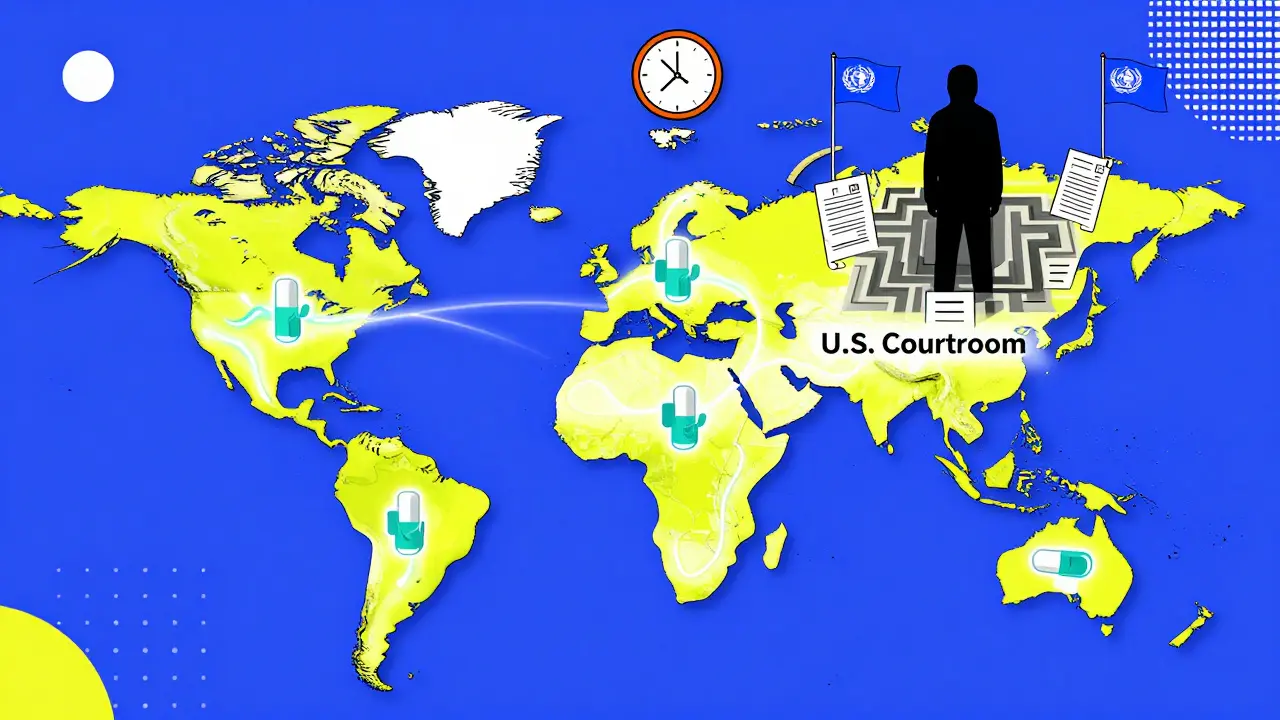
And then there’s the export problem. The WTO created a special rule in 2005 to let countries without drug factories import generic versions made under license. Canada was the only country to ever use it-in 2012, to send HIV meds to Rwanda. It took 18 months. The system was too slow, too complex. It’s still broken.
Even in rich countries, the process is a nightmare. In the U.S., getting a license under §1498 means filing a lawsuit. The average case takes 2.7 years. The median payout? $5.2 million. That’s not cheap. And it’s not fast.
What’s Changing Now?
COVID-19 changed everything. In 2020, 40 countries prepared to issue licenses for vaccines and treatments. The U.S., Germany, Canada, Israel-all moved fast. The WTO responded in June 2022 by agreeing to a temporary waiver on vaccine patents until 2027. But so far, only 12 facilities in 8 countries have actually started making them under the waiver. Why? Because the paperwork is still too heavy. Companies still fear lawsuits. Governments still fear trade pressure.
The EU’s 2023 Pharmaceutical Strategy is pushing for faster rules: patent holders must respond to licensing requests within 30 days-or lose control of the patent. That’s huge. It removes the bottleneck.
And the WHO is drafting a Pandemic Treaty. Draft Article 12 says: if the WHO declares a global health emergency, essential health products automatically get licensed. No negotiation. No delay. Just production.
Who Benefits?
It’s not the big pharma companies. It’s not the patent lawyers. It’s the patients. It’s the governments. It’s the generic drugmakers.
Teva, one of the world’s largest generic drugmakers, made $3.2 billion extra between 2015 and 2020 from markets where compulsory licenses were used. That’s not greed. That’s supply meeting demand. Without these licenses, those drugs wouldn’t exist at those prices.
And it’s not just medicine. The same rules apply to clean energy tech, water filters, and agricultural tools. If a patented irrigation system could save a drought-stricken region, why shouldn’t it be made available?
The Bottom Line
Compulsory licensing isn’t about breaking patents. It’s about balancing them. The patent system is supposed to encourage innovation-and make sure people benefit from it. When a patent stops someone from getting a lifesaving drug, the system fails. Compulsory licensing is the safety valve.
It’s not perfect. It’s slow. It’s messy. It’s fought over in courtrooms and trade negotiations. But when it works, it saves lives. And in a world where drug prices still lock out millions, that’s not just legal-it’s moral.
