
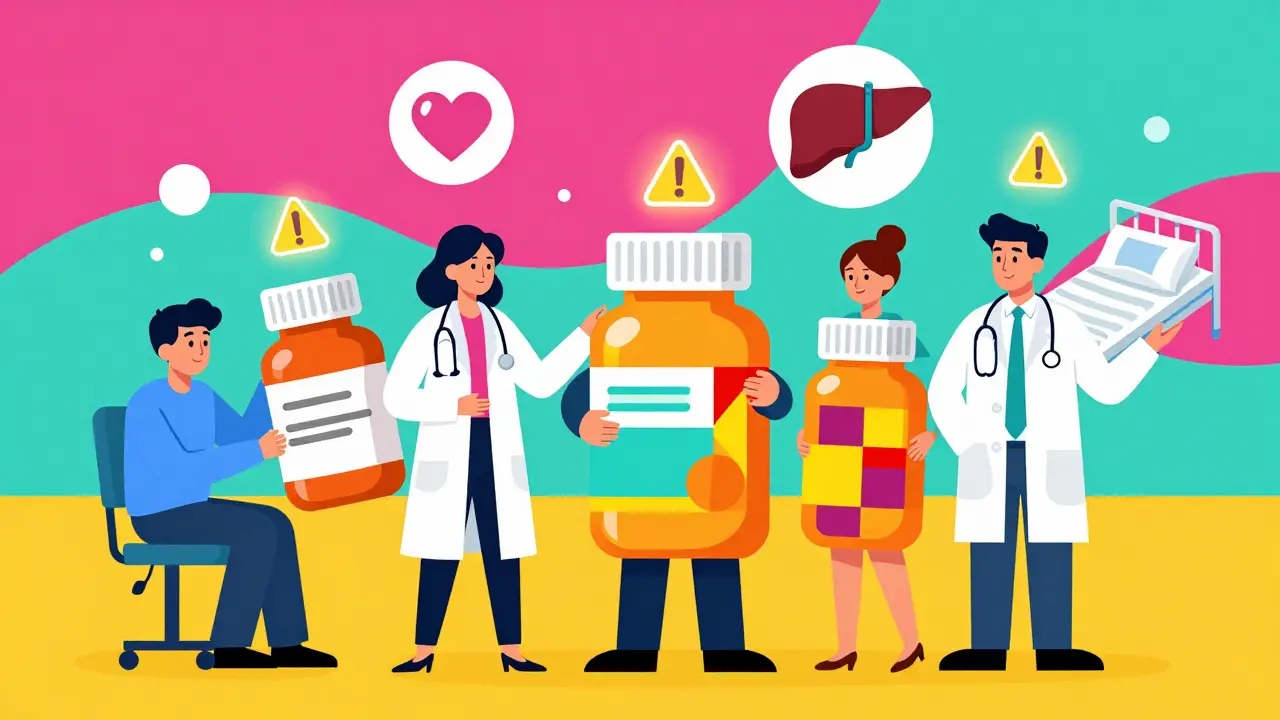
Every year, millions of people take prescription drugs. Most of them work as expected. But some don’t. Sometimes, a medication causes a serious side effect that wasn’t seen in clinical trials. That’s where adverse event reporting comes in. The FDA doesn’t just rely on lab studies to know if a drug is safe. It depends on real people - patients, doctors, pharmacists - to tell it when something goes wrong. If you’ve experienced a bad reaction to a medication, your report could help prevent others from getting hurt.
What Counts as an Adverse Event?
An adverse event is any harmful or unwanted experience linked to taking a medication. It doesn’t have to be proven that the drug caused it. If it happened around the time you took the medicine, it’s worth reporting. This includes:- Severe allergic reactions (like anaphylaxis)
- Hospitalizations or emergency room visits
- Birth defects in babies born to mothers taking the drug
- Liver failure, kidney damage, or heart rhythm problems
- Unusual bleeding, severe rash, or sudden confusion
- Death
- Drug interactions that weren’t listed on the label
The FDA defines it broadly: even if you’re not sure the drug caused it, if it happened while you were taking it, report it. The system is designed to catch patterns - not to prove cause-and-effect right away. That comes later, after hundreds or thousands of similar reports pile up.
Who Can Report?
Anyone can report. But who reports matters.- Consumers (patients or family members): You’re not required to report, but your voice matters. The FDA gets about 400,000 reports from consumers each year.
- Healthcare professionals: Doctors, nurses, pharmacists, and dentists are encouraged to report. Their reports are more detailed and carry more weight because they include medical records.
- Pharmaceutical companies: These companies are legally required to report serious side effects within 15 days. They submit over 500,000 reports annually.
Some reports are mandatory. For example, under the National Childhood Vaccine Injury Act, doctors must report certain vaccine-related injuries. For other drugs, reporting is voluntary - but it’s still critical.
How to Report as a Patient or Family Member
You don’t need a medical degree to report. You just need basic information.- Start with your doctor. Talk to them about what happened. They can help you fill out the form correctly and may even submit it for you. Their clinical notes add value.
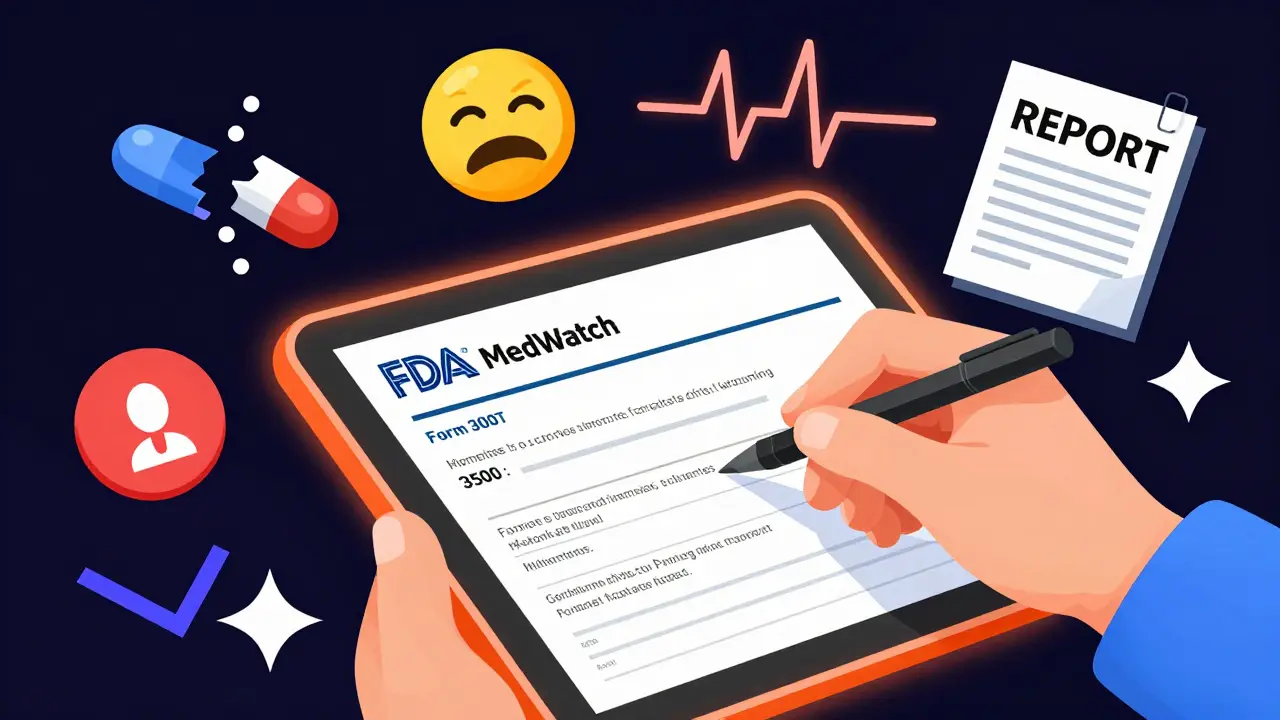
- Use the MedWatch Online Form. Go to fda.gov/medwatch and click "Report a Problem." The form is called Form 3500.
- Have these details ready:
- Your name, age, and gender
- The name of the medication (brand and generic)
- The dosage and how long you took it
- When you started and stopped taking it
- When the side effect started and how long it lasted
- A clear description of what happened (e.g., "I developed a full-body rash 3 days after starting the pill" or "I had chest pain and passed out after taking the medication")
- Any lab results, hospital records, or imaging tests (you can upload photos of prescriptions or packaging)
- Whether you’ve had this reaction before
Don’t worry if you don’t have all the details. The FDA says incomplete reports are still useful. You can save your progress and come back within three days using a unique Report ID.
How Healthcare Providers Report
Doctors and pharmacists report the same way - through MedWatch Online - but they have more tools at their disposal.- Include medical history, lab values, and medication lists from the patient’s chart.
- Use precise medical language. The FDA uses a system called MedDRA to code events. For example, "heart attack" becomes "myocardial infarction."
- Attach relevant documents: EKGs, bloodwork, discharge summaries.
Studies show that reports from healthcare professionals are 73% more likely to trigger a safety review than those from consumers alone. Why? Because they provide context. A report saying "patient had dizziness" is vague. A report saying "patient had orthostatic hypotension with systolic BP drop of 40 mmHg within 2 minutes of standing, 4 days after starting drug X" is actionable.
How Drug Companies Report
Pharmaceutical companies must report serious and unexpected adverse events within 15 calendar days of learning about them. They use a standardized electronic format called ICH E2B(M), which is machine-readable and compatible with global systems.- They submit reports through the FDA’s Electronic Submission Gateway.
- They must link each report to the correct product using Structured Product Labeling (SPL) codes.
- They file quarterly safety reports that summarize all adverse events for their drugs.
Failure to report can cost companies millions. In 2022, the average penalty for non-compliance was $2.3 million per violation. Some companies spend $50,000 to $200,000 a year on software just to handle reporting.
What Happens After You Submit?
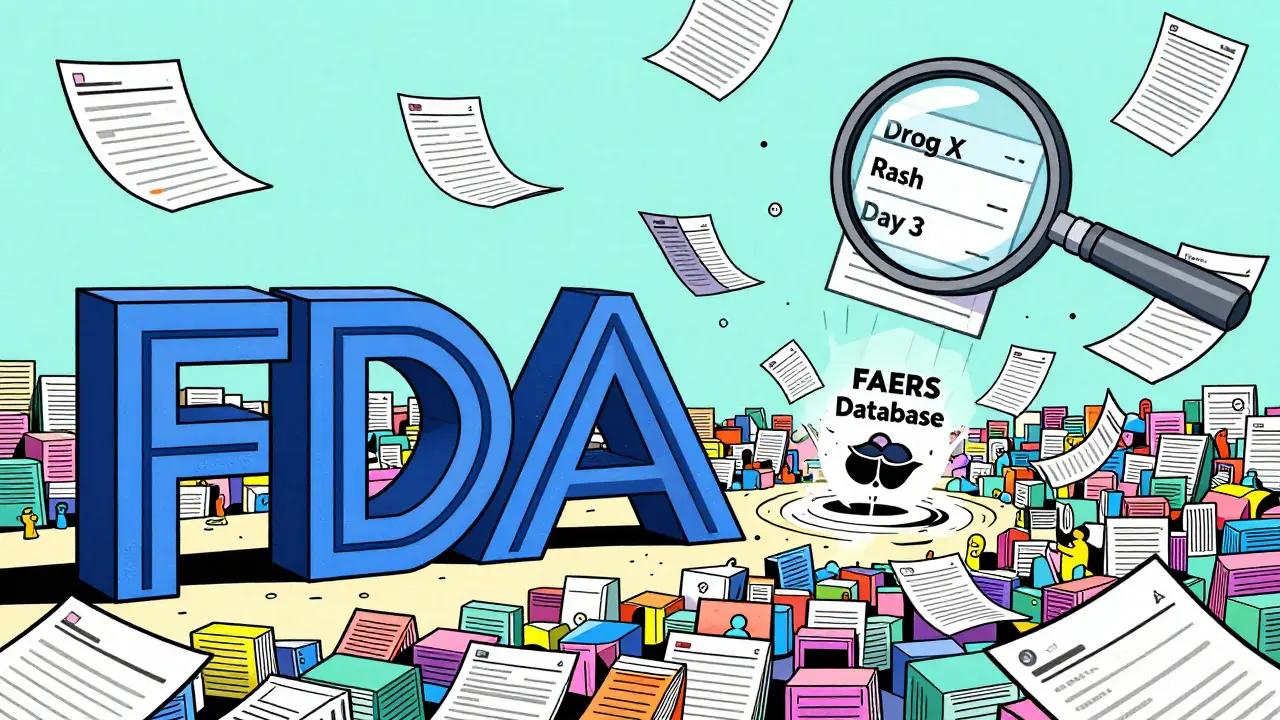
Once you hit "Submit," your report goes into the FDA Adverse Event Reporting System (FAERS), which holds over 30 million reports dating back to 1968. The system doesn’t respond immediately. You won’t get a confirmation email. There’s no tracking number.But here’s what does happen:
- Trained analysts review reports daily.
- Reports are coded using MedDRA terminology.
- Statistical tools look for patterns - for example, if 50 people report liver damage after taking the same drug, it flags a possible signal.
- High-quality reports with lab results and timelines are prioritized.
Some reporters have received follow-up requests. One woman reported her daughter’s anaphylaxis to penicillin. Within 10 business days, an FDA safety officer called to ask for the child’s lab results. That kind of response is rare - but it happens.
On average, it takes 217 days for a report to be reviewed and assessed for potential safety signals. The FDA admits it’s understaffed - one safety reviewer handles about 18,000 reports. That’s why your detailed report matters.
What the FDA Can Do With Your Report
Your report might not change anything tomorrow. But over time, thousands of reports can lead to real change:- Adding new warnings to drug labels
- Updating dosing recommendations
- Requiring post-market studies
- Issuing "Black Box" warnings (the strongest warning the FDA can give)
- Withdrawing a drug from the market
For example, in 2018, reports of aortic aneurysms linked to fluoroquinolone antibiotics led to a Black Box warning. In 2020, reports of severe skin reactions from a common acne drug prompted a recall. These changes didn’t come from lab tests. They came from real people who took the time to report.
Common Problems With Reporting
The system isn’t perfect. Here’s what users say:- The online form times out. One doctor on Reddit spent 45 minutes filling out a report - then lost everything.
- The 3,000-character limit for descriptions is too short. Complex reactions get cut off.
- There’s no confirmation email. You don’t know if it went through.
- It’s hard to know if an event is "unexpected" - you need the drug’s label to decide.
Still, reports with detailed timelines and lab data are 68-82% more likely to be acted on. So even if the system is clunky, your effort makes a difference.
What’s Changing in 2026?
The FDA is upgrading its system. In 2023, it launched FAERS Public Dashboard 2.0 - a free tool that lets anyone explore reports by drug, event, or date. In 2024, it plans to use artificial intelligence to scan reports automatically, looking for hidden patterns.By 2025, the FDA hopes to connect with electronic health records. Imagine: when a doctor prescribes a drug, their system automatically flags any unusual side effects and sends them to the FDA. That could boost reporting rates by 300%.
But until then, the system still runs on human input. Your report - no matter how small it seems - is part of a global safety net.
What You Should Do Now
If you or someone you know had a bad reaction to a medication:- Don’t wait. Report it now.
- Don’t assume someone else will do it.
- Don’t think it’s "not serious enough." If it scared you, it’s worth reporting.
- Keep a copy of your report. Write down the Report ID if you get one.
You’re not just sharing a story. You’re helping protect others. The next person who takes that drug might be your sister, your neighbor, or your child. Your report could be the one that saves them.
Do I have to be a doctor to report an adverse event to the FDA?
No, anyone can report. Patients, family members, caregivers, and even bystanders can submit reports through the FDA’s MedWatch system. While healthcare professionals provide more detailed information, consumer reports are just as valuable. The FDA encourages reports from all sources.
Is it mandatory to report side effects from medications?
It’s mandatory for pharmaceutical companies and healthcare providers in certain cases - like vaccine-related injuries under federal law. For patients and the general public, reporting is voluntary. But it’s strongly encouraged. The FDA relies on public reports to detect hidden risks that clinical trials might miss.
How long does it take for the FDA to act on a report?
There’s no set timeline. Individual reports are reviewed as part of a larger database. The FDA analyzes patterns across thousands of reports - not single cases. On average, it takes about 217 days for a report to be assessed for potential safety signals. However, if a pattern emerges quickly - like a sudden spike in liver failure after a new drug launch - the FDA can move much faster.
Can I report an adverse event if I’m not sure the drug caused it?
Yes. The FDA defines an adverse event as any harmful experience that occurs after taking a drug - regardless of whether it’s proven to be caused by the drug. If the event happened around the time you took the medication, it’s worth reporting. The system is designed to detect possible links, not confirm them.
What information is most important in an adverse event report?
The most valuable details are: the exact drug name (brand and generic), dosage, start and stop dates, when the event began, a clear description of symptoms, and any lab results or medical records. Reports with this level of detail are up to 82% more likely to trigger a safety investigation. Even if you don’t have all the data, submit what you can - partial reports still help.
