
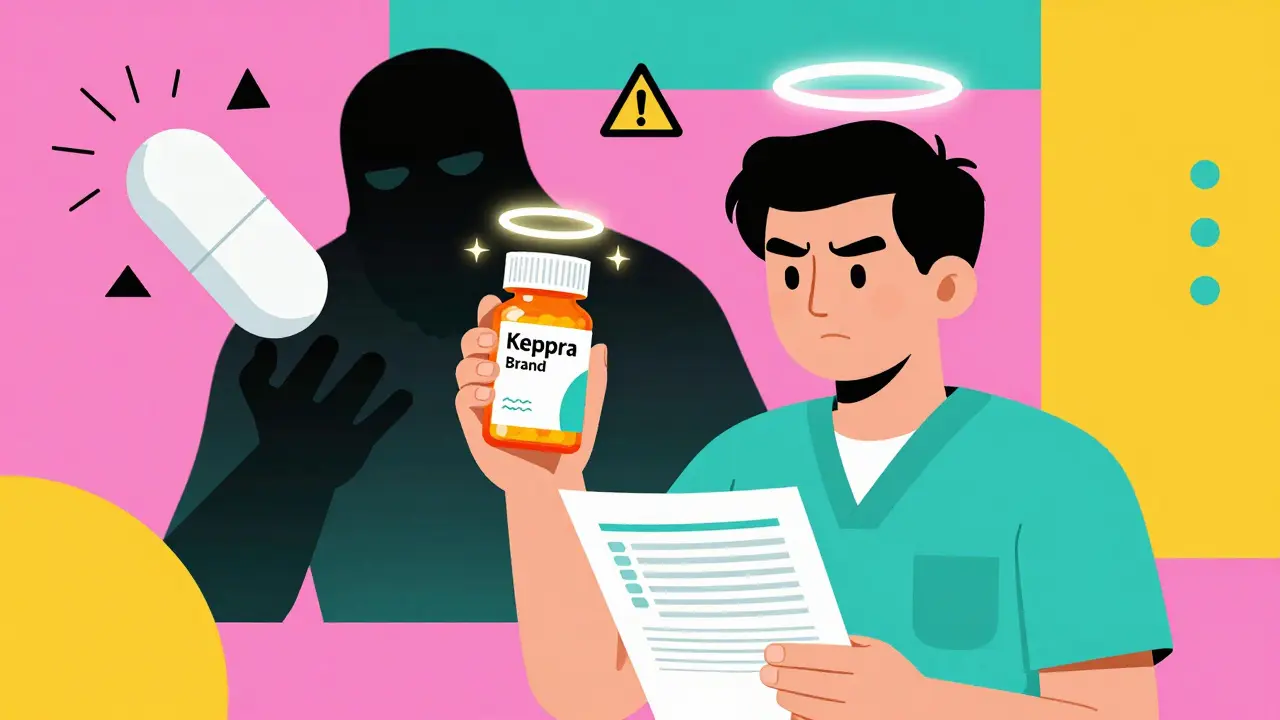
Switching from a brand-name medication to a generic can save money - but for some people, it’s not just a cost change. It’s a health risk. If you’ve noticed your symptoms returning, your energy dropping, or your blood levels going haywire after switching to a generic, you’re not imagining it. And you’re not alone. Thousands of patients in Australia and around the world have the same experience. The question isn’t whether generics work - they often do. The question is: when should you stay on brand?
Why Some People Can’t Switch to Generics
Not all medications are created equal, even when they have the same active ingredient. For drugs with a narrow therapeutic index - like levothyroxine for thyroid issues, warfarin for blood thinning, or certain anti-seizure medicines - tiny differences in how the body absorbs the drug can mean the difference between control and crisis. A 2021 study in Neurology found that patients switching from brand-name anti-epileptic drugs to generics had a 23% higher chance of having a seizure. For someone on warfarin, a small shift in blood levels can lead to dangerous clots or uncontrolled bleeding. One patient in Melbourne told me, “I was stable for years on the brand. The generic made me dizzy and my INR shot up. I ended up in the ER.” Even if the active ingredient is identical, the inactive ingredients - the fillers, dyes, preservatives - can cause real problems. About 7% of people report allergic or intolerant reactions to these additives. Lactose, gluten, or artificial colors in a generic version might trigger stomach pain, rashes, or brain fog in sensitive individuals. If you’ve ever said, “This pill tastes weird,” or “I feel off even though the label says it’s the same,” that’s not just in your head. It’s chemistry.What to Say - and How to Say It
Talking to your doctor about staying on brand isn’t about being difficult. It’s about being specific. Vague statements like “I don’t like generics” won’t help. But saying, “I had two seizures in two months after switching from Keppra brand to the generic, and none for five years before that,”? That’s data. That’s a story your doctor can act on. Use the SBAR method - it’s simple and proven:- Situation: “I’m on Keppra for epilepsy, and I switched to the generic last month.”
- Background: “I was seizure-free for five years on the brand. My last blood test showed stable levels.”
- Assessment: “Since switching, I’ve had three seizures and my blood levels dropped 20%.”
- Recommendation: “Can we go back to the brand? I have my lab results here.”
Insurance Won’t Pay - What Now?
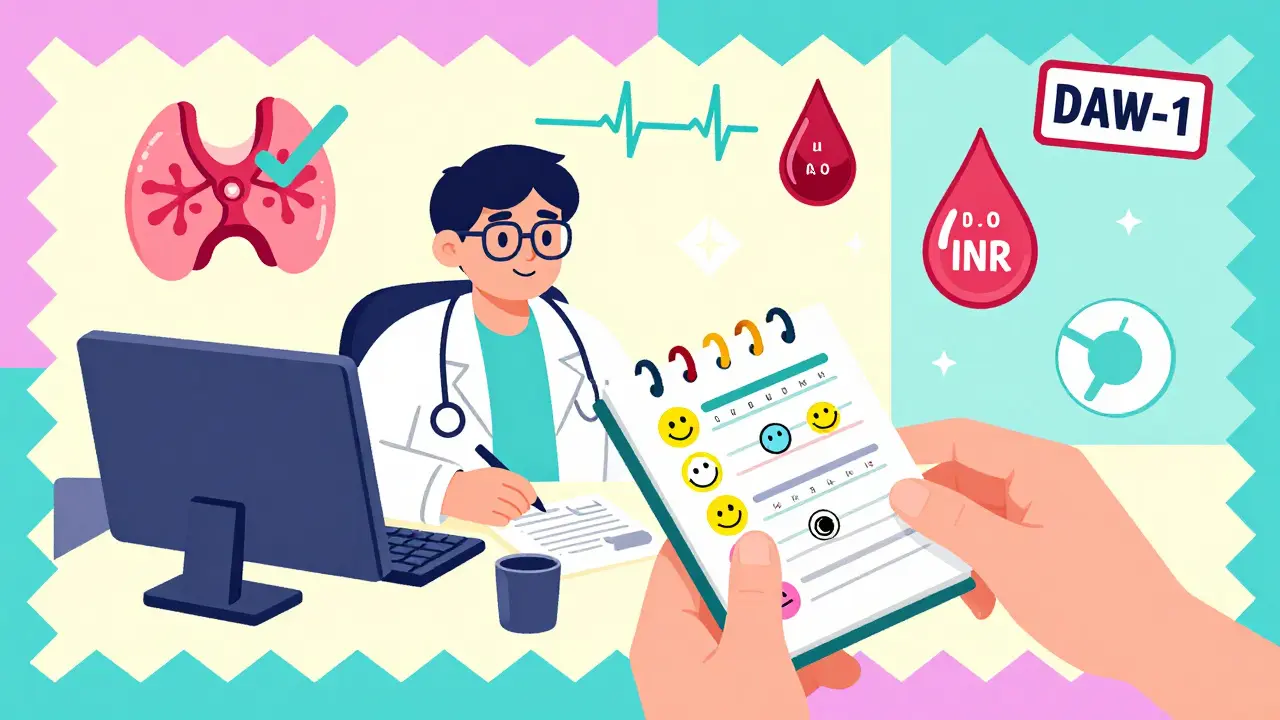
Here’s the hard part: your insurance likely wants you on the generic. In Australia, most private health funds and Medicare Part D plans push for generics unless there’s a documented medical reason. That means your doctor may need to fill out a prior authorization form - sometimes taking 15 to 30 minutes of their time. That’s why some doctors give in, even if they know the brand is better for you. You can help. Give your doctor:- A printed copy of your pharmacy records showing when you switched and when symptoms started
- Your lab results (INR, TSH, drug levels)
- A note from your pharmacist if they’ve seen you react to the generic before
What If Your Doctor Says No?
If your doctor says, “Generics are just as good,” don’t walk out. Ask for specifics:- “Can you show me the data that proves this exact generic is equivalent for my condition?”
- “Have you seen patients like me have problems with this switch?”
- “Can we try a short trial with the generic, and if I react, we go back to brand?”
Know Your Medication
Not all generics are the same. The same brand might have multiple generic versions made by different companies. One might have a different filler than another. If you’ve had a bad reaction, check the label. Look for the manufacturer name. If you’re on a generic that changed without you knowing, that’s a red flag. Use the Therapeutic Goods Administration (TGA) database in Australia to look up your medication. Search by active ingredient. See what brands and generics are approved. Check if your drug is listed as having “therapeutic equivalence issues.” If it’s on the list - like levothyroxine, phenytoin, or lithium - you have a strong case to stay on brand.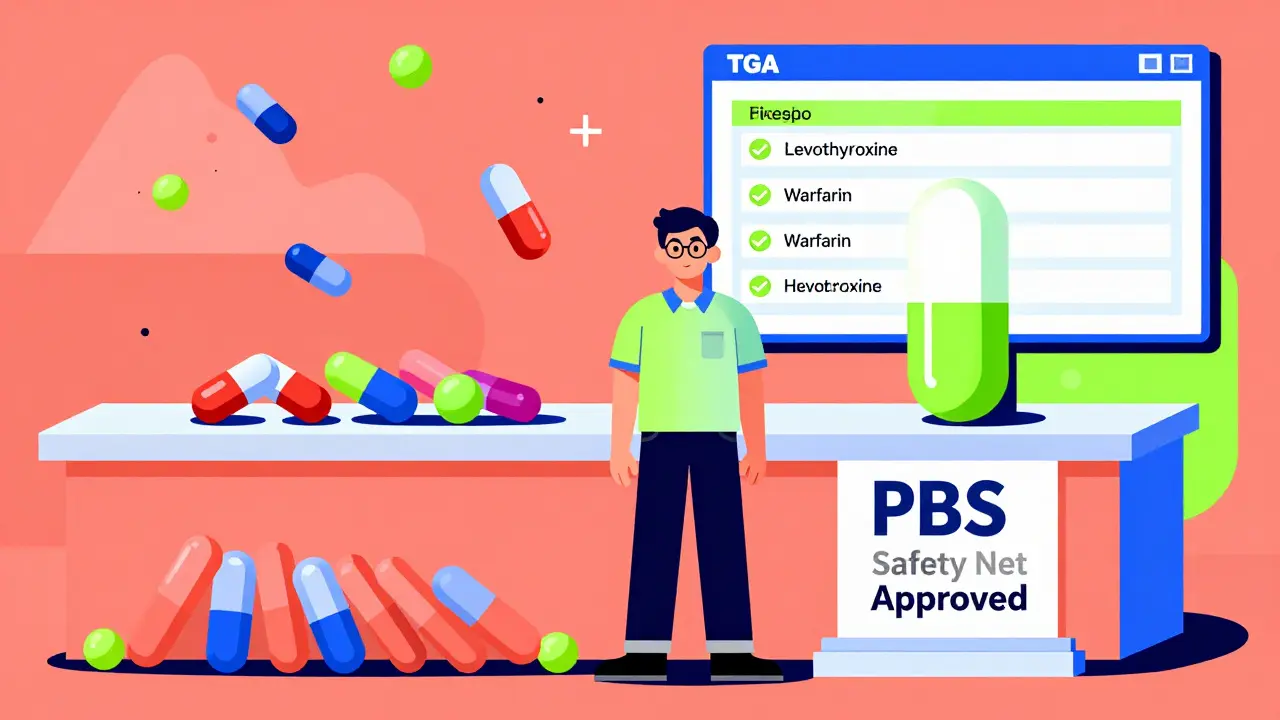
What About Cost?
Yes, generics are cheaper. But if you end up in the hospital because your seizure control slipped or your blood clotted? That’s far more expensive. And the stress? Unmeasurable. In Australia, you can apply for the Pharmaceutical Benefits Scheme (PBS) Safety Net. Once you hit the threshold, your scripts cost just $7.50 - brand or generic. If you’re on a chronic medication, you’ll hit that cap fast. And if your brand is on the PBS, you’re already paying the same as the generic after the cap. So ask: “Is my brand covered by PBS?” If yes, cost isn’t the barrier you think it is.Final Thought: Your Body Knows
You’ve lived with this medication longer than your doctor has. You know how you feel on it. You know when something’s off. Don’t let a formulary rule or a pharmacist’s default substitution override your lived experience. The science says generics are bioequivalent. But medicine isn’t just science - it’s people. And your body isn’t a lab test. It’s your life. If you’ve had a bad experience with a generic, document it. Talk to your doctor. Bring your data. Push back - politely, but firmly. You’re not asking for special treatment. You’re asking for the right treatment.Can I legally insist on staying on a brand-name medication in Australia?
Yes, you can. While pharmacists can substitute generics unless blocked, your doctor can write "Dispense as Written" (DAW-1) on your prescription. This legally prevents substitution. You also have the right to request your preferred medication if you have documented medical reasons, such as adverse reactions or therapeutic failure with generics. Insurance may require prior authorization, but your doctor can appeal with clinical evidence.
What if my doctor refuses to support my request?
If your doctor won’t help, ask for a referral to a specialist - like an endocrinologist for thyroid meds or a neurologist for epilepsy. Specialists often have more experience with narrow therapeutic index drugs and are more likely to advocate for brand-name use. You can also request a second opinion. Keep records of every conversation, and if needed, contact the Pharmaceutical Society of Australia or your local patient advocacy group for guidance.
Are brand-name medications always better than generics?
No. For most medications - like statins, blood pressure pills, or antibiotics - generics work just as well. The issue is with drugs where tiny changes in absorption matter: thyroid hormones, seizure meds, blood thinners, and some psychiatric drugs. If you’ve never had a problem with a generic, there’s no need to switch back. But if you have, your experience is valid and worth acting on.
How do I find out if my medication has therapeutic equivalence issues?
Check the Therapeutic Goods Administration (TGA) website in Australia. Search your medication by active ingredient. Look for notes on therapeutic equivalence or bioequivalence concerns. You can also ask your pharmacist to check the TGA’s database. Medications like levothyroxine, phenytoin, carbamazepine, and warfarin are commonly flagged. If your drug is on that list, you have stronger grounds to stay on brand.
Will my insurance cover the brand if I don’t have a medical reason?
Unlikely. Most private health funds and Medicare Part D require proof of medical necessity - like lab results, symptom logs, or prior adverse reactions - before covering a brand-name drug when a generic is available. Without documentation, your claim will be denied. But if you’ve had a documented issue, your chances of approval jump significantly. Keep all records organized and present them clearly.
Can I switch back to the brand if I’ve already tried the generic?
Absolutely. Many patients do. If you tried the generic and felt worse - even if you didn’t know why at the time - you can go back. Your doctor can write a new prescription with DAW-1. You’ll need to explain what happened, but you don’t need to prove it was the generic’s fault. Your symptoms and timeline are enough. Insurance will often approve the switch if you show a clear pattern of improvement after returning to the brand.

15 Comments
Nikki Brown
December 25, 2025 AT 22:50Wow. Just... wow. This is exactly why people like me can't trust the system anymore. I've been on levothyroxine for 12 years. Switched to generic once. Got heart palpitations, brain fog, and cried for three days straight. My doctor said, 'It's all in your head.' I quit seeing him. Now I pay out of pocket. You're not crazy. You're just not a statistic.
Peter sullen
December 27, 2025 AT 14:43It is imperative to underscore, with the utmost scientific rigor, that the bioequivalence paradigm, as currently codified by regulatory agencies, fails to account for inter-individual pharmacokinetic variance in medications possessing a narrow therapeutic index. The pharmacodynamic heterogeneity observed in patients undergoing substitution-particularly with antiepileptics and anticoagulants-demands a paradigm shift toward personalized therapeutic protocols, rather than population-based formulary mandates.
Steven Destiny
December 27, 2025 AT 21:07Stop letting insurance companies decide your life. If your body screams ‘NO’ to a generic, you don’t need permission-you need a prescription with DAW-1 stamped on it. I fought my insurer for 8 months. I won. Now I sleep without seizures. Your life matters more than their profit margin.
Fabio Raphael
December 28, 2025 AT 03:23I’ve seen this so many times in my practice. One patient, 68, on warfarin for atrial fibrillation. Generic switched. INR went from 2.4 to 5.8. Almost bled out. She brought her logs, her lab sheets, her journal-every single day. The doctor finally listened. I just wish more people knew they had the right to demand this. You’re not being difficult. You’re being smart.
Amy Lesleighter (Wales)
December 29, 2025 AT 19:40my doctor told me generics are the same… but i felt like i was drugged out for 3 weeks. i kept a notebook. wrote down every headache, every dizzy spell. showed it to him. he finally said ‘ok fine.’ now i get my brand. worth every penny. your body knows. trust it.
Becky Baker
December 30, 2025 AT 19:48Why are we even letting foreign drug makers make our meds? If you’re gonna be on a life-saving pill, why not make it American? I don’t trust some factory in India making my seizure meds. This isn’t about money. It’s about national pride. And safety.
Rajni Jain
January 1, 2026 AT 14:52thank you for sharing this. i’m from india and we have the same problem here. pharmacists switch without asking. i had a friend who went into seizures after switching. now she carries a printed note from her neurologist in her wallet. i’m going to do the same. you’re not alone.
Natasha Sandra
January 2, 2026 AT 14:24OMG YES!! 🙌 I switched to generic thyroid med and felt like a zombie for 3 months. My cat even noticed-I was less cuddly 😭 I went back to brand and now I’m back to baking cookies and hiking. Your body doesn’t lie. Don’t let anyone tell you otherwise. 💪❤️
Erwin Asilom
January 4, 2026 AT 06:41There’s a reason the FDA has a ‘therapeutic equivalence’ list. It’s not just marketing. For some drugs, the differences in fillers and release profiles are clinically significant. The burden shouldn’t be on patients to fight for basic safety. But since it is, the SBAR method works. Document everything. Be quiet. Be persistent. Win.
Sumler Luu
January 5, 2026 AT 07:31I had a similar experience with carbamazepine. I didn’t say anything at first-I thought I was just tired. Then I had a minor fall because my balance was off. I went to my neurologist with my journal. She wrote DAW-1 on the spot. I didn’t even ask. She just said, ‘I’ve seen this before.’ Sometimes, doctors know. They just need the proof.
sakshi nagpal
January 6, 2026 AT 19:55This is such an important conversation. I think we need to separate the issue of cost from the issue of safety. In India, we often can't afford brand names-but when someone has a reaction, we have no recourse. Maybe governments should maintain a list of high-risk generics and require pharmacist counseling before substitution. Knowledge should be mandatory, not optional.
Sandeep Jain
January 8, 2026 AT 02:44i had the same thing with lithium. switched generic, started having tremors and memory lapses. i thought i was going crazy. turned out the generic had different binders. took me 6 months to convince my doc. now i print the tga page and hand it to the pharmacist. they get quiet. they know.
roger dalomba
January 9, 2026 AT 16:48So… you’re telling me the system is broken, and the solution is… paperwork? Congrats. You won the bureaucratic lottery. Meanwhile, I’m just trying to get my insulin without a PhD in insurance law.
Brittany Fuhs
January 10, 2026 AT 21:28Why are we letting foreigners make our meds? And why are we letting doctors be pushovers? This isn’t medicine. It’s corporate supply chain management with a stethoscope. I’d rather pay $500 a month than let some factory in Bangladesh decide if I live or die.
Sophia Daniels
January 12, 2026 AT 17:01Generics are the pharmaceutical equivalent of buying knockoff AirPods. Yeah, they play sound. But sometimes they glitch. Sometimes they explode. And sometimes, if you’re lucky, you just get really bad bass. But if you’re on warfarin? That’s not a glitch. That’s a death sentence. Don’t be a lab rat. Demand your brand. Fight like your life depends on it-because it does.