
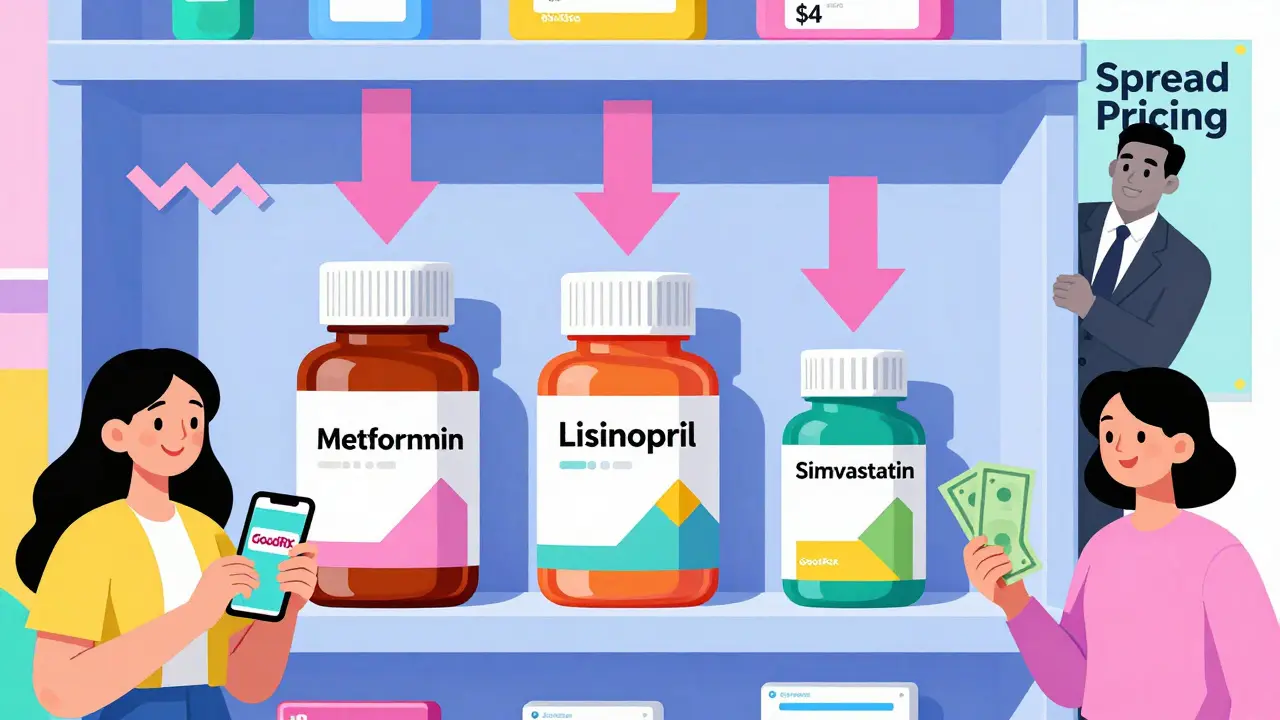
When you walk into a pharmacy to pick up your blood pressure pill or diabetes medication, you might assume the generic version is cheap because it’s "generic." But here’s the truth: generic drug prices don’t stay low on their own. They drop because of fierce competition - what experts call a "price war." And if you don’t know how to play the game, you could be paying way more than you should.
Why Generic Drugs Suddenly Become Super Cheap
When a brand-name drug’s patent expires, other companies can start making identical versions. These are called generics. They don’t need to repeat expensive clinical trials. All they have to prove is that they work the same way. That cuts their costs dramatically. But here’s the catch: the moment one company starts selling a generic, the price doesn’t crash right away. It takes more competitors to make prices fall hard. Here’s how it works in real numbers:- With just one generic maker: price is about 15-30% lower than the brand.
- With four generic makers: price drops 79-85%.
- With six or more: prices fall over 95% compared to the original brand.
But Why Are You Still Paying Too Much?
Here’s where things get messy. Even though the price of the drug itself has collapsed, your out-of-pocket cost hasn’t always followed. That’s because pharmacy benefit managers - or PBMs - are in the middle. They’re middlemen between drug makers, insurers, and pharmacies. And they’ve figured out how to keep the savings for themselves. One trick is "spread pricing." A PBM tells your insurance plan they’ll pay $5 for a generic pill. But they only pay the pharmacy $2. You, the patient, pay your $10 copay. The PBM pockets $8 - even though the drug only costs $2. You think you’re saving money. But the real savings? They’re not reaching you. Another problem? "Copay clawbacks." If your copay is $10, but the cash price of the drug is only $3, your insurance still charges you $10. The pharmacy can’t tell you the cash price is lower because of "gag clauses" - rules that were banned in 2018, but still sometimes ignored.Who’s Really Making Money Off Generics?
It’s not you. It’s not the pharmacy. It’s the middlemen. Pharmacies make about 42.7% profit on generic drugs. That sounds high - until you realize the drug cost them $1 and they sold it for $1.43. That’s not a lot of money. But PBMs? They’re making 10 to 20 times more per prescription. The top five generic drug makers - Teva, Viatris, Sandoz, Amneal, and Aurobindo - control over 60% of the market. That’s not competition. That’s an oligopoly. And when only a few companies control the supply, they can quietly raise prices instead of competing. In 2022, a study found that 24% of generic drugs had price increases - not because of inflation, but because competitors dropped out. Why? Because prices fell so low, making the drug wasn’t profitable anymore. And when a company exits, supply shrinks. And when supply shrinks? Prices go back up.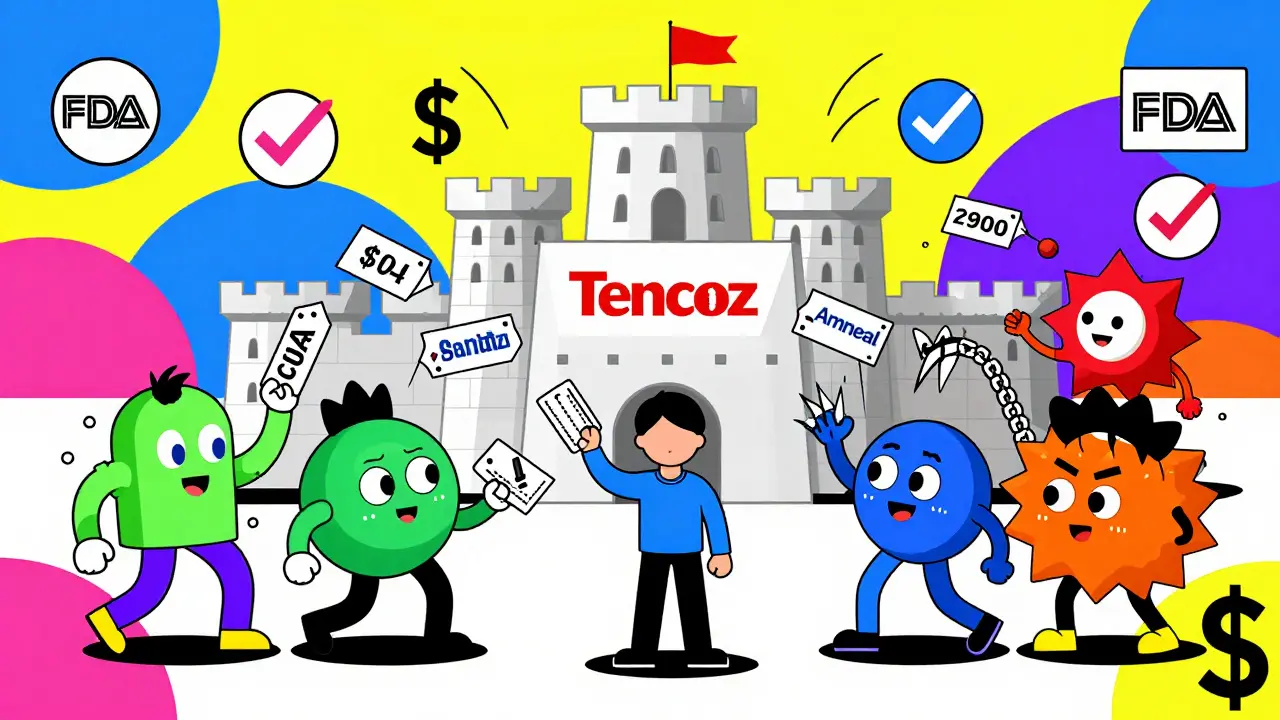
How to Actually Save Money - Step by Step
You can’t fix the system. But you can beat it. Here’s how:- Always ask for the cash price. Don’t assume your copay is the best deal. In nearly 30% of cases, paying cash is cheaper than using insurance. That’s because insurance systems add layers of fees and markups.
- Use GoodRx or SingleCare. These apps show you the lowest price for your generic drug at nearby pharmacies. Prices for the same drug can vary by 300% between Walgreens, CVS, and a local independent pharmacy.
- Check for $4 programs. Walmart, Costco, and Kroger offer a list of over 100 generic medications for $4 or less for a 30-day supply. Metformin, lisinopril, levothyroxine, and simvastatin are all on the list.
- Don’t trust the brand name. If your doctor prescribes a brand, ask: "Is there a generic?" Even if you’ve been on the same drug for years, a new generic may have dropped the price.
- Look for AB ratings. The FDA gives generics an "AB" rating if they’re bioequivalent to the brand. If it’s not AB, ask why. Some generics aren’t interchangeable.
What’s Changing? And Will It Help?
There are signs things are shifting. The FDA approved over 1,000 new generics in 2023 - up from 748 in 2022. That’s more competition coming. The Federal Trade Commission just released a report calling PBMs "powerful middlemen inflating drug prices" and recommended banning spread pricing. Congress is considering bills to cap out-of-pocket drug costs at $2,000 a year for Medicare users. But here’s the reality: even with all this, you still can’t rely on the system to save you money. The incentives are all wrong. PBMs profit from complexity. Pharmacies profit from confusion. Drug makers profit from scarcity. The only thing that consistently works? You knowing the price. You asking for the cash rate. You comparing options.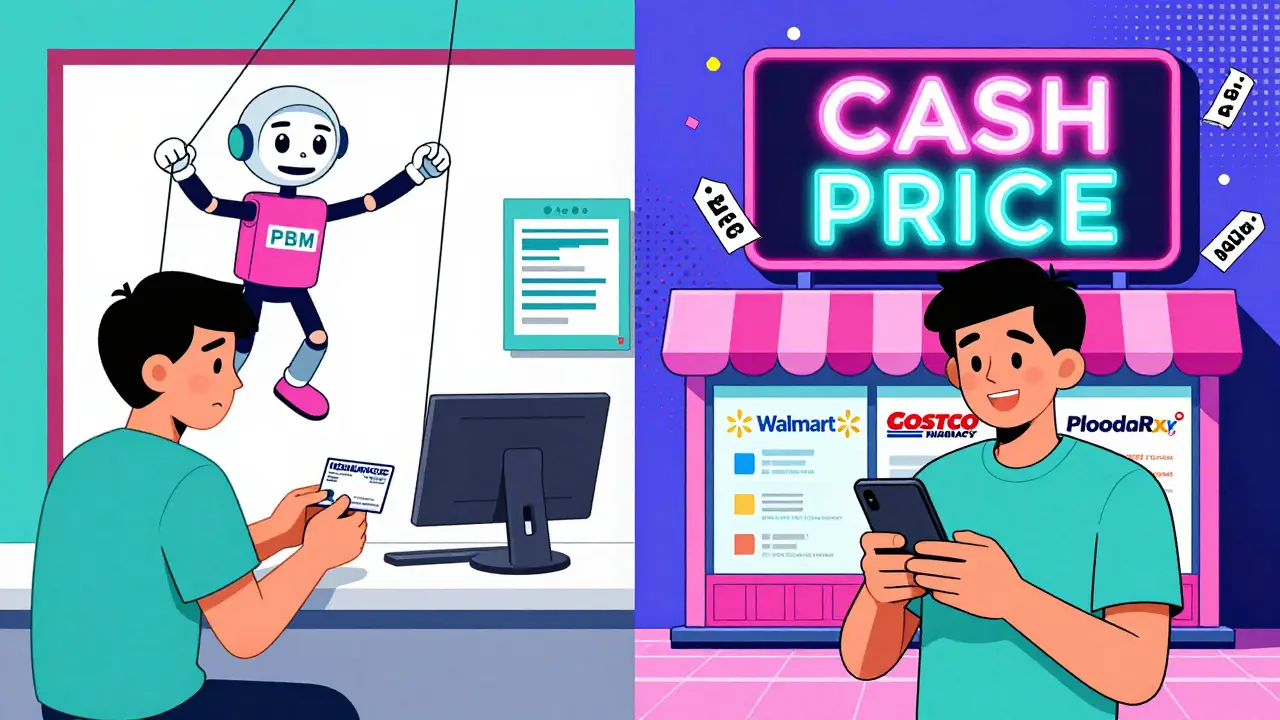
When Generics Don’t Save You - And Why
Not every generic is a bargain. Insulin glargine, for example, has biosimilar versions - but they’re still expensive because only a few companies make them. Same with epinephrine auto-injectors (EpiPens). Even though generics exist, prices stayed high because manufacturers restricted supply and used legal tricks to delay competition. And then there’s the "me-too" problem. Sometimes, a company will make a generic version that’s almost identical - but with a slightly different pill shape or color. They market it as "new and improved." You pay more. But it’s the same drug. That’s why checking the active ingredient matters. Don’t buy based on brand names or packaging. Look up the chemical name. If it’s the same, it’s the same.Final Thought: The Real Winner in a Price War
Generic drug price wars were designed to put money back in patients’ pockets. And they do - if you know how to access them. The system isn’t broken. It’s rigged. But you have more power than you think. The next time you fill a prescription, don’t just hand over your card. Ask for the cash price. Open GoodRx. Compare three pharmacies. Take five minutes. You might save $50. Or $500. Or even $1,000 this year. That’s the real benefit of a price war. Not in boardrooms. Not in PBMs’ bank accounts. But in your wallet.Why are generic drugs so much cheaper than brand-name drugs?
Generic drugs cost less because they don’t need to repeat expensive clinical trials to prove they work. Once a brand-name drug’s patent expires, other companies can copy the active ingredient. They only need to show the generic is bioequivalent - meaning it works the same way in the body. That cuts development costs dramatically, allowing them to sell at a fraction of the price.
Do generic drugs work as well as brand-name drugs?
Yes. The FDA requires generics to have the same active ingredient, strength, dosage form, and route of administration as the brand-name drug. They must also be bioequivalent - meaning they deliver the same amount of medicine into your bloodstream at the same rate. About 97% of prescriptions in the U.S. are filled with generics when available, and studies show they’re just as safe and effective.
Why is my generic drug still expensive?
There are a few reasons. First, if only one or two companies make the generic, there’s little competition - so prices stay high. Second, pharmacy benefit managers (PBMs) may be charging you more than the actual cost of the drug through practices like spread pricing. Third, your insurance copay might be higher than the cash price. Always ask the pharmacy for the cash price - it’s often lower.
How can I find the lowest price for my generic medication?
Use free apps like GoodRx or SingleCare. They show you prices at nearby pharmacies and often have coupons. You can also check Walmart’s $4 list, Costco’s pharmacy prices, or local independent pharmacies, which sometimes offer better deals than big chains. Don’t rely on your insurance copay - it’s not always the cheapest option.
Can I save money by buying generics in bulk?
Sometimes, yes. For chronic conditions like high blood pressure or diabetes, buying a 90-day supply instead of 30 days can reduce your per-pill cost. Some pharmacies offer discounts for bulk purchases. But check expiration dates and storage needs. And always confirm the drug hasn’t recently had a price increase due to supply issues.
What should I do if my generic drug suddenly becomes more expensive?
First, check if the manufacturer changed. Sometimes a different company makes the same drug, and the price jumps. Use GoodRx to compare prices. If the cash price is still low, ask your pharmacist to switch the brand. Also, check if your insurance changed its formulary - maybe they replaced a cheaper generic with a more expensive one. Call your insurer and ask why.
Are all generic drugs created equal?
In terms of active ingredients, yes. But some generics may have different inactive ingredients - like fillers or dyes - which can affect people with allergies. Always check the label. Also, look for the FDA’s "AB" rating. If it’s not AB, the drug may not be interchangeable with the brand. Don’t assume all generics are the same - ask your pharmacist.

8 Comments
John Chapman
January 1, 2026 AT 11:46OMG YES THIS IS SO TRUE 😭 I was paying $45 for metformin until I found it for $3 at Walmart with GoodRx… my bank account cried tears of joy 💸💊
Urvi Patel
January 3, 2026 AT 10:25Generic drugs are cheap because westerners are too lazy to innovate anymore they just copy and sell it cheap while we in India actually make the stuff and get zero credit 🤷♀️
anggit marga
January 3, 2026 AT 14:57Y’all in the US think you’re so smart with your GoodRx but in Nigeria we just buy from local chemists who sell the same pills for 200 naira and no one cares about PBMs because no one has insurance anyway 🤷♂️
Joy Nickles
January 4, 2026 AT 21:09Wait wait wait-so you’re saying PBMs are the REAL villains?? But didn’t the FTC say… and also the 2023 report… and what about the 2024 Senate bill… and also the gag clause loophole… and don’t forget the 37% margin on insulin generics… and also the 2022 study by JAMA… and the FDA’s 2021 guidance on AB ratings… and-
…I’m sorry I just got too excited
Emma Hooper
January 6, 2026 AT 16:17Let me tell you something sweet like honey on toast 🍯-this whole system is a circus, and you’re the clown holding the balloon labeled ‘Insurance Copay.’ But guess what? You can walk right out the back door, grab the cash price, and ride off on a unicycle made of savings. No one’s stopping you. Not the PBM. Not the pharmacy. Not even your doctor. You’re the hero of your own prescription saga. Go get that $4 metformin, queen.
Martin Viau
January 8, 2026 AT 09:08The structural inefficiencies in the U.S. pharmaceutical supply chain are a textbook case of rent-seeking behavior exacerbated by regulatory capture. PBMs function as oligopolistic intermediaries with asymmetric information advantage-essentially, they’re extractive middlemen leveraging opaque pricing mechanisms to internalize consumer surplus. The $4 generic programs are merely tactical workarounds, not systemic solutions. We need price transparency mandates and vertical integration bans.
Marilyn Ferrera
January 9, 2026 AT 02:28Always ask for the cash price. Always. It’s the one thing you control.
Bennett Ryynanen
January 10, 2026 AT 16:12Bro. I used to pay $120 for my blood pressure med. Then I found out it was $3.50 at CVS if I paid cash. I almost cried. I told my mom. She cried. Now my whole family checks GoodRx before they even think about using insurance. This isn’t just saving money-it’s reclaiming your power. Do it. Just do it.