
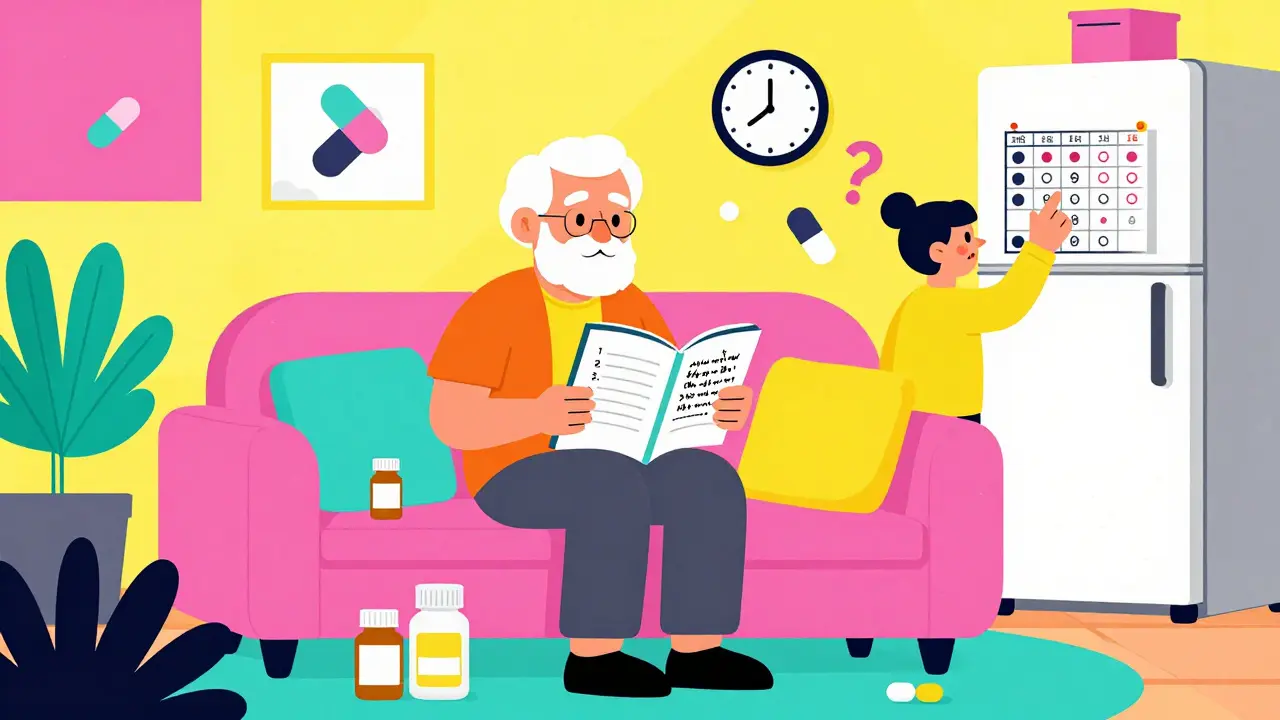
Getting your medications right isn’t just about picking up a prescription. It’s about understanding medication dosages, spotting dangerous interactions, remembering when to take each pill, and knowing what side effects mean. For many people-especially older adults or those managing multiple conditions-this is overwhelming. That’s why bringing someone with you to medication appointments isn’t just helpful. It’s often essential.
Why You Need Someone With You
Doctors have minutes to explain complex drug regimens. You’re nervous. You’re tired. You might forget half of what was said. Studies show that 78% of medication errors happen during transitions of care-like when a new prescription is written or a dose is changed. That’s where a caregiver or advocate comes in. An advocate doesn’t need to be a medical professional. It can be a family member, friend, neighbor, or even a paid professional. Their job? To listen, ask questions, take notes, and make sure nothing gets lost in translation. According to the National Consumer Voice for Quality Long-Term Care, about 30% of Medicare beneficiaries used an advocate during medication appointments in 2022. And that number is growing fast. The results are clear. When someone else is there, medication errors drop. A 2023 study in Health Affairs found professional advocates reduced errors by 28%. Even untrained family members cut mistakes by nearly half compared to going alone. One Reddit user, "MedSafetyMom," shared how her daughter caught a dangerous interaction between warfarin and a new antibiotic-something she missed because she was too stressed to think straight.Who Can Be Your Advocate
You don’t need to hire someone. Many people use family or friends. But not everyone knows how to do it well. Here’s what works:- Family caregivers-They know your history, routines, and habits. They notice when you seem off or forget to take pills. But without training, they miss 42% of key details, according to a University of Pennsylvania study.
- Professional advocates-Certified through groups like the Patient Advocate Certification Board, these are trained to navigate insurance, check drug interactions, and communicate with providers. They cost $75-$200 an hour, but in complex cases (like five or more medications), they cut error rates from 58% to 22%.
- Self-advocates-If you’re confident and organized, you can do it yourself. But if your health literacy is low, you’re 37% more likely to miss critical info, per the National Assessment of Adult Literacy.
How to Prepare Before the Appointment
Preparation is everything. A 2023 Tulane University guide says 72 hours before your appointment is the sweet spot to start. Here’s what to do:- Gather your actual medication bottles-Not just a list. The FDA found 23% of errors come from outdated or inaccurate lists. Bring every pill, liquid, patch, and inhaler-even the ones you haven’t taken in months.
- Write down your symptoms-Note when they happen, how bad they are, and whether they line up with when you take a certain pill. Did your dizziness start after you switched to the new blood pressure med? Write it down.
- Check your insurance coverage-18% of prescriptions get delayed because the pharmacy says it’s not covered. Call your insurer or check your plan’s website 48 hours ahead. Know what your copay will be.
- Make a list of questions-Use the "Ask Me 3" framework: What is my main problem? What do I need to do? Why is it important? Write them out. Don’t rely on memory.
What to Do During the Appointment
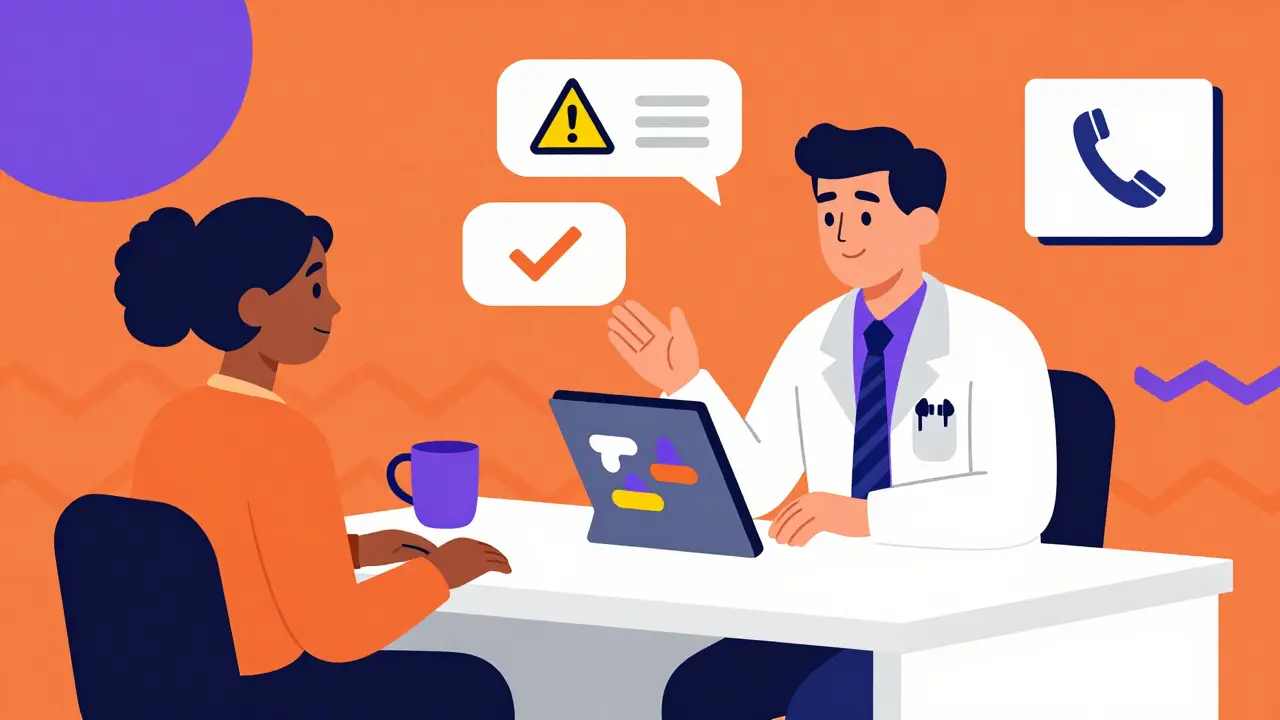
The appointment itself is your chance to get clarity. Here’s how to make it count:- Bring a notebook or tablet-Write down everything. Don’t assume you’ll remember. Your advocate should take notes, too.
- Use the SBAR method-Situation (I’m here because I’m dizzy after taking my new pill), Background (I’ve been on this med for two weeks), Assessment (It started the day after the dose changed), Recommendation (Can we try lowering it?). This boosts understanding by 52%, according to Health Concepts, Ltd.
- Ask for clarification-If the doctor says "take one daily," ask: "Is that morning or night? Can I split it? Can I crush it?" One Johns Hopkins study found 12.3% of prescriptions have dosage errors.
- Confirm all new prescriptions-Ask: "Is this replacing something?" and "Is this safe with my other meds?" Use a free tool like Medscape’s interaction checker on your phone if needed.
What Happens After the Appointment
The work doesn’t end when you walk out. In fact, that’s when mistakes often happen.- Create a visual medication schedule-Take photos of each pill. Print them out. Tape them to your fridge or bathroom mirror. GoodRx’s study showed this reduces identification errors by 67%.
- Set up a "medication buddy"-Ask your advocate to check in weekly. Have them confirm you took your pills and report any new side effects. This improves adherence by 41%.
- Call the pharmacy-Don’t wait until you get there. Call ahead to confirm the prescription was filled correctly. Ask if they have any warnings about your meds.
- Follow up within 24 hours-If anything was unclear, call the doctor’s office. Say: "I had a question about the new prescription we discussed. Can you clarify?" Many offices have a dedicated line for this.
What to Do If You’re Turned Away
Sometimes, staff will say: "We can’t talk to you-HIPAA rules." That’s wrong. HIPAA allows patients to designate who can receive their health information. You just need to give written permission. Here’s what to do if you’re blocked:- Ask for the privacy officer or patient services manager.
- Present a signed HIPAA authorization form (you can get one from your provider’s website).
- Remind them: The AMA’s 2022 policy requires providers to accommodate patient-requested advocates.
The Bigger Picture: Why This Matters
Medication errors affect 1.5 million Americans every year. Many lead to hospital visits, long-term harm, or even death. The system wasn’t built for people managing five, six, or ten different pills. It was built for speed. But things are changing. The 21st Century Cures Act gave patients digital access to their records-so advocates can review meds before the appointment. The American Rescue Plan poured $3.1 billion into patient navigation programs. By 2023, 78% of federally funded clinics had formal advocate roles. Medicare Advantage plans now offer medication advocacy support to 62% of members-up from 38% in 2020. And innovation is accelerating. The FDA approved an AI tool called MediCheck Pro in 2023 that flags dangerous interactions during appointments with 92% accuracy. CMS now requires doctors to document advocate involvement in high-risk cases to qualify for Medicare payments. This isn’t just about being organized. It’s about safety. It’s about dignity. It’s about making sure the care you’re getting matches what you actually need.Can I bring someone to my medication appointment even if they’re not family?
Yes. You can bring anyone you trust-a friend, neighbor, social worker, or professional advocate. You just need to give the provider written permission through a HIPAA authorization form. The law doesn’t require them to be related to you.
How do I know if I need a professional advocate?
Consider a professional if you’re taking five or more medications, have trouble remembering doses, deal with insurance denials often, or have cognitive challenges. Professional advocates are trained to spot drug interactions, negotiate with pharmacies, and handle billing issues. They’re especially helpful if you’re transitioning between hospitals, nursing homes, or home care.
What if my doctor doesn’t want my advocate in the room?
You have the right to have an advocate present. If your provider refuses, ask to speak with the office manager or patient services director. Cite the American Medical Association’s 2022 policy, which requires providers to allow patient-requested advocates. If they still refuse, contact your insurance company or the hospital’s patient rights office. You’re not being difficult-you’re protecting your health.
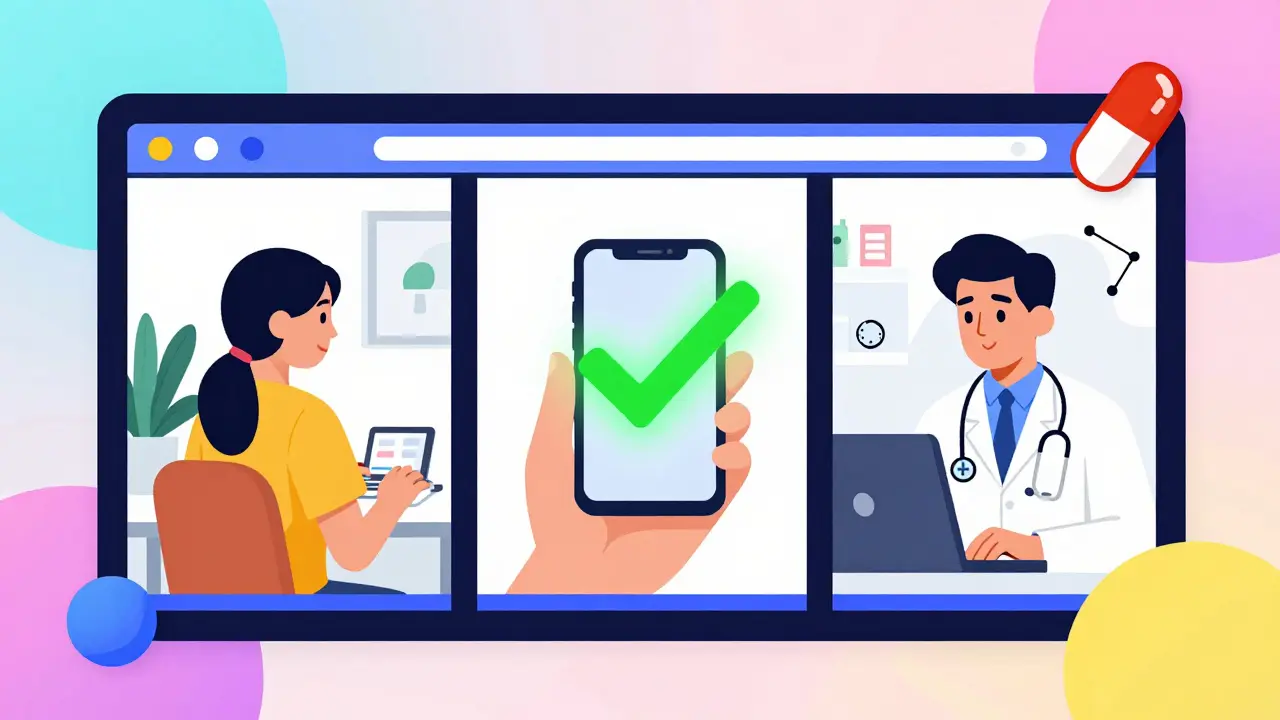
Can I use telehealth to bring an advocate to my appointment?
Absolutely. Many clinics now offer virtual visits, and you can invite your advocate to join by phone or video. This is especially helpful if the advocate lives far away or has mobility issues. The American Telemedicine Association predicts 68% of medication consultations will include virtual advocates by 2026.
Are there free or low-cost advocate services available?
Yes. Many Federally Qualified Health Centers (FQHCs) offer free patient navigation services, including medication advocacy. Medicare Advantage plans are increasingly covering these services-check with your plan. Nonprofits like the Patient Advocate Foundation and local Area Agencies on Aging also provide free or sliding-scale support. Ask your pharmacist or social worker for referrals.

12 Comments
Lisa Davies
December 15, 2025 AT 13:03This is SO needed 💪 I took my grandma to her med appointment last week and the pharmacist almost gave her the wrong pill. She was confused AF. I had to step in. Thank you for writing this!
Benjamin Glover
December 16, 2025 AT 10:13Honestly, if you can't manage your own meds, you shouldn't be left alone. This isn't rocket science. Just follow the script.
Jocelyn Lachapelle
December 16, 2025 AT 16:52I brought my bestie to my cardiologist last month and she caught that my new blood pressure med was interacting with my fish oil. We both cried from relief. You're not weak for needing help
John Samuel
December 17, 2025 AT 10:01The systemic failure here is staggering. We treat medication management like a puzzle you’re supposed to solve alone, while the system churns out polypharmacy like it’s a commodity. Advocacy isn’t a luxury-it’s the last firewall between patients and iatrogenic harm. We need institutionalized, funded navigator roles in every clinic. This isn’t advocacy. It’s triage.
Cassie Henriques
December 17, 2025 AT 18:01Medication reconciliation protocols are still inconsistently implemented even in EHR-integrated systems. The lack of interoperability between pharmacy benefit managers and EMRs creates dangerous gaps. We need real-time CDS integration with patient-reported outcomes and AI-driven interaction alerts-preferably with HL7 FHIR compliance.
Raj Kumar
December 17, 2025 AT 23:10my uncle in delhi he take 7 meds every day and no one help him. he just look at bottle and guess. i feel bad. maybe we can make a simple app for this? like pic of pill + voice reminder? free?
John Brown
December 18, 2025 AT 15:32I used to think asking for help was a sign of weakness. Then I watched my mom nearly get hospitalized because she mixed up her insulin and thyroid meds. Now I sit with her every time she sees the doc. Turns out, being present isn’t burdensome-it’s sacred.
Christina Bischof
December 20, 2025 AT 14:15i just wish more people knew they could bring someone. my aunt got yelled at for bringing her neighbor to a dr visit. like wtf. its her body
Mike Nordby
December 22, 2025 AT 13:11The 2023 Health Affairs study cited here has a sample size of n=412 and lacks longitudinal follow-up. Additionally, the 28% error reduction claim is based on a non-randomized cohort. Methodological rigor is essential when citing clinical outcomes.
Nupur Vimal
December 23, 2025 AT 12:03Everyone needs a helper but most people are too proud. My sister says she doesn't need anyone but she forgets half her pills and then blames the pharmacy. She's the reason this article exists
Sai Nguyen
December 24, 2025 AT 23:58India has 800 million elderly. No one cares. You think this applies here? Ha.
Michelle M
December 26, 2025 AT 09:25This isn't just about meds. It's about being seen. When someone sits with you in that room, they're saying: I see your fear. I hear your confusion. I won't let you be erased by the system. That's the real medicine.