
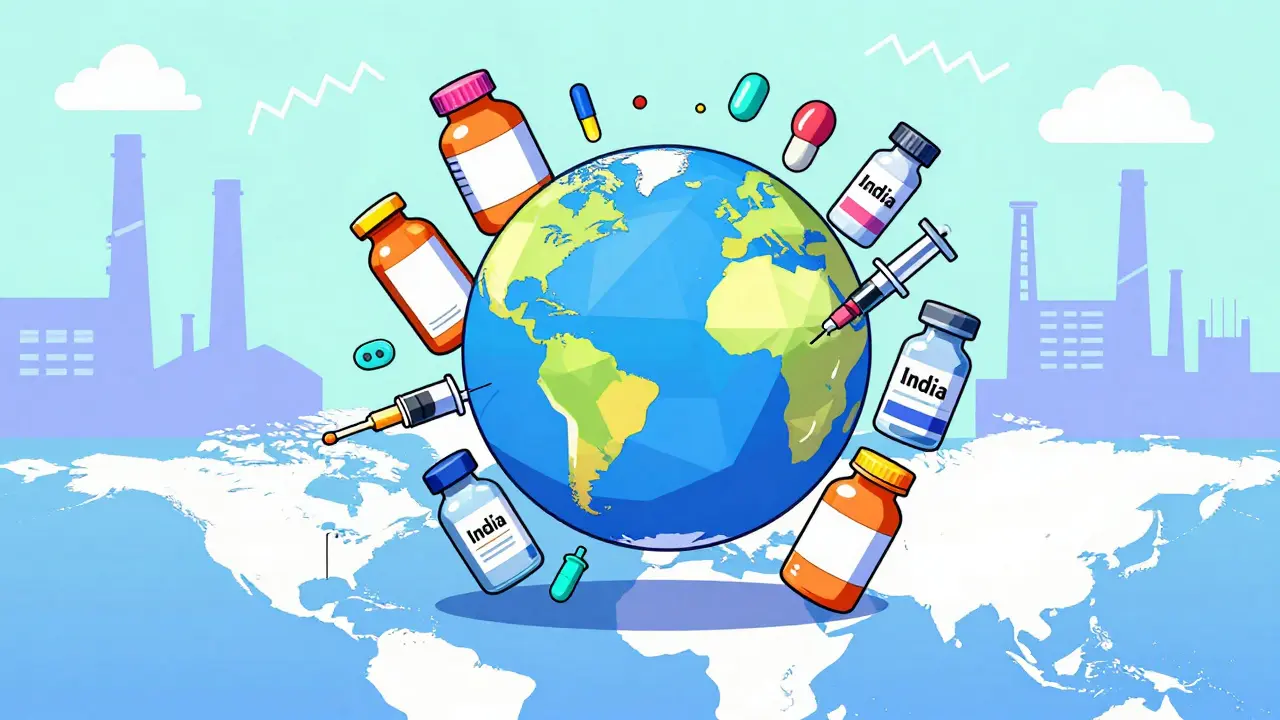
When you take a pill for high blood pressure, an antibiotic, or a diabetes medication, there’s a good chance it came from India. The country doesn’t just make medicines-it supplies the world. India produces one in five of all generic drugs exported globally. It’s the top vaccine maker on Earth, providing over 60% of the world’s shots. And it does all this at prices that make treatment possible for millions who couldn’t otherwise afford it.
How India Became the Pharmacy of the World
It wasn’t luck. It was policy. In the 1970s, India changed its patent laws to stop foreign companies from monopolizing drug formulas. Instead of letting patents block local production, India allowed manufacturers to copy patented medicines as long as they made them differently. This opened the door for Indian companies to reverse-engineer life-saving drugs-like HIV antiretrovirals-and sell them for a fraction of the cost. By 2024, that strategy had turned India into a global powerhouse. The pharmaceutical industry was worth $50 billion, and it’s on track to hit $130 billion by 2030. Over 10,000 manufacturing units operate across the country. More than 650 of them meet U.S. FDA standards-the highest number outside the United States. Another 2,000+ are approved by the World Health Organization for Good Manufacturing Practices (GMP). That’s not just scale. It’s reliability.What’s in the Medicine Cabinet? A Global Supply Chain
Indian factories churn out more than 60,000 different generic drugs. They cover everything from common conditions like asthma and acid reflux to complex diseases like cancer and rare autoimmune disorders. The country also produces over 500 active pharmaceutical ingredients (APIs), the core chemical components of drugs. But here’s the catch: India still imports about 70% of its APIs from China. That’s a big vulnerability. When global supply chains got disrupted during the pandemic, India felt it. The government responded with a ₹3,000 crore ($400 million) incentive program to build domestic API production. The goal? Cut that dependency to 53% by 2026. Meanwhile, Indian companies are moving up the value chain. Biosimilars-copycat versions of expensive biologic drugs-are now 8% of export value, up from just 3% in 2020. Companies like Biocon and Dr. Reddy’s are investing over $500 million a year into these complex therapies. That’s not just making cheaper pills anymore. It’s competing in the high-tech end of pharma.Who Buys Indian Generic Drugs?
The answer? Almost everyone. - In the United States, Indian generics make up 40% of all dispensed generic prescriptions. That’s nearly half the market for low-cost medicines. - In the UK, one-third of NHS prescriptions for generics come from India. - Across Sub-Saharan Africa, Indian drugs supply about half of all medicines used in public health programs. Why? Because they work-and they’re cheap. A course of HIV treatment that once cost $10,000 per patient a year dropped to $100 thanks to Indian generics. Malaria drugs, antibiotics, insulin-all became affordable where they were once out of reach. But here’s something you won’t hear often: India doesn’t make the most money from these sales. It supplies 20% of global volume, but only 10% of the value. Why? Because it sells mostly low-cost, high-volume generics. The U.S. generics market is worth $70-80 billion a year, but Indian companies capture just a fraction of that revenue. Their strength is volume, not pricing power.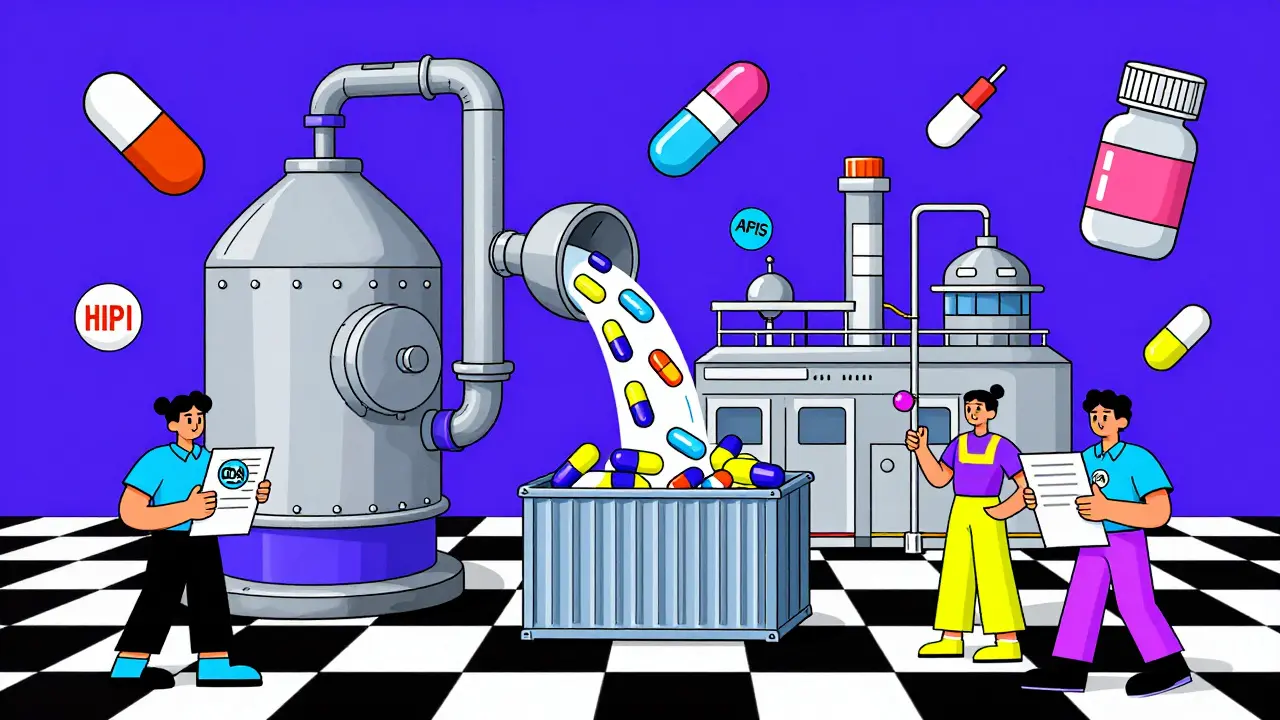
Quality: Trust or Trouble?
There’s a myth that Indian drugs are low quality. That’s outdated. In 2015, only 60% of Indian manufacturing sites passed FDA inspections. By 2024, that number jumped to 85-90%. That’s on par with global averages. The FDA has inspected more than 650 Indian plants-more than any other country except the U.S. And most of them pass. That doesn’t mean problems don’t exist. In 2023, the Bureau of Investigative Journalism found a handful of dangerous batches linked to Indian manufacturers. But those cases were rare. Out of billions of doses shipped, they were exceptions. Patient feedback tells a clearer story. On PharmacyChecker.com, 87% of U.S. users who took Indian generics rated their experience as positive. In the UK, NHS patients gave Indian-sourced drugs an average rating of 4.2 out of 5. Complaints? Mostly about taste, packaging, or shipping delays-not effectiveness. One Reddit user reported inconsistent dissolution rates in a batch of levothyroxine, a thyroid medication. That’s a real issue. But it was one batch. Not a pattern. And it was flagged, investigated, and pulled. The truth? Indian manufacturers have spent the last decade fixing quality. They now use electronic regulatory documents (eCTD), follow strict GMP rules, and train staff to meet global standards. They’re not perfect-but they’re reliable.Big Players Behind the Scenes
It’s not a bunch of small shops. It’s dominated by giants: - Sun Pharma: Market cap over $43 billion. The world’s largest generic drugmaker by revenue. - Cipla: Famous for pioneering low-cost HIV drugs in the early 2000s. Now worth $13 billion. - Dr. Reddy’s: A leader in complex generics and biosimilars. Invests heavily in R&D. These companies don’t just sell pills. They run global supply chains, invest in biotech labs, and lobby regulators. Sun Pharma spends 6-8% of its revenue on research. That’s more than many U.S. generics firms.

14 Comments
sagar patel
December 26, 2025 AT 03:18India makes the medicines that keep my grandfather alive and it costs less than his coffee habit
Bailey Adkison
December 26, 2025 AT 12:26Let’s not pretend this is altruism. India exports generics because it’s cheaper than innovating and the US lets them get away with it. The FDA inspects them but doesn’t punish them enough. This isn’t global health-it’s regulatory arbitrage
Michael Dillon
December 27, 2025 AT 13:59Actually the real story is how Indian companies got rich off Western patents then turned around and sold the same drugs back to us at 90% off. The US pharma lobby is screaming but patients are saving thousands. Who’s the villain here? The ones making pills or the ones making shareholders rich?
Gary Hartung
December 28, 2025 AT 18:13Let me be clear: the idea that India is a ‘pharmacy of the world’ is a romanticized myth perpetuated by Western media to absolve themselves of systemic healthcare failure. The fact that we rely on a country with 1.4 billion people to supply our essential medicines reveals a profound collapse in American industrial policy, not an Indian triumph. And don’t even get me started on the supply chain fragility-this isn’t resilience, it’s a single point of failure waiting to explode
Ben Harris
December 30, 2025 AT 13:07Everyone’s acting like India is some saintly savior when they’re just taking advantage of weak IP laws. I’ve seen the reports-contaminated batches, falsified data, plants with cockroaches crawling over vats. The FDA says 85% pass but that still means 1 in 7 is borderline dangerous. And what about the workers? Do you think they’re paid fairly? No one talks about that
Carlos Narvaez
December 31, 2025 AT 00:53API dependency on China is the real crisis. India’s playing chess while China controls the board. No amount of FDA inspections fixes that
Harbans Singh
January 1, 2026 AT 08:47I grew up seeing my mom buy insulin from Cipla. It was the only way we could afford it. Now I work in a hospital in Bangalore and I see how much care goes into every batch. The stigma around Indian drugs is unfair. They’re not perfect but they’re honest. And they save lives every day
Justin James
January 2, 2026 AT 04:12Did you know that China owns 70% of the API supply chain and India is just the middleman? This whole thing is a controlled demolition. The West is being slowly disarmed of pharmaceutical sovereignty while we cheer for cheap pills. The real agenda? To make us dependent on a single authoritarian regime through a proxy. India is the puppet. China is the puppeteer. Wake up
Rick Kimberly
January 2, 2026 AT 07:52While the narrative surrounding India’s pharmaceutical dominance is compelling, it is imperative to recognize that the structural underpinnings of this success are rooted in regulatory arbitrage, labor cost differentials, and historical patent law exceptions. The ethical dimension of this model requires sustained scrutiny, particularly as global health equity evolves
Terry Free
January 3, 2026 AT 02:45Oh wow, India’s the pharmacy of the world? Cool. So that means when your kid gets asthma meds from a factory in Gujarat, you’re basically betting on someone’s lunch break. Congrats, you’re living in a third-world pharmacy fantasy
Lindsay Hensel
January 3, 2026 AT 19:38As someone who works in global public health, I’ve seen firsthand how Indian generics have transformed access in rural clinics across Malawi and Nepal. The dignity of care-affordable, reliable, and dignified-is not a luxury. It’s a right. And India is making that possible
Sophie Stallkind
January 5, 2026 AT 05:25It is noteworthy that India’s pharmaceutical industry has achieved a level of regulatory compliance with international standards that surpasses many developed nations’ domestic manufacturers. The adherence to GMP and FDA protocols reflects not merely economic strategy but institutional maturity
Katherine Blumhardt
January 6, 2026 AT 03:35So what happens when the Chinese supply chain breaks again? Like during COVID? We all just panic buy metformin off Amazon? 😅 I mean I love the prices but I’m kinda scared to take anything from India now…
Linda B.
January 6, 2026 AT 18:5285% FDA pass rate? That’s a lie. The inspections are scheduled weeks in advance. They clean the place up, fake the logs, and the FDA signs off. Meanwhile, the real production happens in the back rooms. This isn’t medicine. It’s a theater. And we’re all paying for the tickets