
Ascites Management: How to Treat Fluid Buildup in the Abdomen
When fluid builds up in the abdomen — a condition called ascites, an abnormal accumulation of fluid in the peritoneal cavity, often caused by liver disease. It's not just swelling — it's a sign your body is struggling to manage pressure and fluid balance. Also known as abdominal effusion, ascites most often shows up in people with cirrhosis, the late stage of chronic liver damage where scar tissue replaces healthy liver cells. About 50% of people with cirrhosis will develop ascites within 10 years, and once it appears, survival rates drop without proper treatment.
Ascites doesn’t happen alone. It’s tied to portal hypertension, high blood pressure in the vein that carries blood from the intestines to the liver. When the liver is damaged, blood can’t flow through it easily, so pressure backs up. Fluid leaks out into the belly. At the same time, the kidneys start holding onto salt and water, making it worse. That’s why ascites management isn’t just about draining fluid — it’s about fixing the root problem: liver function, sodium balance, and blood pressure in the portal system. People with ascites often need daily diuretics like spironolactone and furosemide, strict low-sodium diets (under 2,000 mg a day), and regular monitoring for infections like spontaneous bacterial peritonitis, which can turn deadly fast.
Some cases need more than pills and diet changes. If fluid keeps coming back despite treatment, doctors may do a paracentesis — a simple procedure to drain the fluid with a needle. In advanced cases, a TIPS procedure (transjugular intrahepatic portosystemic shunt) might be used to reroute blood flow and lower pressure. But none of these work long-term if the liver keeps failing. That’s why many people with ascites end up on transplant lists. The good news? Early and consistent management can slow progression, reduce hospital visits, and help people live longer with better quality of life.
What you’ll find below are real, practical guides on how ascites connects to liver disease, what treatments actually work, how to avoid complications, and what to ask your doctor when things get complicated. These posts cover everything from diuretic side effects to when to suspect infection — all based on current medical practice and patient experiences. No fluff. Just what you need to understand and manage this condition.
7
Dec
2025
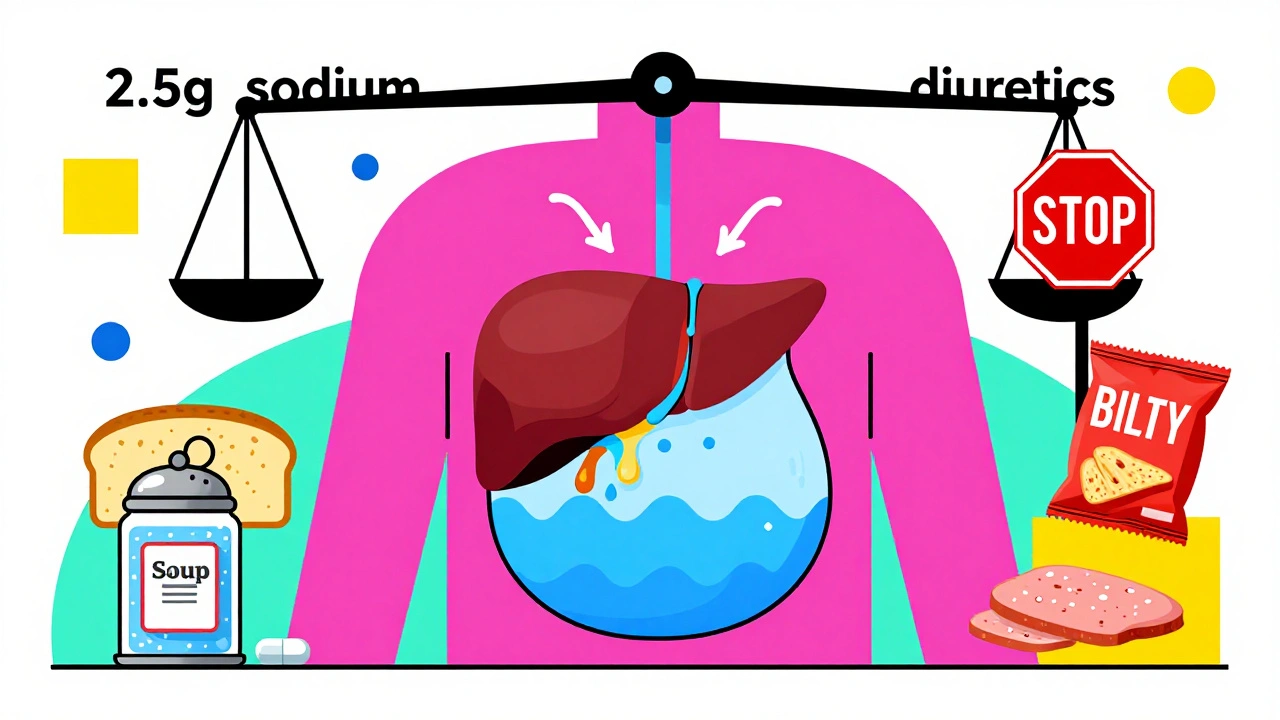
Ascites Management: How Sodium Restriction and Diuretics Really Work
Ascites from cirrhosis requires careful management with sodium control and diuretics. Learn the latest evidence on how much salt to eat, which medications work best, and what to avoid to prevent complications.
© 2026. All rights reserved.