
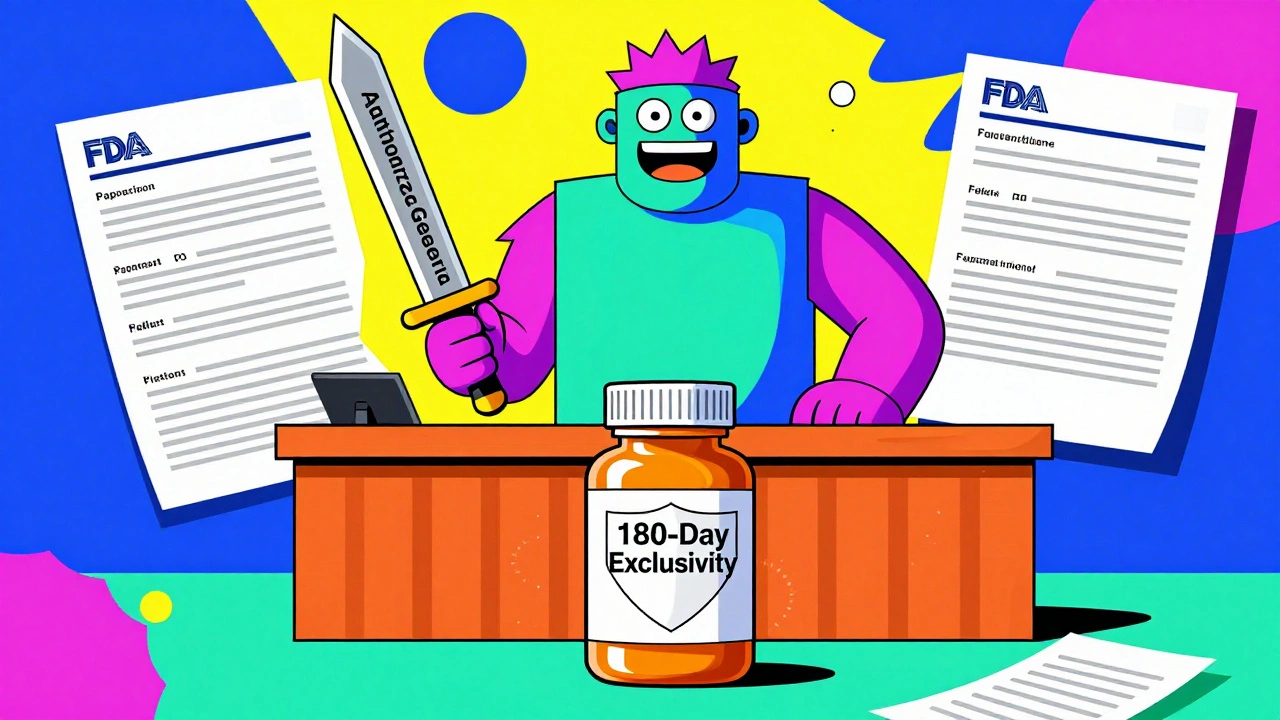
The U.S. generic drug market runs on a legal tightrope. At its center is the 180-day exclusivity provision - a rule designed to reward the first company brave enough to challenge a brand-name drug’s patent. But here’s the twist: while that first generic gets a six-month head start, the brand-name company can still flood the market with its own version - just without the brand name. These are called authorized generics. And they’re legal. And they’re devastating to the first generic’s profits.
How the 180-Day Exclusivity Rule Was Supposed to Work
In 1984, Congress passed the Hatch-Waxman Act to fix a broken system. Before then, brand-name drugs had years of monopoly protection, and generics couldn’t enter until patents expired - even if they were weak or invalid. The law changed that. It created a shortcut for generics: the Abbreviated New Drug Application (ANDA). Instead of running full clinical trials, generics just had to prove they worked the same as the brand-name drug. The big incentive? The 180-day exclusivity. If a generic company filed a Paragraph IV certification - basically saying, "This patent is invalid or we don’t infringe it" - and won in court or forced a settlement, they got six months of exclusive rights to sell the generic. No other generic could enter during that time. The idea was simple: reward the challenger. Encourage more patent fights. Get cheaper drugs to patients faster. The numbers show it worked. Since 1984, this system has saved the U.S. healthcare system over $2.2 trillion. The average time to generic entry dropped from over five years to under two. In 2022, nearly 80% of new generic approvals involved a patent challenge. That’s not luck. That’s the exclusivity rule doing its job.What Are Authorized Generics - and Why Do They Break the System?
An authorized generic isn’t a copy. It’s the exact same drug. Same factory. Same active ingredient. Same packaging - just without the brand logo. The brand-name company licenses its own product to a generic distributor, who sells it under a different name. No new FDA approval needed. No bioequivalence studies. Just a label change and a lower price tag. Here’s the problem: the law doesn’t stop them from doing this during the 180-day exclusivity window. So when the first generic finally launches after years of legal battles and $3 million in legal fees, the brand-name company drops its own version onto the same pharmacy shelves. Suddenly, instead of capturing 80% of the market, the first generic is stuck sharing it - often dropping to 50% or less. This isn’t theoretical. Between 2005 and 2015, brand-name companies launched authorized generics in about 60% of cases where 180-day exclusivity was granted. In one high-profile case, Teva Pharmaceuticals lost $287 million when Eli Lilly launched an authorized generic of Humalog during Teva’s exclusivity period. That’s not a business risk - that’s a legal loophole.
The Legal Gray Area: Is This Anti-Competitive?
The Federal Trade Commission (FTC) thinks so. Between 2010 and 2022, the FTC filed 15 antitrust lawsuits against brand-name drugmakers for using authorized generics to block real competition. Their argument? This isn’t competition - it’s a pay-to-delay tactic disguised as consumer savings. Brand-name companies argue the opposite. They say authorized generics lower prices faster. A 2021 RAND Corporation study found that when an authorized generic enters alongside the first generic, prices drop 15-25% more than when only one generic is on the market. That’s true. But here’s the catch: those savings go to consumers - not to the generic company that spent millions to get there. The real issue is incentive. The whole point of the 180-day exclusivity is to motivate generics to take on risky, expensive patent challenges. If you know the brand-name company can just step in and take half your profits, why risk $5 million in legal fees? A 2022 Drug Patent Watch analysis found that 78% of first generic applicants now negotiate contracts with brand-name companies to delay authorized generic launches - often as part of patent settlement deals. That’s not competition. That’s collusion.How Generic Companies Adapt - and Why It’s Not Enough
Smaller generic manufacturers are walking away. The cost of filing a Paragraph IV challenge has climbed to $3.2 million on average. The risk of losing half your revenue to an authorized generic makes it a terrible gamble. Reddit threads from pharmaceutical professionals show real frustration: "Why risk it if the brand can just copy us?" Larger companies like Teva and Mylan have teams dedicated to managing exclusivity windows. They hire consultants, track FDA filings, and build legal contingencies into every ANDA. But even then, mistakes happen. The FDA reports that 28% of first applicants between 2018 and 2022 lost part or all of their exclusivity because they triggered the clock too early, shipped product too late, or misread the rules. The FDA’s own guidance says the 180-day clock starts when the generic is "first commercially marketed" - meaning both FDA approval AND actual shipment to customers. Many companies don’t realize that approval alone isn’t enough. Delay shipment by a week? You lose a week of exclusivity. It’s a minefield.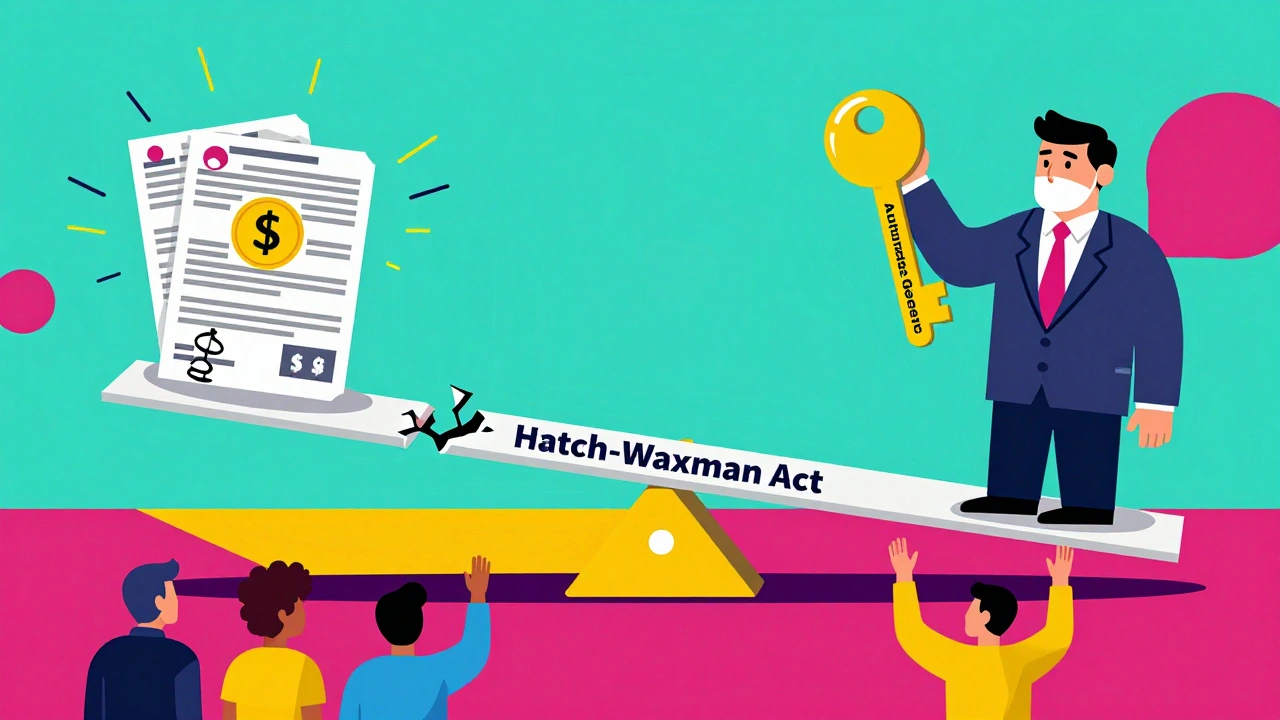

13 Comments
Gwyneth Agnes
December 6, 2025 AT 20:42Authorized generics are just corporate theft dressed up as capitalism.
Stop pretending this is fair.
Mansi Bansal
December 8, 2025 AT 08:53It is an incontrovertible fact that the structural architecture of pharmaceutical market dynamics has been subverted by the pernicious exploitation of regulatory lacunae, thereby engendering a pernicious asymmetry wherein the very entities entrusted with innovation are now the principal agents of market distortion.
One must interrogate the ethical imperatives underpinning such conduct, which, in the context of public health, constitutes nothing short of a moral abdication.
Kay Jolie
December 9, 2025 AT 06:50Okay but let’s be real - this isn’t just a loophole, it’s a full-on corporate heist with a FDA stamp.
The Hatch-Waxman Act was supposed to be the people’s win, not Big Pharma’s cheat code.
And now we’re just watching generics get ghosted by their own damn patent challengers.
It’s like paying someone to break into your house so you can steal back your stuff.
And the worst part? We’re told to be grateful for the ‘lower prices’ while the real innovators - the ones who actually sued - get wiped out.
This isn’t competition. This is legalized sabotage with a side of pink slime.
Clare Fox
December 10, 2025 AT 17:08the system was built on trust that companies would play fair
but when you give someone a sword and then let their enemy hold the sheath
you dont get justice
you get a very quiet kind of violence
the kind that doesnt make headlines
just lower stock prices and broken startups
and patients who still pay too much
because the real winners never had to lift a finger
they just waited
and then they copied
Jackie Petersen
December 11, 2025 AT 00:02Why are we letting foreign drug companies dictate U.S. policy?
And why is the FDA letting American companies get robbed by their own rules?
This is why we need a wall around pharmaceutical patents.
Not for profits - for sovereignty.
Annie Gardiner
December 12, 2025 AT 14:10Actually, I think authorized generics are the only thing keeping this system from collapsing.
Without them, the first generic would charge $500 for a $2 drug and call it a day.
So yes, they’re stealing the spotlight - but they’re also keeping prices low.
Maybe the real villain isn’t the brand company.
Maybe it’s the idea that one company should get a monopoly on cheap medicine.
That’s not capitalism.
That’s just greed with a law degree.
Rashmi Gupta
December 13, 2025 AT 18:15Everyone says the law is broken.
But nobody asks why the first generic companies keep signing settlement deals that let the brand launch an authorized generic anyway.
It’s not the law that’s broken.
It’s the generics.
They’re cowards with balance sheets.
Karen Mitchell
December 14, 2025 AT 10:06It is unconscionable that the United States of America permits such a flagrant violation of competitive integrity under the guise of regulatory compliance.
The FDA’s inaction constitutes a dereliction of duty.
There is no justification for permitting a patent-holding entity to manufacture and distribute an identical product under a different label while simultaneously denying market access to the challenger who bore the legal and financial burden.
This is not a market - it is a rigged casino.
Geraldine Trainer-Cooper
December 15, 2025 AT 23:49they spent 3 mil to win a patent fight
then the brand just slapped a new label on the same pills
and sold them for 10% less
and now the generic company goes bankrupt
and everyone acts like this is normal
its not capitalism
its just the rich playing monopoly with our health
Kenny Pakade
December 16, 2025 AT 09:42Why are we letting Indian and Nigerian drug companies profit off American innovation?
And why is the government letting them steal our patents?
Authorized generics are just a cover for foreign companies to undercut American pharma.
We need tariffs on all generics that don’t come from U.S. factories.
This isn’t about drugs - it’s about national survival.
Brooke Evers
December 16, 2025 AT 22:13I know this feels unfair - really, I do.
But think about the people who actually get the medicine cheaper because of this mess.
The single mom choosing between insulin and rent.
The veteran on a fixed income.
The kid with asthma who needs albuterol.
Yeah, the first generic company got screwed.
But the system - messy, broken, unfair as it is - still got life-saving drugs into millions of hands faster than it ever did before.
Maybe the answer isn’t to punish the brand.
Maybe it’s to find a way to compensate the challenger without killing the price drop.
Because if we fix this wrong, we might end up with no generics at all.
And that’s a cost no one can afford.
Chris Park
December 17, 2025 AT 01:36Authorized generics are a psyop.
It’s not about lowering prices.
It’s about controlling the narrative.
Big Pharma owns the FDA, the Congress, the media.
They let you think you’re winning when you’re being manipulated.
They created this loophole on purpose.
They want you to believe the system is fair so you won’t demand real change.
They don’t fear competition.
They fear you waking up.
Priya Ranjan
December 17, 2025 AT 09:31You’re all missing the point.
First generics don’t deserve exclusivity.
They didn’t invent the drug.
They didn’t fund the R&D.
They just waited for someone else to take the risk.
Now they want a monopoly on the profits?
That’s not capitalism.
That’s entitlement.
And if they can’t handle competition, they shouldn’t have entered the game.
Let the market decide.
Not some 1984 law written by lawyers who never saw a patient.