
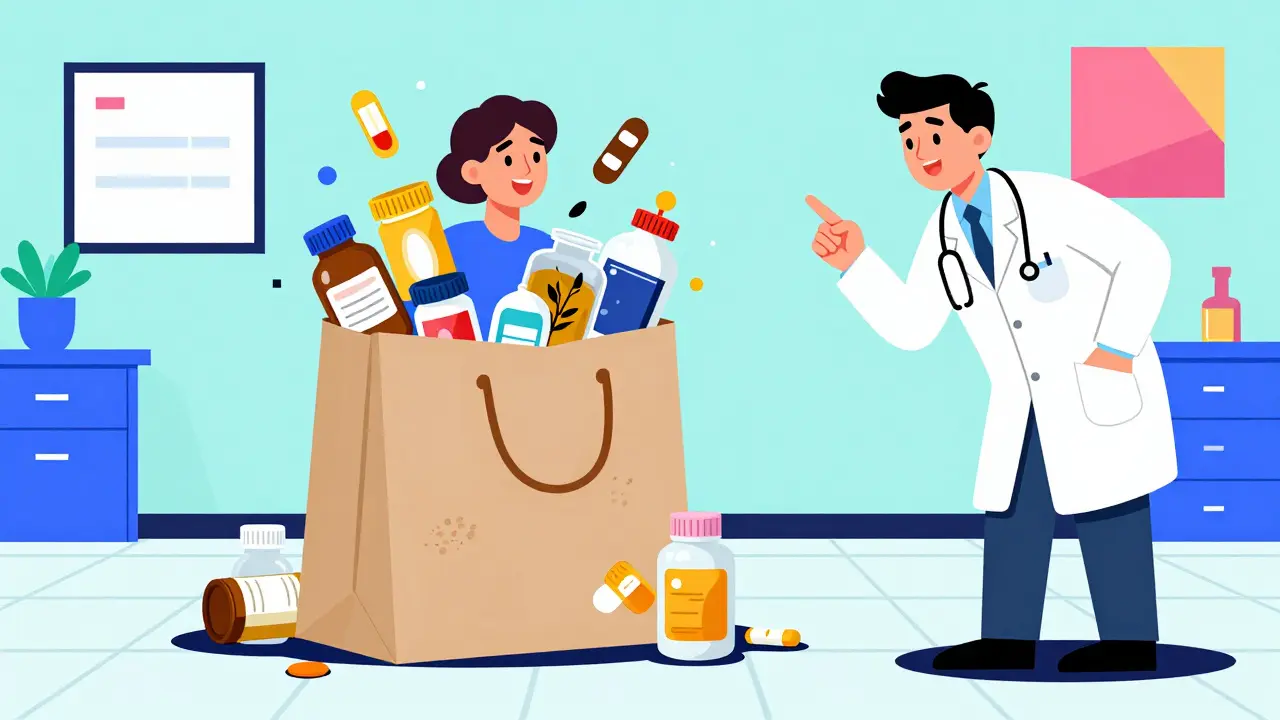
When you walk into a doctor’s office, emergency room, or hospital, the most important thing you can bring isn’t your insurance card or ID-it’s your medical history. Specifically, a complete, accurate list of everything you’re taking. Missing one pill, one supplement, or one over-the-counter medicine can lead to dangerous drug interactions, hospital stays, or even death. Medication errors are one of the leading causes of preventable harm in healthcare, and the biggest gap? It’s not the system-it’s the missing information you hold in your head.
Why Your Medication List Matters More Than You Think
Every year, over 7,000 people in the U.S. die from medication errors that could have been avoided. That’s not because doctors are careless. It’s because medication lists are often incomplete. A 2023 study found that when patients rely on memory alone to list their drugs, nearly 40% of their medications are left out. That includes painkillers, vitamins, herbal supplements, and even eye drops you use once a day. These aren’t "minor" meds-they’re part of your health story. The process of checking and correcting this list is called medication reconciliation. It’s not just a formality. It’s a safety net. Hospitals are required by law to do it when you’re admitted, transferred, or discharged. But if you don’t bring the right info, the system can’t fix the gaps. In fact, electronic systems that pull data from pharmacies catch 32% more errors than staff trying to ask questions alone. But even those systems miss up to 20% of medications-especially if you pay cash, buy OTC drugs without a prescription, or use a different pharmacy than the one connected to your EHR.What Exactly Should Be on Your List?
Don’t just write down your prescriptions. Your list needs to include:- Every prescription drug, including doses and how often you take them
- All over-the-counter medicines-pain relievers, antacids, sleep aids, cold meds
- Vitamins, minerals, and supplements-even the ones you only take "once in a while"
- Herbal remedies, teas, and natural products (like turmeric, St. John’s wort, or ginkgo)
- Any injections, patches, inhalers, or eye/ear drops
- Medications you stopped taking, and why
The Brown Bag Method: A Simple Trick That Works
The best way to make sure nothing gets left out? Bring your actual meds to your appointment. It’s called the "brown bag method." You don’t need a fancy app or a printed list. Just grab every bottle, box, or packet you take and put them in a bag. Take it with you. This isn’t just anecdotal. Studies show it cuts medication discrepancies by 40% compared to just telling your doctor what you take. Why? Because it forces accuracy. You might forget you’re still taking that old antibiotic from last year. Or you might not realize you’ve doubled up on acetaminophen because it’s in your cold medicine and your painkiller. Seeing the bottles makes it real. If you’re worried about looking messy or embarrassed-don’t be. Doctors see this every day. They’d rather see your bag than have you miss a critical interaction. One nurse practitioner in Melbourne told me: "I’ve had patients bring in 20 different bottles. I’ve never seen a doctor say, ‘Why do you have so many?’ I’ve only heard, ‘Thank you for bringing this.’"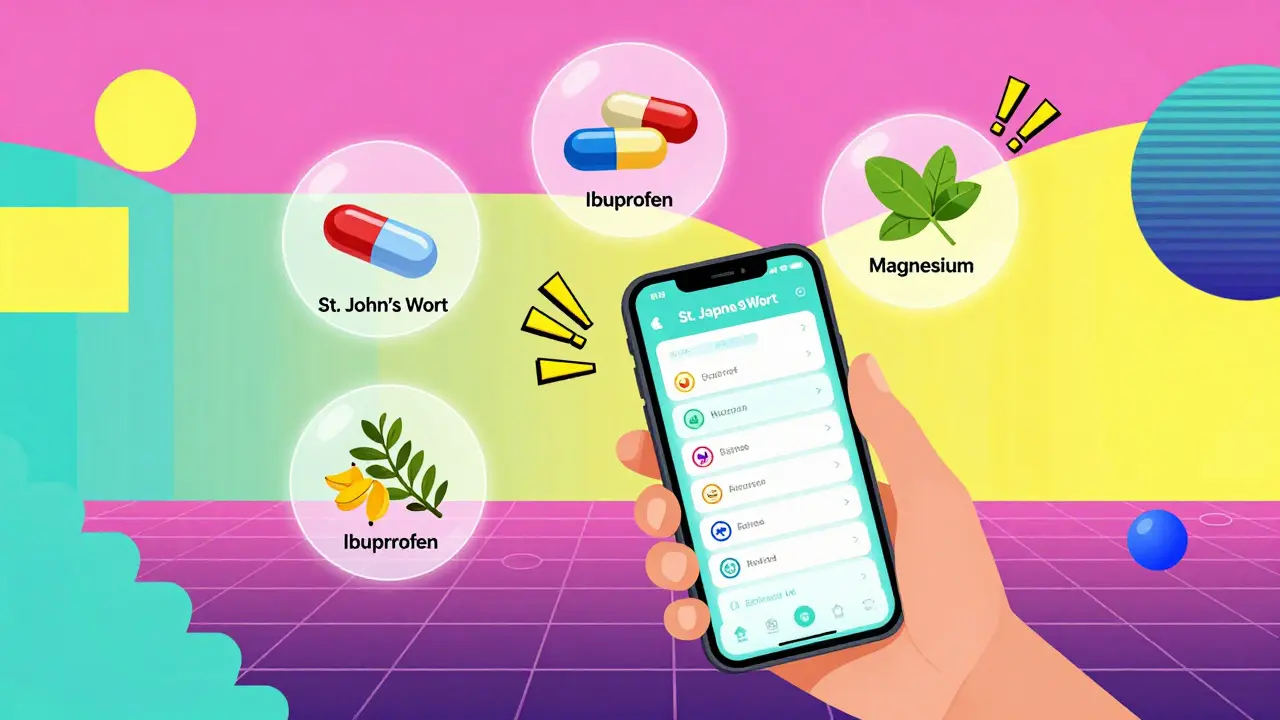
What Happens When You Don’t Share Everything
Let’s say you take warfarin for a blood clot. You also take ibuprofen for arthritis because "it’s just a painkiller." You don’t think it matters. But ibuprofen can increase your risk of bleeding-sometimes dangerously. If your doctor doesn’t know you’re taking it, they might increase your warfarin dose. That’s when things go wrong. Or you’re on antidepressants and start taking St. John’s wort for "natural mood support." You don’t mention it because you think it’s harmless. But combining it with SSRIs can trigger serotonin syndrome-a life-threatening condition that causes high fever, confusion, and seizures. These aren’t rare cases. The Institute for Safe Medication Practices lists over 50 high-alert medications-drugs that can cause serious harm if used incorrectly. Insulin, heparin, opioids, anticoagulants. If your list is wrong, even one of these can become a ticking time bomb.How Technology Helps-And Where It Falls Short
Most hospitals now use electronic systems that pull your medication history from pharmacies. Services like Surescripts connect to over 98% of U.S. pharmacies and 100% of major pharmacy benefit managers. They can show your doctor what you’ve filled in the last six months. But here’s the catch: these systems don’t know about cash-pay meds. They don’t track supplements. They don’t know if you stopped taking something because it made you sick. And they’re only as good as the data they get. One 2022 study found that pharmacy claims alone were only 61% accurate when it came to actual medication use. That’s why patient input is still essential. Even the smartest AI can’t replace you telling your doctor: "I stopped the metformin because my stomach was killing me." Or "I started taking magnesium because my legs cramp at night."What You Can Do Right Now
You don’t need to wait for your next appointment. Start today:- Grab a notebook or open a note on your phone.
- Go through your medicine cabinet. Write down every pill, capsule, drop, patch, or powder.
- Include the name, dose, frequency, and reason you take it.
- Update it every time your doctor changes something-add, stop, or switch a drug.
- Keep a copy in your wallet or phone. Share it with your primary doctor, pharmacist, and a trusted family member.
What Your Doctor Should Do
Good providers don’t just ask you for a list. They ask you to show it. They use tools like SBAR (Situation, Background, Assessment, Recommendation) to make sure nothing slips through during handoffs. They check for high-alert drugs. They ask: "Have you started anything new?" and "Have you stopped anything?" They also use the "teach-back" method: "Can you tell me in your own words why you take this pill?" Studies show this improves understanding by 75%. If your doctor never asks you to explain your meds, ask them why. You’re not being difficult-you’re protecting your life.When Things Go Wrong: What to Do
If you’ve had a bad reaction, been hospitalized, or noticed a change after starting a new med-speak up. Don’t assume it’s "just side effects." Document everything: what you took, when, what happened, and how long it lasted. If you’re in the hospital and notice your meds don’t match your list, say something. Politely. Firmly. "I brought this list with me. I don’t see my blood pressure pill here. Can we check?" You’re not being a nuisance. You’re preventing a mistake.The Bigger Picture: Why This Isn’t Just Your Problem
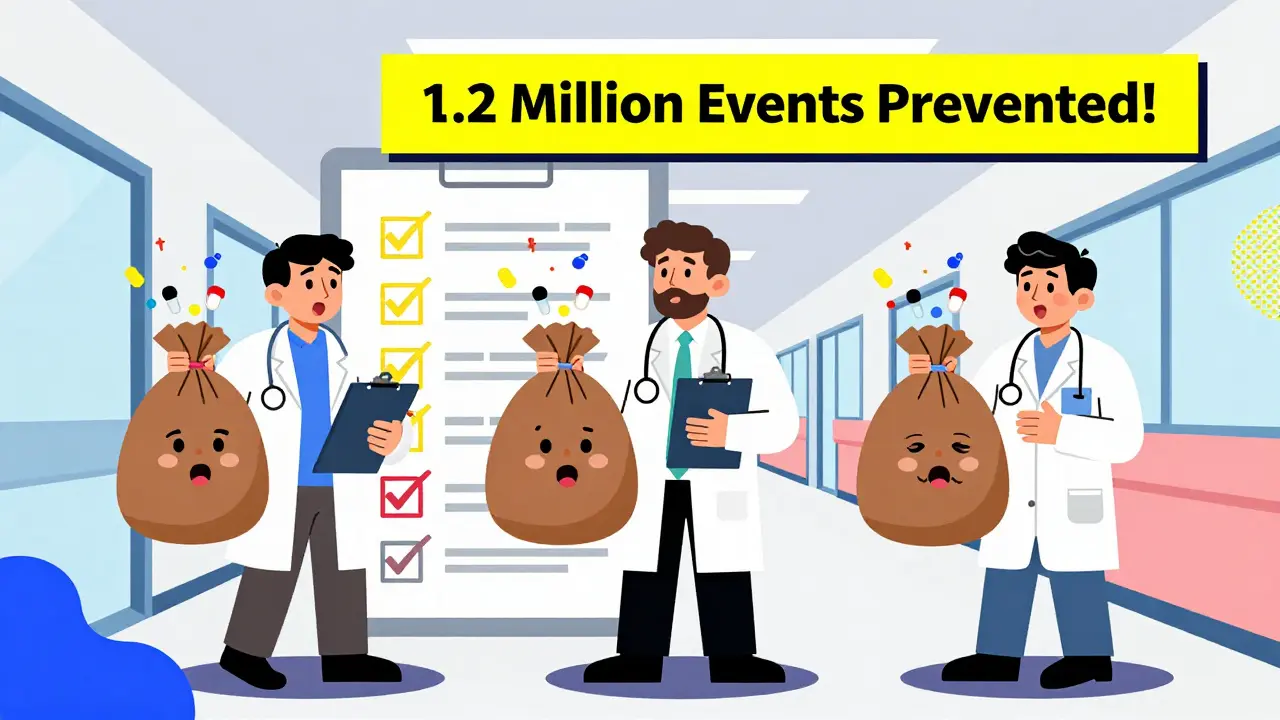
Medication safety isn’t just about you. It’s about the system. In 2023, Medicare penalized hospitals in the worst quartile for medication errors by cutting payments by 1%. That’s why hospitals are investing in reconciliation tools. But technology alone won’t fix this. Only you can fill the gaps. The National Academy of Medicine estimates that if everyone shared accurate medication histories, we could prevent 1.2 million adverse drug events by 2030-and save $21 billion in healthcare costs. That’s not a number. That’s real people. Real families. Real lives. You don’t need to be a medical expert. You just need to be honest, prepared, and persistent. Your health isn’t a guess. It’s a list. And that list? It’s yours to keep.What if I forget to bring my meds to my appointment?
If you can’t bring your bottles, write down every medication you’ve taken in the last 30 days, including doses and why you take them. Include over-the-counter drugs, vitamins, and supplements. Use your pharmacy’s app or online portal to pull up your fill history. Even an imperfect list is better than nothing. Tell your doctor you’re doing your best to be accurate.
Do I really need to tell my doctor about herbal supplements?
Yes. Many herbal products interact with prescription drugs. St. John’s wort can make birth control, antidepressants, and blood thinners less effective. Garlic supplements can increase bleeding risk before surgery. Turmeric can interfere with diabetes meds. Your doctor doesn’t need to approve them-they need to know about them to avoid dangerous combinations.
Can my pharmacist help me with my medication list?
Absolutely. Pharmacists are medication experts. Ask them to review your list every time you pick up a new prescription. Many pharmacies offer free med reviews. They can spot duplicates, interactions, or doses that are too high. Bring your list-and your bottles-to your pharmacy appointment.
What if I’m seeing multiple doctors? Who gets the list?
Give a copy to every provider you see-your GP, specialist, dentist, even your physical therapist. Keep the most current version in your phone and wallet. If you’re referred to a specialist, send your list ahead of time. Say: "Here’s what I’m taking so we can avoid interactions." It’s not rude-it’s responsible.
Is it safe to share my meds with family members?
Never share your prescription meds with anyone else. But it’s smart to give a trusted family member a copy of your list. If you’re ever unable to speak for yourself-during an emergency, for example-they can give your meds to responders or doctors. This can save your life.
How often should I update my medication list?
Update it every time you start, stop, or change a medication-even if it’s temporary. Also update it after every hospital visit, ER trip, or pharmacy consultation. Keep it current. A list that’s six months old is often inaccurate. Your best defense is a living document.

11 Comments
Ben Kono
January 13, 2026 AT 08:55I just bring my whole medicine cabinet to every appointment and let them sort it out. Doctors never complain. They just nod and say thank you. Seriously. It's that easy.
Rinky Tandon
January 14, 2026 AT 04:45You're all missing the real issue here. The pharmaceutical-industrial complex deliberately obscures drug interactions to keep you dependent. St. John’s wort isn't dangerous-it's been suppressed because it competes with SSRIs. The FDA knows. Your doctor knows. You're being gaslit.
Cecelia Alta
January 15, 2026 AT 12:11I once showed up with 17 bottles and a handwritten spreadsheet. The nurse laughed and said, 'Finally, someone who takes this seriously.' Then she spent 45 minutes cross-checking everything. I didn't even know I was double-dosing on acetaminophen. That list saved me from liver failure. Don't be the person who thinks 'it's just a supplement.'
Alex Fortwengler
January 15, 2026 AT 13:09Yeah right. Like doctors actually care. They're just trying to hit their EHR compliance quotas. I’ve had three different systems show three different lists. One said I was on insulin. I’ve never even had diabetes. They don’t want your info-they want checkboxes.
Daniel Pate
January 17, 2026 AT 08:45The real problem isn't patient forgetfulness-it's the fragmentation of care. If your cardiologist, endocrinologist, and primary care provider don’t share systems, your brown bag is the only thing holding the system together. Technology doesn’t fix silos. People do. And if you’re not advocating for yourself, no one will.
gary ysturiz
January 17, 2026 AT 11:30This is so simple it’s almost embarrassing. Write it down. Keep it updated. Share it. Your life is worth the five minutes it takes. I started doing this after my mom ended up in the ER because she didn’t tell her doctor about her fish oil. She almost bled out. Don’t wait for that moment.
Lelia Battle
January 18, 2026 AT 06:56There’s a quiet dignity in owning your health narrative. We outsource so much of our wellbeing to institutions-yet the most vital data, the most intimate details of our bodies, remain locked in our minds. To bring the brown bag is to say: I am not a case number. I am the keeper of my own biology. And that is not weakness. It is sovereignty.
Faith Wright
January 18, 2026 AT 22:25I love how this post treats patients like responsible adults. Most health content talks down to us like we’re toddlers who can’t remember if we took our pills. But you? You assume we’re capable. And that’s why we listen.
jordan shiyangeni
January 20, 2026 AT 01:43The systemic failure here is not merely informational-it is epistemological. The biomedical model reduces the patient to a vector of pharmacological inputs, ignoring phenomenological context: why you stopped metformin, how the side effects altered your daily rhythm, whether you’re taking supplements to counteract iatrogenic harm. The EHR cannot capture the lived experience of illness. Only the patient can. And yet, the system still privileges algorithmic accuracy over narrative truth.
TiM Vince
January 20, 2026 AT 20:55In my village in rural Kenya, we don’t have apps or EHRs. We bring our herbs, our pills, our powders in a cloth bundle to the clinic. The nurse doesn’t judge. She just says, 'Show me.' That’s all. No tech needed. Just respect. Maybe we’ve been overcomplicating this.
Jose Mecanico
January 21, 2026 AT 09:55I started using the same notepad for my meds since my last hospital stay. I keep it in my wallet. My wife has a copy. My pharmacist has a copy. I update it every Sunday night. It’s not glamorous. But it’s the only thing keeping me alive.