
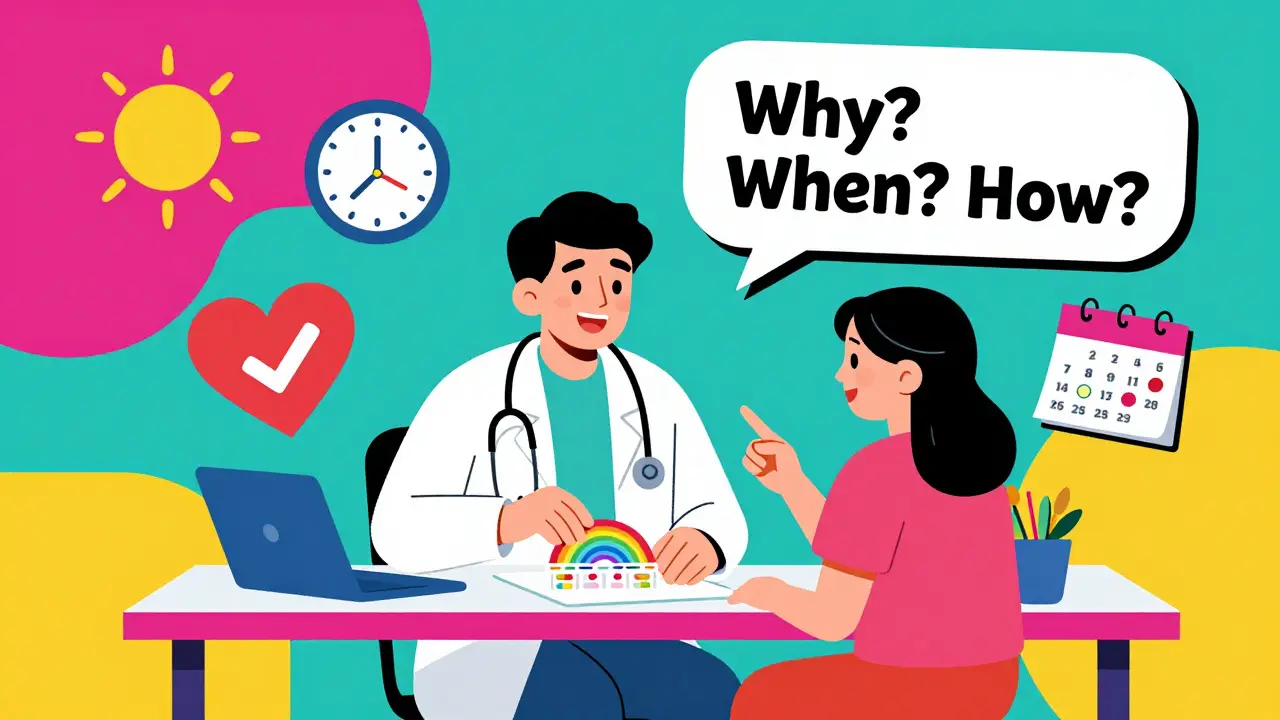
Getting patients to take their medications correctly isn’t just about writing a prescription. It’s about making sure they understand why they’re taking it, what to expect, and how to do it without confusion. Too often, patients leave the clinic with a bag of pills and a vague sense of ‘take as directed.’ That’s not enough. In fact, nearly half of people with chronic conditions don’t take their meds as prescribed-and poor communication is a big reason why.
Why Clear Medication Communication Matters
Every year, medication misunderstandings cost the U.S. healthcare system around $300 billion. That’s not just money-it’s hospital stays, avoidable emergencies, and lives lost. A 2020 study in the Annals of Internal Medicine showed that when patients don’t understand their meds, they’re far more likely to skip doses, take too much, or stop altogether. The problem isn’t usually that patients are careless. It’s that they weren’t given clear, simple, and personalized information. Take high blood pressure, for example. A patient might be told, “Take this once a day.” But if they don’t know why it’s important-if they don’t feel sick or see immediate results-they’ll assume it’s not working and quit. That’s why explaining the goal isn’t optional. It’s essential.Start with What They Already Know
Before you explain anything, ask: “What has your doctor told you about this medication?” This simple question does two things. First, it shows you care about their perspective. Second, it reveals gaps in their understanding before you start talking. One GP in Melbourne shared how this changed her approach. A patient came in for a new statin prescription. She asked the question and learned the patient thought the pill was for “cleaning out his arteries.” He’d been taking it only when he felt bloated. That’s not adherence-that’s guesswork. By starting with his understanding, she corrected the misconception and built trust.Use Plain Language, Not Medical Jargon
Say “take one pill in the morning and one at night” instead of “take BID.” Say “this helps lower your chance of a heart attack” instead of “this inhibits HMG-CoA reductase.” Avoid words like “PO,” “QD,” or “prn.” They’re meaningless to most people. The Agency for Healthcare Research and Quality (AHRQ) found that 80 million American adults struggle with basic health literacy. That number is similar in Australia. If you’re using terms only doctors understand, you’re not communicating-you’re excluding. Even small changes make a difference. Instead of saying, “This reduces your risk by 20%,” say, “Out of 100 people like you, 10 would have a heart attack in 10 years without this medicine. With it, only 8 would.” That’s concrete. That’s real.Set Realistic Expectations
Patients often stop meds because they don’t see results fast enough. Antidepressants? It can take 4-6 weeks to feel better. Blood pressure meds? You won’t “feel” them working. Diabetes meds? They prevent problems, not fix symptoms. Be upfront. Say: “You might not notice any difference in the first week. That doesn’t mean it’s not working. Most people start feeling better after 2-3 weeks.” Give them a timeline. Tell them what to watch for-and what’s normal. A 2021 study at UCSF showed that when providers gave specific timeframes for when effects would appear, 30-day adherence jumped from 62% to 84%. That’s not magic. That’s clarity.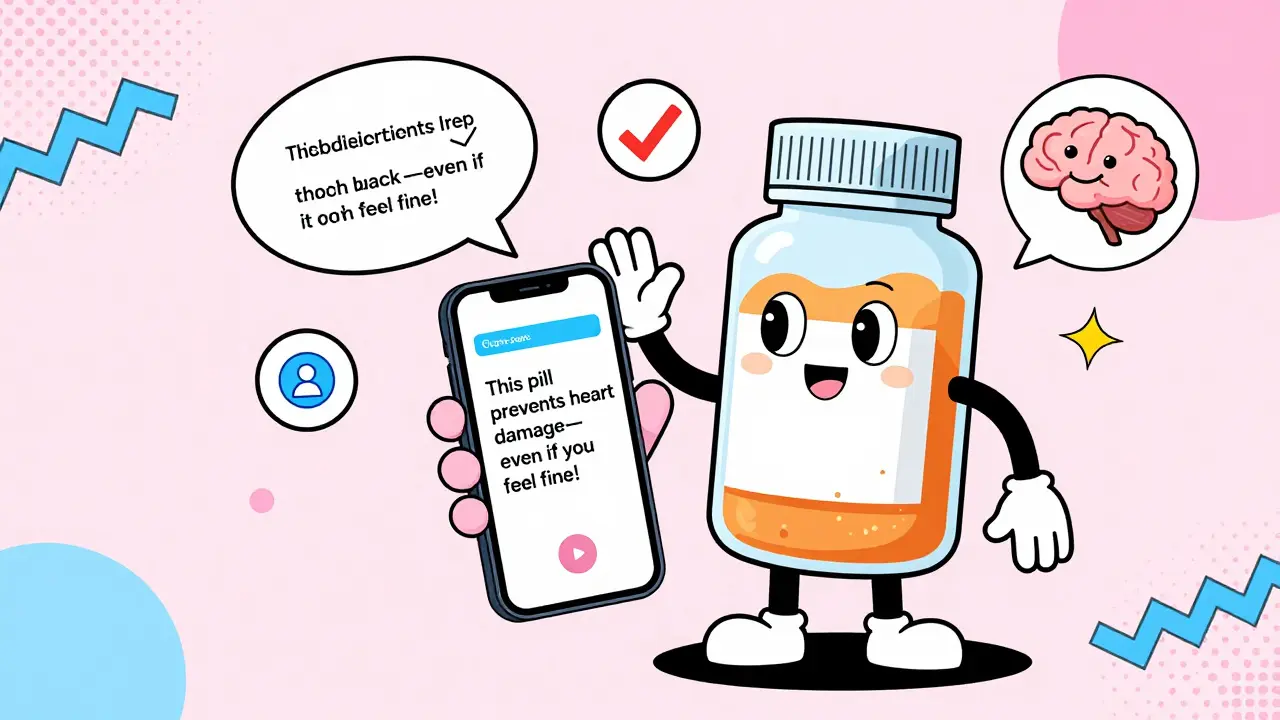
Use the Teach-Back Method
This is the single most effective tool you have. After explaining, ask: “To make sure I explained this right, can you tell me in your own words how you’ll take this pill?” Don’t say, “Do you understand?” That’s a yes/no trap. People will say yes even if they’re lost. Teach-Back forces them to explain it back. If they say, “I take it when I feel dizzy,” you know you need to clarify again. The Joint Commission says this method increases adherence by 23%. It’s not just good practice-it’s becoming standard. Medicare and other insurers now require documentation of Teach-Back for high-risk medications.Make It Visual
Words alone aren’t enough. Show them the pills. Use a pill organizer. Draw a simple clock showing morning and night. Hold up a calendar and circle the days they’ll start. One patient in a Sydney clinic said, “My nurse laid out all my pills on the table and showed me which ones go when. I took a photo of it with my phone. I still look at it every day.” That’s not just helpful-that’s life-changing. Apps and text reminders help too. But they work best when they tie back to what you said in person. A text that says, “Remember: your blood pressure med may make you dizzy at first. That’s normal,” reinforces your message.Check In on Emotions
Patients don’t just have questions-they have fears. “Will this make me gain weight?” “I heard these pills hurt your kidneys.” “I don’t want to be on meds forever.” Acknowledge those feelings. Say: “That’s a common worry. Many people feel the same way.” Then give facts, not dismissals. “Some meds can cause weight gain, but not this one. Let me show you the data.” A 2023 patient survey found that 78% of people who felt they understood their meds said their provider “listened to their concerns.” That’s more powerful than any pamphlet.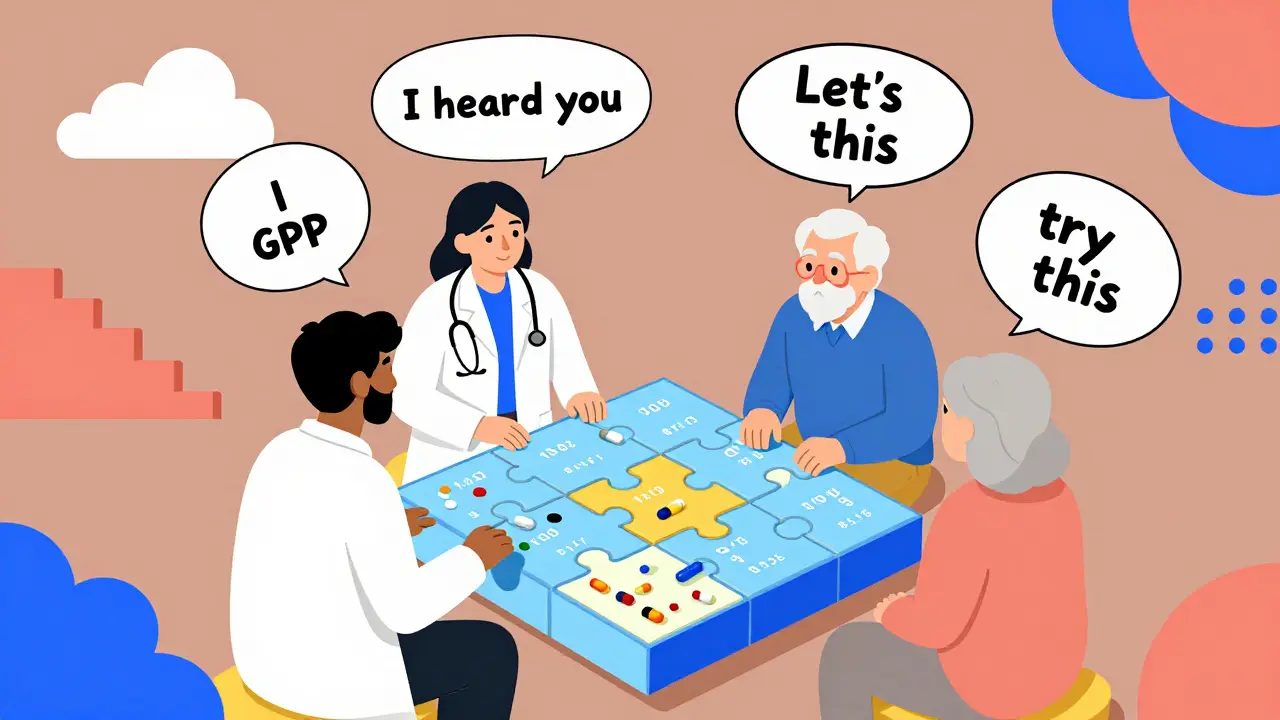
Work With Pharmacists and Use Team-Based Care
You don’t have to do it all alone. Pharmacists are medication experts-and patients trust them. If someone is on five or more meds, schedule a pharmacist-led review. Studies show this cuts hospital visits by 22%. Even small clinics in Australia are using this model. A GP refers a diabetic patient with complex insulin needs to the pharmacy next door. The pharmacist spends 20 minutes walking them through the pump, checking their injection technique, and answering questions. The GP gets a report. The patient feels supported.Document What You Talk About
The Joint Commission requires you to document the patient’s understanding of their medication’s purpose, schedule, and expected effects. If you don’t write it down, it didn’t happen-for billing, for audits, for legal protection. Use your EHR templates. Many systems now have built-in fields for “Medication Goals Discussion.” Fill them out. It’s not busywork. It’s proof you did your job.What to Avoid
- Saying “Take as directed.” (What does that even mean?) - Rushing through the conversation. (The average visit is under 16 minutes. Don’t let time pressure cut corners.) - Assuming they remember everything. (Studies show people forget half of what’s said right after the appointment.) - Ignoring cultural or language barriers. (Use interpreters. Don’t rely on family members.) - Not discussing deprescribing. (Many older adults take meds they don’t need. Talk about stopping, not just starting.)It’s Not Just About Pills-It’s About Trust
When patients feel heard, respected, and clearly informed, they don’t just take their meds. They show up for appointments. They ask questions. They trust you with their health. That’s the real win. You’re not just prescribing treatment. You’re building a partnership. And that partnership starts with one simple rule: Never assume they know. Always check.Why do patients often stop taking their medications even when they’re prescribed?
Patients often stop because they don’t understand why they’re taking the medication, what results to expect, or how to take it correctly. Many think if they don’t feel better right away, the drug isn’t working. Others are afraid of side effects or don’t know how to fit the regimen into their daily life. Without clear, personalized communication, confusion leads to nonadherence.
What is the Teach-Back method, and why is it so effective?
Teach-Back is when you ask the patient to explain, in their own words, how they’ll take their medication and why. It’s not a test-it’s a check for understanding. Studies show it increases adherence by 23% because it catches misunderstandings early. Patients remember more when they say it out loud, and providers get real feedback instead of just a nod and a “yes.”
How can I explain medication benefits without using percentages?
Use absolute numbers instead of relative ones. Instead of saying, “This reduces your risk by 30%,” say, “Out of 100 people like you, 10 would have a stroke in the next 10 years without this medicine. With it, only 7 would.” That’s easier to picture and less misleading. The RACGP and AHRQ both recommend this approach to avoid confusion.
What should I do if a patient says they can’t afford their medication?
Don’t ignore it. Ask if they’ve talked to their pharmacist about lower-cost options or patient assistance programs. Many brand-name drugs have generic versions or coupons. Some pharmacies offer $4 generic lists. If it’s a high-cost specialty med, refer them to a social worker or medication assistance program. Affordability is part of adherence-prescribing something they can’t pay for is setting them up to fail.
Is it okay to use apps or text reminders instead of talking to patients?
No-not as a replacement. Digital tools like text reminders are helpful, but they only work if they’re based on a clear conversation you had in person. A text saying “Take your pill” doesn’t explain why. But a text saying “Remember, this pill helps prevent heart damage-even if you feel fine” reinforces your message. Use tech to support, not replace, human communication.
How do I fit all this into a short appointment?
Focus on 2-3 key points per visit. Use the “Chunk and Check” method: explain one thing, pause, ask them to repeat it. Skip the jargon. Use visuals. If a patient has a complex regimen, schedule a separate 15-minute medication review with a pharmacist. Many clinics now do this-and find it saves time long-term by reducing errors and repeat visits.
What’s the biggest mistake providers make when talking about meds?
Assuming the patient understands because they nodded or said “yes.” Most people don’t admit they’re confused. The real mistake is not asking them to explain it back. The second biggest mistake is using vague phrases like “take as directed” or medical terms like “BID.” Clarity beats convenience every time.
Should I talk about stopping medications too?
Yes-especially for older adults. The 2023 Beers Criteria found that 42% of people over 65 take at least one medication they don’t need. Talking about deprescribing isn’t about reducing care-it’s about reducing harm. Ask: “Is this still helping you?” “Are you still having the problem it was meant to fix?” Clear communication about stopping is just as important as starting.

15 Comments
Tony Du bled
December 22, 2025 AT 04:19Been a nurse for 12 years and this is the most accurate thing I’ve read all year. Patients don’t forget because they’re dumb-they forget because we talk over them like they’re supposed to understand Latin.
Teach-back isn’t optional. It’s basic human decency.
Candy Cotton
December 22, 2025 AT 19:15While the article presents a commendable framework for patient education, it conspicuously omits any reference to the structural failures of the American healthcare system that render even the most articulate communication ineffectual. Without addressing cost, access, and systemic disenfranchisement, this is merely performative empathy.
Ajay Brahmandam
December 23, 2025 AT 19:34Love this. I’m from India and we have the same problem-people think medicine is like chai, you drink it when you feel sick. I showed my grandma a little chart with her pills and days of the week. She still shows it to her friends. Simple works.
Also, never say ‘BID.’ Say ‘twice a day.’ End of story.
jenny guachamboza
December 25, 2025 AT 18:51THIS IS ALL A BIG PHARMA LIE. 😵💫
They don’t want you to feel better-they want you to stay on pills FOREVER. The ‘23% adherence boost’? Probably funded by Big Med. Teach-back? Just a way to make you feel guilty for not taking the poison.
My cousin took his blood pressure med for 3 weeks and his ‘heart attack risk’ went UP. Coincidence? I think not. 🤔
Tarun Sharma
December 27, 2025 AT 10:03Clear communication is a professional obligation, not a suggestion. The principles outlined are foundational to clinical ethics and should be mandatory in all medical curricula. The data cited are robust and the methodology, particularly teach-back, is evidence-based and replicable.
Gabriella da Silva Mendes
December 27, 2025 AT 23:12Okay but let’s be real-how many doctors actually have time for this? I went to my doc last week and he typed the whole time while saying ‘take this once a day’ and then handed me a 12-page pamphlet in 14-point font. No one’s got 20 minutes to explain insulin to someone who’s just trying to get out of the room before their Uber arrives.
Also, I’m tired of being told to ‘use plain language’ when the system is designed to keep us confused. It’s not me, it’s the machine.
Jim Brown
December 29, 2025 AT 06:16There is a metaphysical dimension to medication adherence that transcends the clinical. The act of taking a pill is not merely physiological-it is an act of faith in a future self, in a system, in the authority of the white coat. When we fail to communicate clearly, we don’t just misinform-we alienate. We fracture the fragile covenant between healer and healed.
Perhaps the real question isn’t ‘how to explain,’ but ‘how to restore trust.’
Sai Keerthan Reddy Proddatoori
December 29, 2025 AT 09:49Western medicine is broken. They give you 10 pills and say ‘take them’ but never ask if you can even afford food. In my village, people use herbs because the pills make them dizzy and cost more than a week’s rice. This article sounds smart but it’s for rich people who have insurance and time to sit in waiting rooms. Real people? They just suffer.
Cara Hritz
December 30, 2025 AT 16:46teach-back is so overrated. i had a doc ask me to repeat back my meds and i said ‘morning and night’ and he was like ‘no, you have to say the exact name’ like i’m a robot. i just want to live. why is this so hard?
Jamison Kissh
December 30, 2025 AT 19:37I wonder if we’re over-indexing on the patient’s role in understanding and under-indexing on the provider’s responsibility to adapt. What if the problem isn’t that patients don’t get it-but that we keep using the same script for everyone?
One size fits none. Maybe we need to treat communication like a personalized algorithm-not a checklist.
Kiranjit Kaur
December 31, 2025 AT 23:47This is everything! 🙌
My mom was on 7 meds and she stopped 4 because she thought they were ‘for the heart’ and she didn’t have heart problems. Then her nurse drew a little sun for morning pills and moon for night. She took a pic. Now she’s got a whole wall of pill photos. We laughed. She’s alive. Thank you for saying this.
Sam Black
January 2, 2026 AT 21:14As an Aussie GP, I’ve seen this play out too many times. A man came in for his statin. Said he only took it when he ate chips. I showed him the pill, drew a clock, and said: ‘This isn’t a snack. It’s a shield.’ He nodded. Two weeks later, he brought his daughter in to thank me. She said, ‘He’s never listened to anyone. But he looked at that clock every morning.’
It’s not about teaching. It’s about seeing.
Aliyu Sani
January 4, 2026 AT 13:48in nigeria, we call this 'medicine mind'. people think if they feel fine, the drug is not working. i had a patient who stopped his diabetes med because he 'felt like a king'-then ended up in the hospital with ketoacidosis. no one told him the medicine wasn’t for feeling good-it was for not dying.
we need more of this. not just docs-community health workers too.
Johnnie R. Bailey
January 5, 2026 AT 20:06The real win here isn’t adherence-it’s dignity. When you sit down, look someone in the eye, and say, ‘Tell me what you think this pill does,’ you’re not just checking understanding-you’re acknowledging their intelligence.
That’s the medicine we forget to prescribe.
And yes, I’ve used the pill organizer trick with my own mom. She still keeps the photo on her fridge. Not because she’s forgetful-because she’s proud she figured it out.
Kathryn Weymouth
January 7, 2026 AT 03:55One of the most overlooked elements in the article is the role of caregiver support. Many patients, especially elderly or neurodivergent, rely on family members to manage medications. If the caregiver is confused, the patient is doomed. We must extend clear communication to the entire care network-not just the patient.