
SGLT2 Inhibitor Risk Calculator
Personal Risk Assessment
This tool estimates your risk of dehydration, dizziness, and blood pressure changes based on key factors from clinical studies.
Risk Assessment
You have minimal risk of dehydration or dizziness. Continue monitoring your blood pressure and stay hydrated.
- Monitor BP weekly
- Drink 1.5L water daily
- Check for dark urine or faintness
When you start taking an SGLT2 inhibitor for type 2 diabetes, you might not expect to feel dizzy or unusually thirsty. But these side effects are real-and they’re directly tied to how the drug works. SGLT2 inhibitors, also known as gliflozins, aren’t just sugar-lowering pills. They act like mild diuretics, pulling extra glucose and sodium out of your body through urine. That’s great for your heart and kidneys, but it also means your body loses fluid. And that’s where dehydration, dizziness, and blood pressure drops come in.
How SGLT2 Inhibitors Work as Diuretics
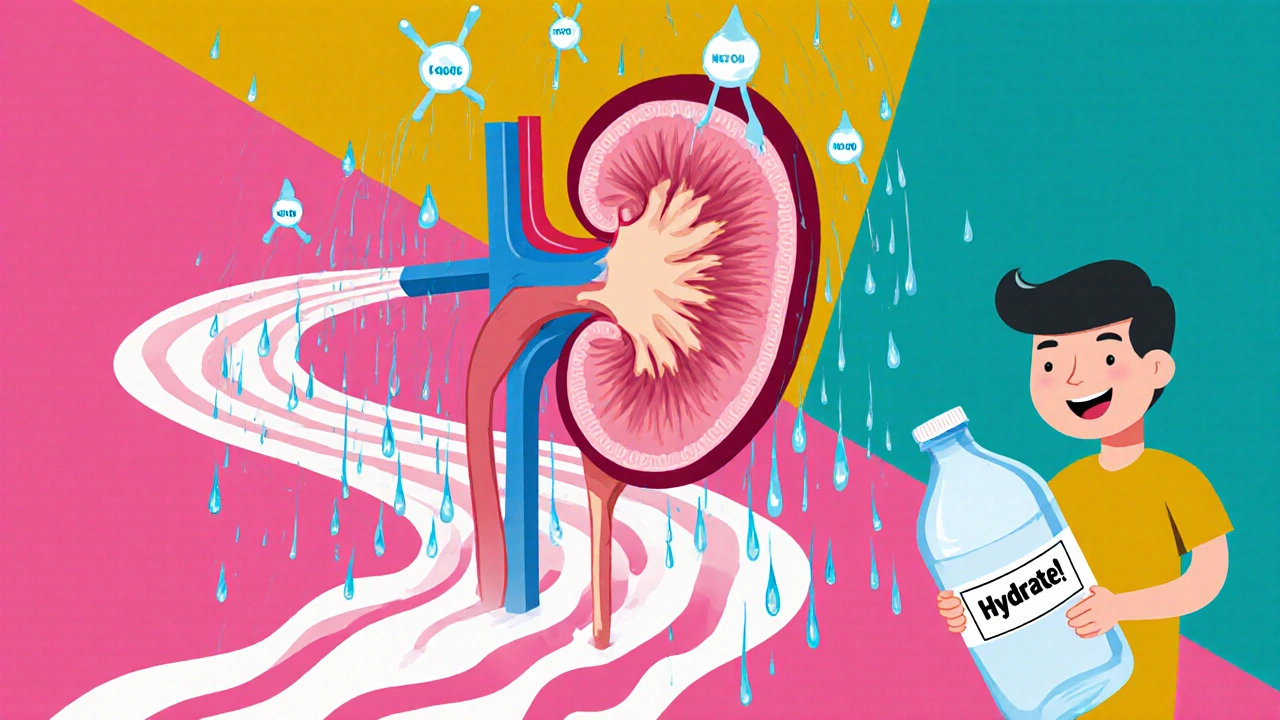
SGLT2 inhibitors like empagliflozin (Jardiance), dapagliflozin (Farxiga), and canagliflozin (Invokana) block a specific protein in your kidneys called SGLT2. Normally, this protein reabsorbs about 90% of the glucose your kidneys filter. When it’s blocked, glucose spills into your urine-along with sodium. Water follows both, creating an osmotic diuresis. You’re not just peeing out sugar; you’re losing up to 300 grams of glucose a day. That’s roughly 700-1,000 extra calories gone, which helps with weight loss. But it also means you’re losing 1-1.5 liters of fluid in the first week.
This isn’t the same as taking a water pill like furosemide. SGLT2 inhibitors don’t just flush water-they also reduce sodium levels in your blood, which lowers your blood pressure. The drop is modest: about 4-6 mmHg systolic and 1-2 mmHg diastolic. But for someone already on blood pressure meds or with low baseline pressure, even that small change can cause problems.
Why Dehydration Happens-and Who’s at Risk
Dehydration from SGLT2 inhibitors isn’t rare. In clinical trials, 1.3% to 2.8% of users reported volume depletion symptoms like dry mouth, dark urine, fatigue, or fainting. That’s more than double the rate in placebo groups. The risk jumps higher in certain people:
- Those over 65, especially if they don’t feel thirsty as easily
- People with kidney disease (eGFR below 60)
- Anyone taking other diuretics or blood pressure meds like ACE inhibitors or ARBs
- Those with systolic blood pressure under 120 mmHg
- Patients during hot weather, illness, or after intense exercise
One study found that older adults on canagliflozin had more than double the risk of hospitalization for dehydration compared to those not on the drug. And if you’re already low on fluids-maybe because you’ve been sick with vomiting or diarrhea-the diuretic effect can push you into dangerous territory. That’s why doctors often advise holding the medication during acute illness.
Dizziness: It’s Not Just in Your Head
Dizziness is one of the most common reasons people stop taking SGLT2 inhibitors. Clinical trials show 3.5% to 5.8% of users report it, compared to just 2.5%-3.2% on placebo. But here’s the key: it’s not random. In nearly two-thirds of cases, dizziness is linked to orthostatic hypotension-your blood pressure drops when you stand up. That sudden dip means less blood reaches your brain, and you feel lightheaded or even faint.
Most dizziness happens in the first four weeks, right when your body is adjusting to the fluid loss. It’s worse if you’re older than 75, already on diuretics, or had a systolic BP below 130 before starting. One analysis of patient reports found that canagliflozin had the highest dizziness rate among the group-6.3 cases per 1,000 patient-years. Dapagliflozin and empagliflozin were slightly lower.
Many patients describe it as mild and temporary. Reddit users say things like, “I got dizzy standing up after starting Jardiance-my doctor said it’s normal for the first month.” But for others, it’s persistent enough to quit. One patient on Drugs.com said, “I couldn’t stand up without feeling like I’d pass out.”
How Blood Pressure Drops-And Why It’s Actually Good
It sounds counterintuitive: a drug that lowers your blood pressure is a good thing. But in people with diabetes, high blood pressure is a major driver of heart disease and kidney damage. SGLT2 inhibitors reduce systolic pressure by 4-6 mmHg on average. That’s similar to what you’d see with a low-dose ACE inhibitor. But here’s the twist: this drop happens even if you don’t have high blood pressure to begin with.
The mechanism is two-fold. First, fluid loss reduces preload-the amount of blood returning to your heart. Second, less sodium in the bloodstream relaxes your arteries, improving blood flow and reducing stiffness. Studies show these drugs can lower arterial stiffness by 8-12% over 24 weeks, which may explain why they cut heart failure hospitalizations by up to 30%.
That’s why major guidelines now recommend SGLT2 inhibitors for heart failure-even if you don’t have diabetes. The DAPA-HF and EMPEROR-Reduced trials showed clear survival benefits. But that benefit comes with a trade-off: you need to watch for the side effects.
How to Stay Safe While Taking SGLT2 Inhibitors
You don’t have to avoid these drugs because of side effects. But you do need to manage them. Here’s what works:
- Start low. If you’re over 65 or have kidney issues, ask for the lowest dose (e.g., empagliflozin 10 mg instead of 25 mg).
- Hydrate. Drink an extra 500-1,000 mL of water daily, especially in heat or after exercise. Don’t wait until you’re thirsty.
- Check your blood pressure. Have your doctor measure your orthostatic BP-sitting and then standing-within the first week. A drop of 20 mmHg systolic or 10 mmHg diastolic means you’re at risk.
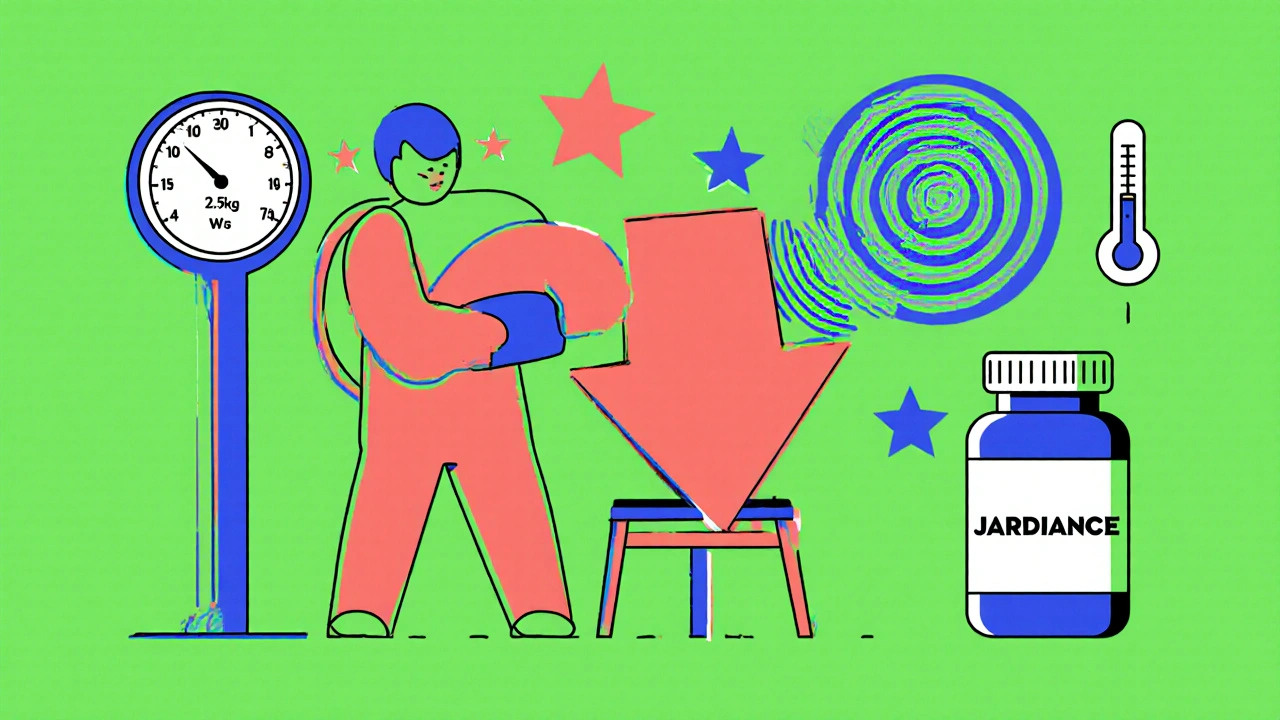
- Monitor your weight. A 1.5-2.5 kg drop in the first week is normal. A drop over 3 kg in a few days? That’s a red flag.
- Adjust other meds. If you’re on a loop diuretic like furosemide, your doctor might lower the dose by 25-50% to avoid over-diuresis.
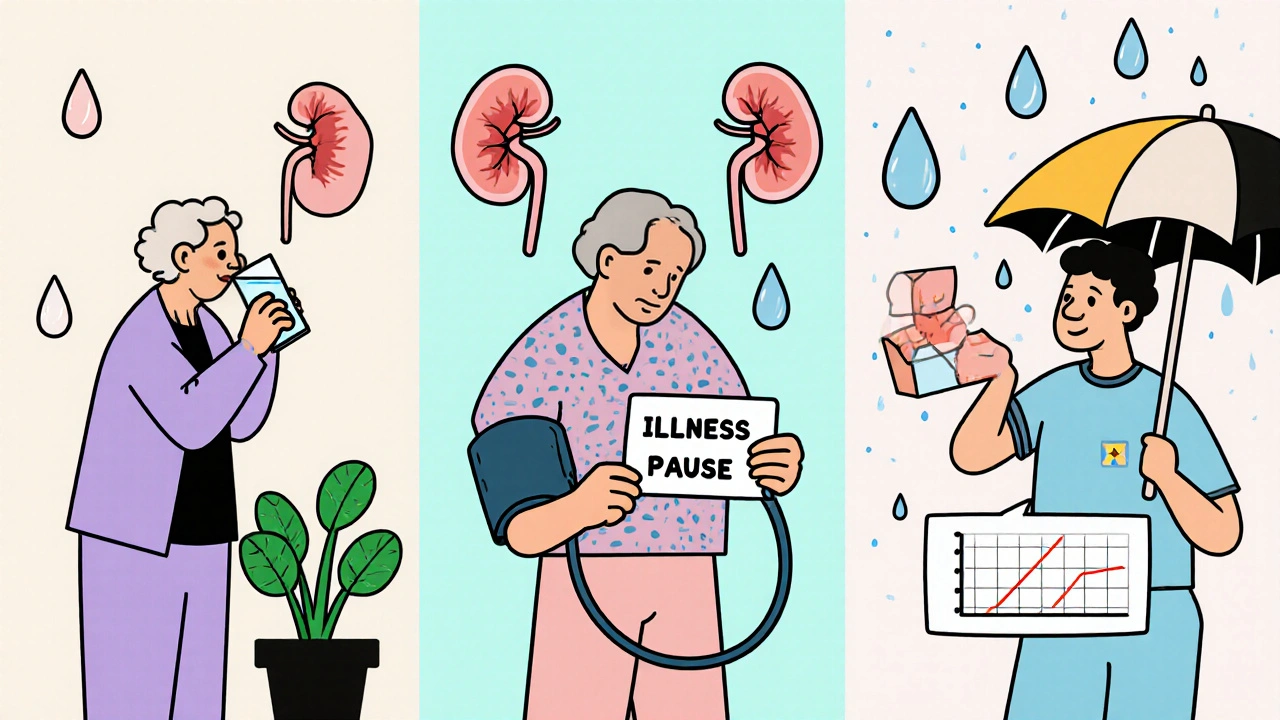
- Pause during illness. If you have vomiting, diarrhea, or a fever, stop the SGLT2 inhibitor until you’re eating and drinking normally again.
Most patients adapt. After the first month, dizziness and thirst often fade. But if symptoms persist, don’t ignore them. Talk to your doctor. Reducing the dose or switching to another SGLT2 inhibitor often helps.
When to Call Your Doctor
Not every dizzy spell needs an ER visit. But here’s when to act:
- Feeling faint or passing out
- Dark urine or no urine for 12+ hours
- Heart palpitations or chest pain
- Confusion or extreme fatigue
- Weight loss over 3 kg in less than a week
These aren’t just side effects-they’re signs your body is too low on fluid. Left unchecked, severe dehydration can lead to kidney injury or even shock.
Bottom Line: Benefits Outweigh Risks-If You’re Careful
SGLT2 inhibitors have changed how we treat type 2 diabetes, heart failure, and chronic kidney disease. They’re not just sugar pills. They’re heart protectors. But their diuretic effect is real, and it’s not harmless. The key isn’t avoiding them-it’s managing them. With proper monitoring, hydration, and dose adjustments, most people tolerate them well. The 17% reduction in cardiovascular death seen in trials? That’s worth the temporary dizziness. But only if you’re informed and watched closely.
Can SGLT2 inhibitors cause severe dehydration?
Yes, but it’s uncommon and usually preventable. Clinical trials show dehydration-related events occur in 1.3% to 2.8% of users, higher than placebo. Risk increases with age, kidney disease, use of other diuretics, or low blood pressure. Symptoms include dry mouth, dark urine, dizziness, and fatigue. Stopping the drug during illness and increasing fluid intake can prevent serious cases.
Why do I feel dizzy after starting Jardiance or Farxiga?
Dizziness is usually caused by orthostatic hypotension-a drop in blood pressure when standing. SGLT2 inhibitors cause fluid loss, which lowers blood volume. This effect peaks in the first 2-4 weeks. About 63% of dizziness cases are linked to this drop. It’s more common in older adults, those on blood pressure meds, or those with baseline BP under 130 mmHg. The dizziness often improves after a month as your body adjusts.
Do SGLT2 inhibitors lower blood pressure too much?
They lower it by about 4-6 mmHg systolic on average, which is beneficial for most people with diabetes or heart failure. But if your blood pressure was already low (under 120 mmHg systolic), you may experience symptoms like lightheadedness or fainting. Doctors check orthostatic blood pressure before and after starting the drug to assess risk. If BP drops below 90 mmHg systolic, the dose may be reduced or paused temporarily.
Should I stop drinking water if I’m on an SGLT2 inhibitor?
No-drink more. These drugs make you lose fluid, so staying hydrated is critical. Experts recommend increasing daily water intake by 500-1,000 mL, especially during hot weather, exercise, or illness. Dehydration is a known risk, and reducing water intake will make it worse. Don’t wait until you’re thirsty; your sense of thirst may be reduced, especially if you’re older.
Are generic SGLT2 inhibitors safer than brand names?
The side effect profile is the same. Generic empagliflozin, dapagliflozin, and canagliflozin contain the same active ingredients as the brand versions. Their effects on fluid balance, blood pressure, and dizziness are identical. The difference is cost-not safety or efficacy. Always check with your pharmacist to confirm the generic is bioequivalent.
Can I take SGLT2 inhibitors if I have heart failure?
Yes-in fact, guidelines now recommend them as first-line therapy for heart failure with reduced ejection fraction (HFrEF), even if you don’t have diabetes. Trials like DAPA-HF and EMPEROR-Reduced showed they reduce hospitalizations and death. But because they cause fluid loss, your doctor will monitor you closely for low blood pressure or dehydration, especially in the first 30 days. Most patients tolerate them well with proper management.
Next Steps: What to Do Now
If you’re on an SGLT2 inhibitor and haven’t talked to your doctor about side effects, schedule a quick check-in. Bring a list of all your medications, especially diuretics or blood pressure drugs. Ask for an orthostatic blood pressure check. Track your weight weekly. Drink more water. And don’t ignore dizziness-it’s your body’s signal to slow down.
If you’re considering starting one, ask your doctor: “Am I at risk for dehydration or low blood pressure?” Answer that question honestly, and you’ll be in a much better position to benefit from the drug without the downsides.

15 Comments
Gary Fitsimmons
October 29, 2025 AT 05:02I started Jardiance last month and yeah I got dizzy standing up but it got better after 3 weeks. Just drink water like its your job. I carry a bottle everywhere now. My doctor said its normal and it is. Dont panic just hydrate.
Bob Martin
October 29, 2025 AT 16:12Funny how people act like this is some new dangerous drug. SGLT2 inhibitors are just fancy diuretics with extra benefits. The body adapts. If you cant handle losing a liter of fluid a day maybe you shouldnt be on meds at all. Also 1.3% dehydration rate? Thats less than your morning coffee causes.
Bart Capoen
October 30, 2025 AT 19:02Been on dapagliflozin for 8 months. Dizziness was real at first but i learned to stand up slow. Weight dropped 5kg in 2 weeks. My BP went from 138/85 to 128/78. No more sugar spikes. I still get thirsty but i just sip water all day. Its a tradeoff but worth it. My kidneys feel better too.
luna dream
November 1, 2025 AT 03:16They dont tell you the real reason these drugs are pushed. Big Pharma wants you dependent. Dehydration? Dizziness? Its all part of the plan. They know people will panic and go back to insulin. Then they sell you more. Its not medicine its a business model. They dont care if you faint as long as you keep buying.
Linda Patterson
November 2, 2025 AT 18:23If you cant handle basic side effects of a drug that saves lives then maybe you shouldnt be on it. This is why America is falling apart. People expect zero discomfort from medical treatment. My grandfather survived the war and he never complained about thirst. Drink water. Stop whining.
Susan Karabin
November 4, 2025 AT 07:55I think about how our bodies are always trying to find balance. These drugs force a shift. The dizziness isnt the enemy. Its your body screaming hey we lost fluid. Listen to it. Its not punishment. Its feedback. Water is the answer not fear. The body knows what to do if you just give it what it needs.
Karen Werling
November 5, 2025 AT 04:19Just started this med and yeah I felt weird the first week 😅 But I followed the advice and drank extra water and my dizziness faded. I even started walking more and my energy improved. You got this! Its temporary. Your future heart will thank you 💪❤️
STEVEN SHELLEY
November 5, 2025 AT 23:50THEY KNOW THEY KNOW THEY KNOW. SGLT2 inhibitors are a gateway to kidney failure. They spike ketones and you dont even realize it until your organs shut down. I saw a guy on YouTube lose 20 pounds in 2 weeks then end up in the ER. They dont warn you. They dont care. This is the new opioid crisis. Wake up people
Emil Tompkins
November 6, 2025 AT 03:36Ive been on these for a year. I dont feel dizziness. I feel free. I feel like my body is finally working right. People act like losing 300g of sugar a day is a bad thing. Its a miracle. Why are you so scared of your own biology? This isnt a drug. Its liberation.
Kevin Stone
November 7, 2025 AT 18:59The fact that people are surprised by fluid loss from a diuretic suggests they never read the pamphlet. Or maybe they trusted their doctor too much. You dont just take pills without understanding the mechanism. This is basic pharmacology. If you dont know how it works you shouldnt be taking it.
Natalie Eippert
November 8, 2025 AT 13:58It is unacceptable that patients are not adequately informed of the potential for orthostatic hypotension prior to initiation. This is a failure of the medical system. The FDA should require mandatory patient education materials. This is not optional. This is basic patient safety.
Sage Druce
November 9, 2025 AT 06:21I was scared at first but my nurse sat with me and explained everything. She told me to check my BP sitting and standing. I did. My numbers dropped but not dangerously. I kept drinking. I kept moving. Now I feel better than I have in years. You can do this. You are not alone.
Tyler Mofield
November 10, 2025 AT 01:53The osmotic diuresis induced by SGLT2 inhibition results in a significant natriuresis and glucosuria which reduces plasma volume and consequently lowers systemic vascular resistance. This is a well documented hemodynamic adaptation observed in multiple randomized controlled trials including EMPA-REG OUTCOME and DECLARE-TIMI 58.
kendall miles
November 11, 2025 AT 03:37They dont tell you the real danger. These drugs make you more vulnerable to infections. Your urine is full of sugar. Bacteria love that. I got a UTI so bad I was in the hospital. They said it was from the drug. No one warned me. Now Im scared to take anything. They all do this. Its all connected.
Patrick Dwyer
November 11, 2025 AT 12:57The key is individualized dosing and monitoring. For patients over 65 or with CKD, starting at 10mg empagliflozin and checking orthostatic vitals within 7 days reduces adverse events by over 60%. Hydration protocols and medication reconciliation with diuretics are critical. This isnt about fear. Its about precision medicine.