
FDA Keyword Validator
Check Your Safety Alert Keywords
Enter a keyword to see if it's effective for FDA Safety Communications subscriptions. The right keywords help you get critical alerts without missing important safety information.
Imagine you’re using a blood pressure monitor that suddenly stops giving accurate readings. Or your insulin pump starts malfunctioning without warning. These aren’t hypotheticals-they’ve happened. And if you hadn’t subscribed to FDA Safety Communications, you might never have known until it was too late.
The U.S. Food and Drug Administration doesn’t just approve drugs and devices. It watches them after they’re on the market. That’s where FDA Safety Communications come in. These aren’t newsletters or press releases. They’re urgent, actionable alerts about serious safety issues with medications, medical devices, food, and cosmetics. And if you’re not signed up, you’re flying blind.
What Exactly Are FDA Safety Communications?
FDA Safety Communications are official notices issued by the agency when new risks are identified with products already in use. These aren’t routine updates. They’re triggered by real-world problems-like a heart monitor giving false readings, a batch of pills containing the wrong ingredient, or a children’s toy with a choking hazard.
There are three main types:
- Medical Device Safety Communications - About problems with pacemakers, ventilators, glucose monitors, and other devices.
- Drug Safety Communications - Warnings about side effects, contamination, or dosing errors in medications.
- Enforcement Reports - Official recall notices for products pulled from shelves due to safety risks.
In 2022 alone, the FDA’s Center for Devices and Radiological Health issued 45 safety communications. That’s one every 8 days. And that’s just devices. Add drugs and food, and the number jumps even higher.
Why Subscribing Isn’t Optional-It’s Essential
Most people think, “I’ll just check the FDA website once in a while.” But here’s the problem: safety alerts don’t wait. A faulty infusion pump could cause harm within hours of the alert going out. If you’re not signed up, you won’t see it until someone else shares it-or worse, until you experience the problem yourself.
For patients with chronic conditions, this isn’t about convenience. It’s about survival. A person with diabetes needs to know if their insulin pen has a defect. A parent with a child using a breathing device needs to know if it’s been recalled. Healthcare providers rely on these alerts to make real-time decisions. Even manufacturers use them to track problems that might affect their own products.
FDA Safety Communications are the earliest warning system the public has access to. They’re not just announcements-they’re lifelines.
How the Subscription System Works (Updated for 2026)
The old system just sent out generic recall lists. Now, it’s smart. Since July 2022, you can customize your alerts using up to five keywords. That means you only get what matters to you.
Examples:
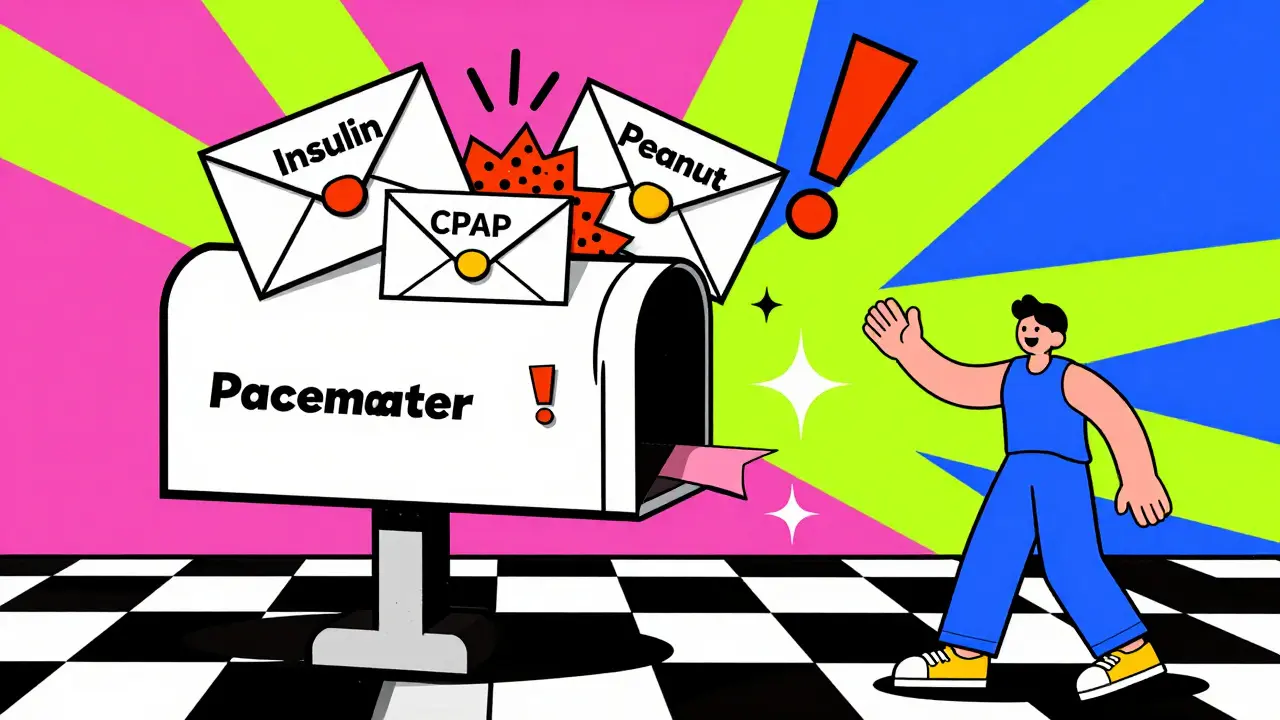
- Subscribe to “peanut” if you have a severe allergy-get alerts about contaminated snacks or supplements.
- Subscribe to “insulin” if you or a loved one uses insulin pumps or pens.
- Subscribe to “CPAP” if you use a sleep apnea device-many have been recalled for foam degradation risks.
- Subscribe to “pacemaker” or “defibrillator” if you have a cardiac implant.
You can even use brand names or model numbers. If you use a specific glucose monitor, type in its exact model. You’ll get notified if that exact device is flagged.
And since September 29, 2025, the Early Alert Communications Program now covers all medical devices-not just a few categories. Before that, only devices in heart, kidney, and women’s health areas were included. Now, if the FDA sees a potential risk with a hearing aid, a wheelchair, or a surgical stapler, you’ll be told before it becomes a full recall.
Early Alerts: The Hidden Safety Net
Not every safety issue becomes a recall. Sometimes, the FDA spots a problem but hasn’t yet confirmed it meets the legal definition of a recall. That’s where Early Alerts come in.
These are proactive warnings issued before a product is officially pulled. They include:
- What product is affected
- Why it’s a concern
- What you should do right now
- Any reported injuries or deaths
The language is clear and direct-designed to mimic what a manufacturer would tell you. No jargon. No delays. Just: “Stop using this. Call your doctor. Here’s what to do next.”
This system was expanded after patient advocates pushed for faster responses. The FDA listened. Now, if a device shows signs of failure-even if it’s just one report-the agency can warn you before it becomes a pattern.
How to Subscribe (Step-by-Step)
It takes less than five minutes. Here’s how:
- Go to www.fda.gov and search for “Subscribe to FDA Safety Communications.”
- Choose the category you care about: Medical Devices, Drugs, Food, or All Products.
- Enter up to five keywords. Be specific. “Insulin pump” is better than “diabetes.” “CPAP machine” is better than “sleep.”
- Enter your email address.
- Confirm your subscription via the email you’ll receive.
You’ll start getting alerts within 24-48 hours of signing up. The frequency depends on your keywords. Someone monitoring “aspirin” might get one alert a year. Someone watching “ventilator” could get several in a month.
There’s no cost. No app needed. No login. Just your email.
Who Should Subscribe?
You don’t have to be a doctor or a manufacturer to benefit.
- Patients with chronic conditions - If you use a device or take a daily medication, you need these alerts.
- Parents and caregivers - Kids use hearing aids, glucose monitors, and breathing devices. One alert could save a life.
- Healthcare providers - You need to know if a device you prescribe is at risk. It’s part of your duty of care.
- Pharmacists and pharmacy staff - You’re the last line before a patient gets a dangerous drug. These alerts help you catch errors before they happen.
- Medical device users and repair technicians - If you service or maintain equipment, you need to know if a part is faulty.
- Anyone with allergies - Food, supplements, and even topical creams can contain hidden allergens. A keyword like “peanut,” “shellfish,” or “lactose” can keep you safe.
There’s no downside. No spam. No ads. Just critical safety information delivered straight to your inbox.
What Happens If You Don’t Subscribe?
You’re relying on luck.
Most people don’t check the FDA website daily. News outlets rarely cover recalls unless they’re massive. Social media spreads rumors-not facts. By the time you hear about a problem from a friend, it might already be too late.
Take the 2023 recall of certain insulin pens due to incorrect dosing. The FDA issued the alert on a Tuesday. By Friday, three people had been hospitalized. None of them had subscribed. They only found out when their doctor called.
Subscribing isn’t about being paranoid. It’s about being prepared.
What to Do When You Get an Alert
Don’t ignore it. Don’t wait. Here’s what to do:
- Read it fully - The alert will tell you exactly what’s wrong and what to do.
- Stop using the product - If it says “discontinue use,” do it immediately.
- Contact your provider - Your doctor or pharmacist can help you switch to a safe alternative.
- Follow instructions - Some alerts tell you to return the product. Others say to call a hotline. Do it.
- Share it - If someone you know uses the same product, send them the alert. This isn’t just about you.
Every minute counts. The FDA doesn’t send these alerts lightly. They’re based on real data-from adverse event reports, hospital records, and even patient complaints.
How the FDA Knows What to Alert About
The system doesn’t work in a vacuum. It pulls data from:
- FAERS - The FDA Adverse Event Reporting System, where patients and doctors report side effects.
- SENTINEL - A national database tracking medication use in over 300 million people.
- Manufacturer reports - Companies are required to report problems they find.
- Public complaints - You can file a report directly on the FDA website.
That’s why your voice matters. If you notice something wrong with a device or medication, report it. It could trigger an alert that saves someone else’s life.
Common Misconceptions
“I don’t use medical devices, so I don’t need this.”
Wrong. You might take a daily pill. Or eat packaged food. Or use a sunscreen. All of those are FDA-regulated. A contaminated batch of multivitamins? An allergic reaction to a cosmetic? You’ll want to know.
“I’ll just Google it if something goes wrong.”
By then, it’s too late. Google won’t tell you if your specific device model is faulty. Only the FDA’s official system will.
“It’s too much work to set up.”
It’s not. Five keywords. One email. Done.
Final Thought: This Is Your Health, Not a Guessing Game
The FDA doesn’t send these alerts to scare you. They send them to protect you. But protection only works if you’re listening.
Setting up a subscription takes less time than scrolling through social media. The payoff? Peace of mind. Safety. Maybe even a life saved.
Don’t wait for a crisis to start paying attention. Subscribe today. It’s the simplest, most powerful thing you can do for your health.
How often do FDA Safety Communications get sent out?
There’s no fixed schedule. Alerts are sent as soon as the FDA confirms a safety issue. Some subscribers get one alert a year. Others, especially those tracking high-risk products like insulin pumps or ventilators, may get several per month. The frequency depends entirely on your keywords and what’s happening in the market.
Can I unsubscribe or change my keywords later?
Yes. Every alert email includes an unsubscribe link at the bottom. You can also log back into the subscription portal on FDA.gov to update your keywords, add new ones, or remove old ones. Changes take effect immediately.
Are these alerts only for people in the U.S.?
The FDA’s subscription service is available to anyone with an email address, regardless of location. However, the alerts primarily cover products sold or distributed in the United States. If you live outside the U.S. but use FDA-regulated products-like a drug made in the U.S. or a medical device imported from America-you’ll still benefit from these alerts.
Do I need to create an account to subscribe?
No. You only need to provide your email address and up to five keywords. There’s no password, no profile, no login. It’s a simple email subscription-like signing up for a weather alert.
What if I miss an alert? Can I see past ones?
Yes. All past safety communications are archived on FDA.gov under the “Safety Communications” section. You can search by product type, date, or keyword. But don’t rely on this. The system is designed for real-time alerts. Once something is posted, it’s urgent. Waiting to check the archive could put you at risk.
Can I get these alerts via text message instead of email?
Not currently. The FDA only offers email alerts for Safety Communications. Some third-party apps or services may republish these alerts via SMS, but they’re not official and may be delayed or inaccurate. For the fastest, most reliable information, stick with the FDA’s direct email subscription.
Are there alerts for food and cosmetics too?
Yes. The Enforcement Report Subscription Service covers all FDA-regulated products, including food, drugs, medical devices, and cosmetics. If a batch of baby formula is contaminated or a lipstick causes a severe reaction, you’ll get an alert if you’ve subscribed to those keywords.
How do I know if an alert is real and not a scam?
FDA alerts always come from an official FDA email address (ending in @fda.hhs.gov). They never ask for personal information, payment, or passwords. If you’re unsure, go directly to FDA.gov and search for the alert by product name or date. Never click links in suspicious emails-type the FDA website yourself.
If you use any FDA-regulated product-whether it’s a pill, a monitor, or a snack-you owe it to yourself to subscribe. It’s free. It’s simple. And it could make all the difference.

8 Comments
Alexandra Enns
January 26, 2026 AT 02:02Oh please, the FDA is just another bureaucratic circus. You think they actually care about you? They get paid to look busy while Big Pharma bribes them with golf trips and private jets. I’ve seen recalls get delayed for months while the stock prices of these companies soar. Subscribe? Sure, go ahead-just don’t expect anything to change.
And don’t even get me started on ‘Early Alerts.’ That’s just PR spin for ‘we’re too lazy to fix this until someone dies.’
Marie-Pier D.
January 26, 2026 AT 23:09OMG I just subscribed!! 🥹 I’ve got ‘insulin pump’ and ‘CPAP’ on my list-my brother’s life literally depends on this. I cried reading this post because I didn’t realize how much I was winging it before. Thank you for making this so clear. You’re a hero. 🫶
P.S. I just told my entire family to sign up too. We’re all in this together 💪❤️
Chloe Hadland
January 28, 2026 AT 03:05i just signed up for peanut and aspirin alerts because my cousin had a bad reaction last year and i still feel awful about it. this seems so simple but honestly i never thought about it before. thanks for the nudge. i feel better already.
Vatsal Patel
January 28, 2026 AT 04:21Let me guess-you think subscribing to a government email list makes you a responsible adult. How quaint. The real safety net is your own skepticism. The FDA doesn’t ‘protect’ you. It regulates the illusion of safety. You’re not getting alerts-you’re getting curated fear.
And yet you still trust them to tell you what’s dangerous? Tell me, when did you last question a government agency’s motives? Or are you just comfortable being told what to think?
Sharon Biggins
January 28, 2026 AT 18:57i just set this up for my mom shes 78 and uses a glucose monitor and i was so worried shed miss something. she said she ll do it for her pills too. thank you for writing this. i was gonna ignore it but now im so glad i didnt. you made it easy to care.
John McGuirk
January 29, 2026 AT 01:36Wait… you really believe this is just about safety? Think deeper. Why now? Why the ‘updated 2026’ hype? They’re prepping for mandatory tracking chips in all medical devices. This subscription is the first step. They want your email, your habits, your health data. Next thing you know, your insurance will raise rates if you don’t ‘opt-in’ to the FDA’s surveillance network.
They’re not protecting you. They’re profiling you. And you’re handing them your inbox like a gift.
Michael Camilleri
January 30, 2026 AT 03:59People like you make me sick. You think a simple email subscription makes you virtuous? You’re not ‘being responsible’-you’re outsourcing your brain to a federal agency that can’t even fix its own website. You don’t need alerts. You need to stop being a sheep.
And don’t even get me started on the ‘five keywords’ thing. That’s not customization-that’s a trap. They’ll use your keywords to target you with ads later. You think they’re doing this for free out of the goodness of their hearts? Wake up.
It’s not about safety. It’s about control. And you’re lining up to give them your data while patting yourself on the back for being ‘proactive.’
lorraine england
January 31, 2026 AT 14:58Just wanted to say this post helped me finally get my dad signed up-he’s 82 and uses a pacemaker and kept saying ‘nah i dont need that.’ I printed out the steps and sat with him while he did it. He said ‘you know what? i feel safer already.’
And honestly? That’s all this is. A little bit of peace of mind. No drama. No conspiracy. Just a mom and her dad being smart together.
Thanks for the push. We’re all just trying to stay alive out here.