
180-Day Exclusivity: How Drug Patents Delay Generics and Impact Your Wallet
When a brand-name drug hits the market, the company gets a 180-day exclusivity, a temporary legal window that blocks generic versions from entering the market even after the main patent expires. This isn’t a patent—it’s a reward granted under the Hatch-Waxman Act to the first generic manufacturer that successfully challenges a brand-name drug’s patent. Think of it as a race: if you’re the first to prove a brand drug’s patent is invalid or doesn’t apply, you get six months of solo sales before anyone else can copy it. That’s powerful. During that time, the generic maker can charge high prices—sometimes close to the brand version—because there’s no competition yet.
This system was meant to encourage generic companies to fight costly legal battles and bring down drug prices faster. But in practice, it’s often used as a delay tactic. Some brand-name companies file dozens of secondary patents, patents on minor changes like pill coating, dosage form, or timing to extend their monopoly. These aren’t new drugs—they’re tweaks. Yet they stop generics from even starting the 180-day race. And when multiple generic companies challenge the same patent, the FDA only gives the exclusivity to one, leaving others out in the cold. That means fewer generics, higher prices, and longer waits for affordable meds.
It’s not just about pills. The same logic applies to biosimilars, complex drugs made from living cells that can’t be copied exactly like regular pills. Even though they’re cheaper than the original biologic, they face their own legal hurdles and don’t qualify for the same 180-day exclusivity. That’s why many patients still pay hundreds or thousands per month for drugs that technically have cheaper alternatives.
What does this mean for you? If you’re on a brand-name drug, your prescription might stay expensive longer than it should. Pharmacists see this every day—they’re the ones explaining why a generic isn’t available yet, even when the patent looks expired. And if you’ve ever wondered why your insulin or rheumatoid arthritis drug costs so much despite being on the market for years, the answer often lies in this 180-day loophole and the patent thickets behind it.
Below, you’ll find real stories and breakdowns from people who’ve been affected—whether it’s a patient stuck paying full price, a pharmacist fighting for access, or a manufacturer caught in the legal maze. These aren’t abstract policies. They’re daily realities that shape what’s in your medicine cabinet and what’s on your bill.
5
Dec
2025
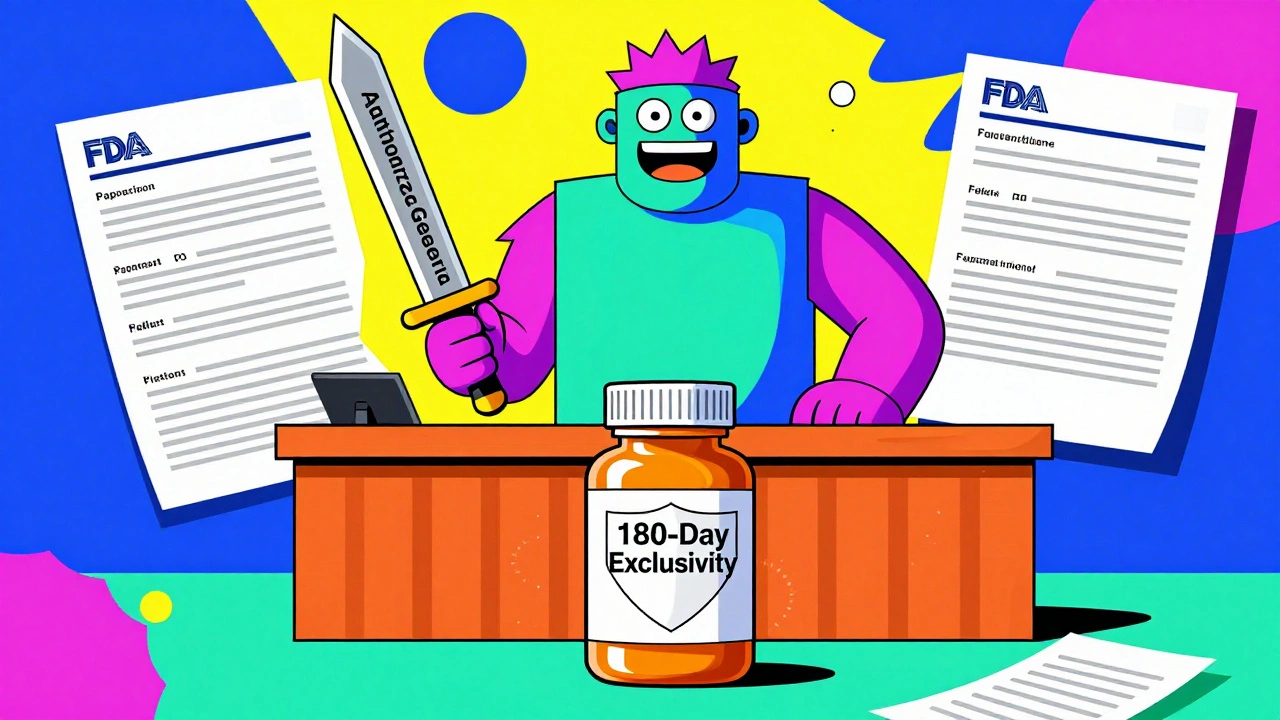
180-Day Exclusivity and Authorized Generics: Legal Considerations in U.S. Drug Markets
The 180-day exclusivity rule was meant to reward generic drug makers for challenging patents. But brand-name companies can legally launch their own versions - called authorized generics - during that window, undercutting profits and undermining the system’s purpose.
© 2026. All rights reserved.